A breathtaking collection of photos taken by ESA Astronaut Paolo Nespoli during his 6-month MagISStra mission on the International Space Station 25 December 2010 – 24 May 2011.
Music: Dream Elements by Green Sun licensed by Ambient Music Garden.
Video produced for Lufthansa inflight entertainment (released June 2011).
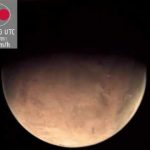
This movie was generated from 600 individual still images captured by the Visual Monitoring Camera (VMC) on board Mars Express during the 8194th orbit on 27 May 2010 between 02:00 and 09:00 UTC (04:00-11:00 CEST) and were transmitted to Earth a few hours later via ESA’s 35m New Norcia deep space station in Australia.
The portion of the movie where the planet beneath the spacecraft was dark has been largely removed since no detail was visible.
The images show the spacecraft’s slow descent from high above the planet, speeding up as closest approach is passed and then slowing down again as the distance increases. Towards the start of the video, the giant Martian volcanoes can be seen followed by the beginning of the ice coverage around the South Pole as the spacecraft crosses over to the night side of the planet. Shortly after emerging back onto the day side of the planet, the beautiful North Pole can be observed, followed by the long climb away from the planet over the equator. Finally, at the end of the movie, the disk of Phobos can be seen crossing from top to bottom of the image.
Credit: ESA – European Space Agency, CC BY-SA 3.0 IGO
Copyright Notice:
This work is licenced under the Creative Commons Attribution-ShareAlike 3.0 IGO (CC BY-SA 3.0 IGO) licence. The user is allowed to reproduce, distribute, adapt, translate and publicly perform this publication, without explicit permission, provided that the content is accompanied by an acknowledgement that the source is credited as ‘ESA/DLR/FU Berlin’, a direct link to the licence text is provided and that it is clearly indicated if changes were made to the original content. Adaptation/translation/derivatives must be distributed under the same licence terms as this publication. To view a copy of this license, please visit http://creativecommons.org/licenses/by-sa/3.0/igo/
ESA astronaut Andre Kuipers invites you to follow a guided tour of the complete International Space Station. Andre himself is the tour guide during this unique visit to the Station.
In the space of one hour Andre shows every module of the International Space Station and explains the ins and outs of living in the largest laboratory in space. This video gives a wonderful glimpse of how life is for an astronaut living in the Station. From science and maintenance to operating robotic arms and finding lost equipment, Andre takes you from the Japanese research module via the Station’s cellar and ‘garden’ to the Russian segment, ending his tour with breath-taking views of Earth from the European-built Cupola observation module.
This video was recorded during the end of ESA’s PromISSe mission. Andre spent a total of 193 days in space before returning to Earth on 1 July 2012.
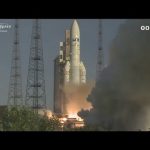
Thursday 2 August 2012 marked the 50th successful Ariane flight in a row: an Ariane 5 was launched from Europe’s Spaceport in French Guiana to perform a dual deployment of two telecommunications satellites, Intelsat 20 and Hylas-2, into their planned transfer orbits.
Lift off of flight VA208 took place at 22:54 CEST; 17:54 French Guiana time. This was Ariane 5’s fourth launch of 2012, continuing a line of launch successes unbroken since 2003.
Traditionally, engineers faced with the task of designing a new, complex system or structure – a car, an aircraft or a satellite – work sequentially, one step at a time, passing the design from engineer to engineer. This is inefficient and consumes time and resources.
For more than a decade, many of ESA’s sophisticated spacecraft have been designed with the help of the CDF, making use of very advanced iterative techniques – hence its title ‘concurrent’.
Concurrent engineering puts all related engineers, with all their brain power and required tools together with the final user representative – or customer – in the same location at the same time. This allows for iterative design at a fast pace, with customer and designers agreeing requirements and taking decisions in real time to ensure the best design for the right cost and an acceptable risk.
This process has been developed and honed so it is now common to produce a risk assessed conceptual space mission design complete with various options and including scheduling, testing and operations in a matter of weeks.
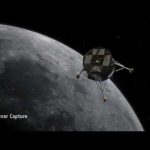
Lunar Lander mission, from launch to landing and exploring the Moon.
Lunar Lander is a robotic explorer that will demonstrate key European technologies and conduct science experiments.
The mission is a forerunner to future human and robotic exploration of the Moon and Mars. It will establish European expertise to allow strong international partnerships in exploration.
An interview with Fernando Doblas, Head of the ESA Communication Department, in the Space Zone at Farnborough air show 2012. Fernando answers questions on ESA’s presence in the Space Zone, and how such events foster international cooperation and the role of ESA.
Tour of the Space Zone at Farnborough International Air show 2012 in the UK. ESA’s exhibition, alongside other space agencies and industries, is in the Space Zone between 9 — 15 July.
Boldly going where no private company has gone before.
On 25 May 2012 the first commercial spacecraft berthed with the International Space Station. A private company achieved something only national agencies have ever done before: flying and recovering an orbital craft. With private companies launching their own spaceships and designing their own orbital stations, it’s the dawn of commercial spacefaring.
We talk to people involved in that development and we explore the world’s first commercial spaceport.
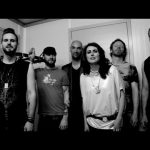
Within Temptation is the internationally known symphonic rock band, founded in the Netherlands in 1996 by vocalist Sharon den Adel and guitarist Robert Westerholt. The band members are interested in all things science-fiction and space-related, and have been following the PromISSe mission of ESA astronaut André Kuipers. When they heard that three of their songs (“Faster”, “Mother Earth” and “The Promise”) had been included in André’s playlist to be played in space, the band were very excited to support his mission. They helped us to produce this video, recording a special message and dedicating their song “Faster” to André, wishing him a high-speed but safe return later this week. Within Temptation are Sharon den Adel, Robert Westerholt, Stefan Helleblad, Jeroen van Veen, Ruud Jolie, Martijn Spierenburg and Mike Coolen.
More information at: www.within-temptation.com
Thanks to the ORTS for the live band footage. Video copyright ESA/Within Temptation. Faster written by S. den Adel, R. Westerholt & D. Gibson. Video produced by ESA/J. Makinen.
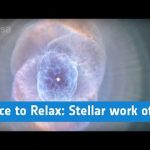
Journey through galaxies, past star-forming clouds, around mammoth stars, and inside gas and dust nebulas. A relaxation programme of astronomical wonders by the European Space Agency.
Originally produced for Lufthansa inflight entertainment (released June 2011).
Credit images: XMM-Newton, Herschel, Planck, Cluster, Integral, Joint ESA/NASA Hubble Space Telescope and ESA amateur ground-based cameras.
Credit music: “Dream Elements” by Green Sun, licensed by AmbientMusicGarden.com
This movie shows a sequence of images taken as ESA’s Rosetta spacecraft flew past the main-belt asteroid (21) Lutetia, during the spacecraft’s 10-year journey towards comet 67P/Churyumov-Gerasimenko.
The flyby took place on 10 July 2010, when Rosetta flew past the asteroid at a distance of 3168.2 km and at a relative speed of 15 km/s. The first image shown in the sequence was taken nine and a half hours before closest approach, from a distance of 500 000 km to Lutetia; the last image was taken six minutes after closest approach, at 6300 km from the asteroid.
The OSIRIS camera on board Rosetta has surveyed the part of Lutetia that was visible during the flyby – about half of its entire surface, mostly coinciding with the asteroid’s northern hemisphere. These unique, close-up images have allowed scientists to study the asteroid’s surface morphology, composition and other properties in unprecedented detail.
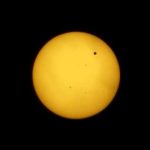
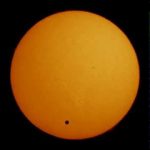
Time lapse movie of the transit of Venus, as seen from the land of the midnight sun in Svalbard. Interference from cloud gives an eerie feel to the scene.
This movie was compiled from images taken by the Venus Monitoring Camera on Venus Express as it approached the planet on its elliptical orbit on 1 June 2012. Initially, the spacecraft is looking at the south side of the planet from a distance of 63 000 km and clouds can be seen moving below. As the spacecraft draws closer, Venus starts filling the field of view and the equatorial regions can be seen. The sequence finishes with observations of cloud features at high latitudes.
Cloudy weather did impact on the Venus transit observations at Longyearbyen, Spitsbergen. Still most of the Venus transit could be captured. Credit: ESA – M. Breitfellner, M. Perez
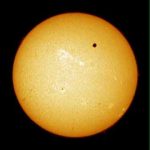
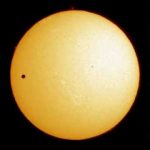
Almost the whole Venus transit could be captured despite of some clouds did get into the way of those observing the Venus Transit in Canberra, Australia. Credit: ESA – Manuel Castillo-Fraile and Miguel Sanchez-Portal
Almost the whole Venus transit could be captured despite of some clouds did get into the way of those observing the Venus Transit in Canberra, Australia. Credit: ESA – Manuel Castillo-Fraile and Miguel Sanchez-Portal
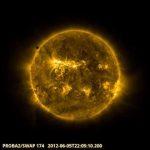
This movie shows the transit of Venus on 5-6 June 2012 as seen from SWAP, a Belgian solar imager onboard ESA’s PROBA2 microsatellite. SWAP, watching the Sun in EUV light, observes Venus as a small, black circle, obscuring the EUV light emitted from the solar outer atmosphere – the corona – from 19:45UT onwards. At 22:16UT – Venus started its transit of the solar disk
The bright dots all over the image (‘snow storm’) are energetic particles hitting the SWAP detector when PROBA2 crosses the South Atlantic Anomaly, a region where the protection of the Earth magnetic field against space radiation is known to be weaker.
Note also the small flaring activity in the bright active region in the northern solar hemisphere as Venus passes over. Towards the end, you can see a big dim inverted-U-shape moving away from the Sun towards the bottom-right corner. This is a coronal mass ejection taking off.
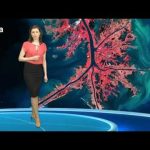
Earth from Space is presented by Kelsea Brennan-Wessels from the ESA Web-TV virtual studios.
In the twenty-fourth edition we look at the Mississippi River Delta, where the largest river in the United States empties into the Gulf of Mexico.
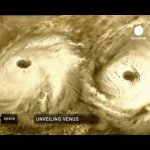
Es conocido como el lucero del alba o la estrella de la mañana, pero no es una estrella: es un planeta. Venus es, junto con Marte, nuestro vecino más cercano, y al mismo tiempo, un gran desconocido. Levantamos el velo que esconde los misterios del planeta ardiente.
On l’appelle l’étoile du berger ou encore l’étoile du matin, mais c’est tout sauf une étoile. C’est même une planète de notre voisinage immédiat. Vénus est, avec Mars, la plus proche planète de la Terre. Proche peut-être mais au combien différente. On commence tout juste à lever quelques pans du voile qui entoure le mystère de la planète brûlante.
It can be called the morning or evening star, depending on where you are or what time it is, but it is anything but a star. In fact, it is one of our nearest planetary neighbours. Venus and Mars may be Earth’s close cousins, but they are oh-so different. Only now are we starting to peer through Venus’ clouds to reveal the burning planet’s secrets.
During a press briefing at The Kennedy Space Center on May 22, SpaceX and NASA officials discussed the launch of the SpaceX Falcon 9 rocket and Dragon capsule on a demonstration flight to the International Space Station. Falcon 9 and Dragon lifted off Tuesday from Cape Canaveral Air Force Station in Florida at 3:44 a.m. EDT. On Thursday, May 24, Dragon will perform a flyby of the space station at a distance of approximately 1.5 miles to validate the operation of sensors and flight systems necessary for a safe rendezvous and approach. Following analysis of the flyby by NASA and SpaceX managers, the Dragon capsule will be cleared to rendezvous and berth with the space station on Friday, May 25, marking the first time a commercial company has attempted this feat.
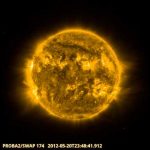
ESA’s space weather microsatellite Proba-2 observed the solar eclipse on the evening of 20 May 2012. It passed through the Moon’s shadow a total of four times, imaging a sequence of partial solar eclipses in the process. The first contact was made on Sunday May 20 at 21:09 GMT. The last contact finished at 03:04 GMT.
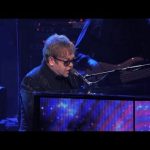
This video was specially recorded during Sir Elton John’s Million Dollar Piano Show in Las Vegas, on 17 April 2012, 40 years to the day after his single Rocket Man was released around the world.
Continuing the celebration of ESA astronaut André Kuipers’ music in space, British rock legend Sir Elton sent a special message to ESA, André and the crew of the ISS on the 40th anniversary of this classic song.
Sir Elton said, “When I was a boy Dan Dare was a comic book hero, and space travel just a romantic idea, not a reality. I was 14 years old when Yuri Gagarin became the first man in space; my songwriting partner Bernie Taupin was just 11. Bernie and I did not meet until 1967, and two years after we met, Neil Armstrong became the first man to step on to the moon.
“Our generation was smitten with the glory and excitement of space travel. ‘Rocket Man’ – and indeed ‘Dan Dare’ on the Rock of the Westies album – came from those boyhood dreams of travelling beyond the stars and looking back on Earth.
“Not long after the Rocket Man single was released, my band and I were invited to the NASA headquarters in Texas and shown around by Al Worden, Apollo 15 command module pilot. It was thrilling to find that real astronauts liked our song, Rocket Man, which was about an imaginary astronaut.
“Now, 40 years later, it’s amazing to hear from the astronauts at the European Space Agency that they like the song and that it has been on the playlist on the International Space Station. I send my best wishes to ESA and all the crew, and my thanks for keeping those boyhood dreams alive.”
André said, “This song has been an inspiration to many people who are interested in space, and especially those who wanted to become astronauts, including myself. It is certainly one of the most played songs here on the ISS, and we know it will accompany more astronauts into space in the future.”
Rocket Man appeared on Elton John’s album Honky Château, released also 40 years ago next week, on 19 May 1972.
Video copyright ESA/Rocket Music
Rocket Man written by E. John and B. Taupin
Music and concert excerpts, courtesy Rocket Music
Video produced by ESA/J. Makinen
ESA astronaut and World Wildlife Fund (WWF) ambassador André Kuipers and his Expedition 31 crewmate, NASA astronaut Don Pettit, took part in a video call with the WWF annual meeting that took place in Rotterdam, the Netherlands on 8 May 2012.
WWF representatives worldwide heard what André and Don had to say about our planet. Their unique vantage point on the International Space Station and ESA’s Earth observation satellites help us understand how fragile our planet is.
The Dutch branch of the WWF — Wereld Natuur Fonds — is celebrating its 50th anniversary this year.
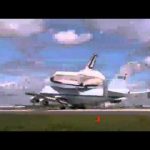
On Friday, April 27 Enterprise, the first NASA space shuttle was transported atop a 747 Shuttle Carrier Aircraft from Dulles International Airport, near Washington, D.C. to New York’s John F. Kennedy International Airport. Enterprise eventually will be displayed at New York’s Intrepid Sea, Air and Space Museum. Though Enterprise, the first space shuttle orbiter never flew in space, it was crucial to the Space Shuttle Program because its series of approach and landing tests in 1977 proved the orbiter could fly in the atmosphere and land like an airplane, except without power — like a glider. Includes footage of Enterprise on the ground at Dulles and takeoff from Dulles.
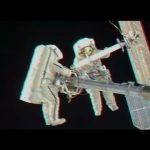
ESA astronaut André Kuipers’ stay on the International Space Station (ISS) started on 23 December 2011 and continues until 1 July 2012. Apart from his demanding tasks as Flight Engineer for Expeditions 30/31, André is providing us with amazing imagery of Earth and of life and work on the ISS. For the first time, digital 3D still photos have been taken of cosmonauts carrying out extravehicular activities in their spacesuits. This short clip collects a selection of 3D images footage taken with the Erasmus Recording Binocular (ERB-2) and some 3D stills from a Fuji W3 camera. Stereoscopic images are a unique tool for providing viewers with a sense of presence in the constrained and dense habitat in which the astronauts live.
Stereoscopic 3D glasses are required to properly enjoy the full 3D effect of this footage.
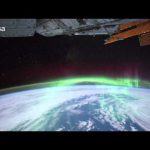
André took this video of Aurora Australis from the European Cupola module in the Space Station. The beautiful phenomenon is caused by bursts of particles from the Sun pouring down Earth’s magnetic field into the atmosphere.
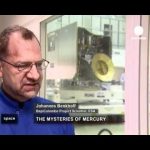
Mercury has always been something of a puzzle for planetary scientists. Its close position to the Sun means it is very difficult to observe, but now a series of satellites is getting up close to this fascinating planet. The European Space Agency’s BepiColombo mission is among them, and it will offer an unprecedented level of information about the mysterious world of Mercury.
YouTube Space Lab is a campaign initiated by YouTube, NASA, Space Adventures and Lenovo that challenges students around the world to design a science experiment for the International Space Station.
The winning experiments will be conducted in space on the International Space Station, making it the Universe’s largest science lesson, streamed live for the world to see via YouTube.
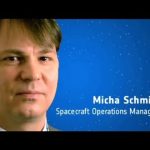
Micha Schmidt is a Spacecraft Operations Manager at ESA. In this video he talks about his involvement in the Herschel project and the many phases of development that exist in all ESA projects. Micha also talks about his fascination for space as a boy and what a great experience it has been to live in various European countries whilst working for ESA.
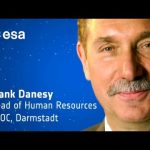
‘How do I become an astronaut?’ is a question that Frank Danesy has been asked many, many times. In this video Frank talks about the qualities needed to become an astronaut, the selection campaigns and the rigorous training involved for the lucky few who are eventually chosen.
Help Keep PTSOS Going, Click Here: https://www.gofundme.com/ptsos
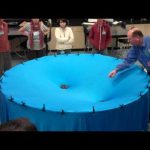
Dan Burns explains his space-time warping demo at a PTSOS workshop at Los Gatos High School, on March 10, 2012. Thanks to Shannon Range from the Gravity Probe B program for creating the original demonstration which he shared with Dan in 2004.
Information on how to make your own Spacetime Simulator can be found here: https://youtu.be/2JOf1ub9US0
In cooperation with NASA, Finland-based Rovio Entertainment, creator of the Angry Birds franchise, has announced its newest game, “Angry Birds Space.” Game developers have incorporated concepts of human space exploration into the new game. From the weightlessness of space to the gravity wells of nearby planets, players use physics as they explore the various levels of the game set both on planets and in microgravity. Aboard the International Space Station, Flight Engineer Don Pettit of NASA created a video using Angry Birds Space to explain how physics works in space, including demonstrating trajectories in microgravity by catapulting an Angry Bird through the space station.