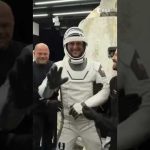
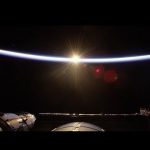
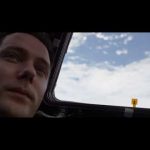
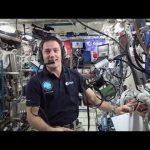
After 20 days in space, ESA project astronaut Sławosz Uznański-Wiśniewski and his Axiom Mission 4 crewmates returned safely to Earth on 15 July 2025.
#Ignis mission highlights:
🌍 230 orbits around Earth 📏 + 13 million km travelled 🧪+ 20 science experiments (13 led by Poland) 💯 All mission objectives fulfilled ⏰ 105 hours of orbital work 📈 + 25% extra activities completed
📹 European Space Agency (ESA) 📸 Axiom Space/SpaceX
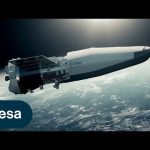
For 40 years, ESA has been shaping the future in space, while delivering crucial access to space for Europe. That work continues, as brand-new rockets are set to take flight: some reusable, some carbon-neutral, with hybrid propulsion, two and three stages, small, large, crewed and uncrewed, to Earth orbit and deep space, the journey continues.
All of these missions are currently in development in Europe and will ensure our continued ability to explore beyond our own home, while looking back to learn more about it.
This, is the future of space exploration.
★ Subscribe: http://bit.ly/ESAsubscribe and click twice on the bell button to receive our notifications.
We are Europe’s gateway to space. Our mission is to shape the development of Europe’s space capability and ensure that investment in space continues to deliver benefits to the citizens of Europe and the world. Check out https://www.esa.int/ to get up to speed on everything space related.
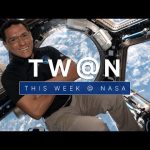
A new long-duration spaceflight record, our SpaceX Crew-6 mission is back home, and our asteroid sample return mission is on target … a few of the stories to tell you about – This Week at NASA! Link to download this video: https://images.nasa.gov/details/A%20New%20Long-Duration%20Spaceflight%20Record%20on%20This%20Week%20@NASA%20%E2%80%93%20September%2015,%202023
Video Producer: Andre Valentine Video Editor: Andre Valentine Narrator: Andre Valentine Music: Universal Production Music Credit: NASA
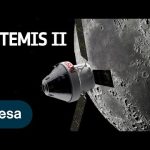
After the uncrewed Artemis I test flight, the Artemis II mission will have astronauts demonstrate what the Orion spacecraft – powered by a European Service Module – can do on its voyage around the Moon.
Two astronauts will fly on the second Artemis mission and take over controls to show how Orion handles at close-quarter flying. While in Earth orbit the spacecraft will detach from its second stage, fly away, turn around, approach the second stage and then fly away again – all using the European Service Module’s 33 thrusters.
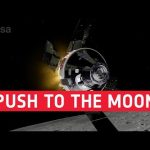
Whereas in the first Artemis mission the second stage fired Orion into its lunar orbit, for the second mission it will be the European Service Module that will give the spacecraft its final push to its voyage around the Moon.
The crew will fly Orion to 8889 km beyond the Moon before completing a lunar flyby and returning to Earth. The mission will take a minimum of eight days and will collect valuable flight test data.
The European Service Module is one of ESA’s many contributions to NASA’s Orion spacecraft and the Artemis programme that will send astronauts to the Moon and beyond. It provides electricity, water, oxygen and nitrogen as well as keeping the spacecraft at the right temperature and on course.
The European Service Module has 33 thrusters, 11 km of electrical wiring, four propellant and two pressure tanks that all work together to supply propulsion and everything needed to keep astronauts alive far from Earth – there is no room for error.
★ Subscribe: http://bit.ly/ESAsubscribe and click twice on the bell button to receive our notifications.
We are Europe’s gateway to space. Our mission is to shape the development of Europe’s space capability and ensure that investment in space continues to deliver benefits to the citizens of Europe and the world. Check out https://www.esa.int/ to get up to speed on everything space related.
The Space Launch System (SLS) rocket with the Orion spacecraft aboard lifted off at 07:47 CET from @NASA’s Kennedy Space Center in Florida, USA on 16 November 2022.
The most powerful rocket ever built sent NASA’s Orion spacecraft and ESA’s European Service Module (ESM) to a journey beyond the Moon and back. No crew will be on board Orion this time, and the spacecraft will be controlled by teams on Earth.
ESM provides for all astronauts’ basic needs, such as water, oxygen, nitrogen, temperature control, power and propulsion.
Much like a train engine pulls passenger carriages and supplies power, the European Service Module will take the Orion capsule to its destination and back.
We are Europe’s gateway to space. Our mission is to shape the development of Europe’s space capability and ensure that investment in space continues to deliver benefits to the citizens of Europe and the world. Check out https://www.esa.int/ to get up to speed on everything space related.
The European Service Module is ESA’s contribution to @NASA’s Orion spacecraft that will send astronauts to the Moon and beyond. It provides electricity, water, oxygen and nitrogen as well as keeping the spacecraft at the right temperature and on course.
We are Europe’s gateway to space. Our mission is to shape the development of Europe’s space capability and ensure that investment in space continues to deliver benefits to the citizens of Europe and the world. Check out https://www.esa.int/ to get up to speed on everything space related.
The Artemis I mission is almost ready for launch: it will send an uncrewed spacecraft beyond the Moon and back. Join this virtual Q&A to learn more about Europe’s contribution to the mission: ESA is overseeing the development of the European Service Module, that provides air, electricity and propulsion to the spacecraft. Participants to this media briefing include Josef Aschbacher, ESA Director General ; David Parker, ESA Director for Human and Robotic Exploration ; Jean-Marc Nasr, @Airbus EVP Space Systems and Marc Steckling, Airbus Head of Space Exploration.
We are Europe’s gateway to space. Our mission is to shape the development of Europe’s space capability and ensure that investment in space continues to deliver benefits to the citizens of Europe and the world. Check out https://www.esa.int/ to get up to speed on everything space related.
The Orion spacecraft with European Service Module will fly farther from Earth than any human-rated vehicle has ever flown before. This video gives an overview of the first mission – without astronauts – for Artemis, focussing on ESA’s European Service Module that powers the spacecraft.
The spacecraft will perform a flyby of the Moon, using lunar gravity to gain speed and propel itself 70 000 km beyond the Moon, almost half a million km from Earth – further than any human has ever travelled, where it will inject itself in a Distant Retrograde Orbit around the Moon.
On its return journey, Orion will do another flyby of the Moon before heading back to Earth.
The total trip will take around 20 days, ending with a splashdown in the Pacific Ocean without the European Service Module – it separates and burns up harmlessly in the atmosphere.
The second Artemis mission will have a simplified flight plan with only a flyby of the Moon but with four astronauts. The third Artemis mission will see astronauts taken to the lunar surface.
The European Service Module is ESA’s contribution to @NASA’s Orion spacecraft that will send astronauts to the Moon and beyond. It provides electricity, water, oxygen and nitrogen as well as keeping the spacecraft at the right temperature and on course.
The European Service Module has 33 thrusters, 11 km of electrical wiring, four propellant and two pressure tanks that all work together to supply propulsion and everything needed to keep astronauts alive far from Earth – there is no room for error.
★ Subscribe: http://bit.ly/ESAsubscribe and click twice on the bell button to receive our notifications.
We are Europe’s gateway to space. Our mission is to shape the development of Europe’s space capability and ensure that investment in space continues to deliver benefits to the citizens of Europe and the world. Check out https://www.esa.int/ to get up to speed on everything space related.
ESA and NASA are working hand in hand before the first Artemis mission to the Moon through a series of joint mission simulations. Teams based at the Erasmus Support Facility (ESF) at ESA’s ESTEC facility in The Netherlands, the German Space Operations Centre at ESA’s Columbus Control Centre in Oberphfaffenhofen and NASA’s Johnson Space Center in Houston are combining their expertise in a series of exercises to ensure a successful launch.
When it comes to simulations, it’s important that not everything goes perfectly right as it recreates – in real time – different stages of the mission to monitor the spacecraft’s position, propulsion, power, avionics and thermal properties. The European team, consisting of 40 people from ESA and industry, apply their considerable expertise from working on the European Service Module (ESM) to any unexpected problems. The ESM will provide power for the Orion spacecraft and propel it along its orbit to the Moon.
We are Europe’s gateway to space. Our mission is to shape the development of Europe’s space capability and ensure that investment in space continues to deliver benefits to the citizens of Europe and the world. Check out https://www.esa.int/ to get up to speed on everything space related.
Reflecting on a record-setting spaceflight, an update on prelaunch activities for Artemis I, and launching the first private astronaut mission to the International Space Station … a few of the stories to tell you about – This Week at NASA!
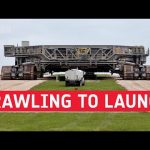
One of the many milestones in the leadup to the launch of Artemis is its rollout: this is when a crawler will carry the SLS rocket with Orion and ESM from the Vehicle Assembly Building to launchpad 39B. @NASA’s John Giles gives us a tour of the crawler and explains the adaptations made to this “wonderful piece of machinery” since it was first built for the Apollo programme in the 1960s. ESA is playing a key role in NASA’s Artemis programme, which will bring astronauts back to the Moon. The European Service Module – or ESM – will provide propulsion, power and thermal control for the Orion spacecraft.
We are Europe’s gateway to space. Our mission is to shape the development of Europe’s space capability and ensure that investment in space continues to deliver benefits to the citizens of Europe and the world. Check out https://www.esa.int/ to get up to speed on everything space related.
The European Space Agency is playing a vital role in humankind’s return to the Moon. In a few months @NASA will launch Artemis I from the Kennedy Space Center. The uncrewed mission will carry NASA’s Orion spacecraft incorporating ESA’s European Service Module (ESM-1), built and tested by Airbus Bremen, in Germany, with the help of 10 European nations. ESM-1’s main engine and 32 thrusters will propel Orion into orbit around the Moon and return it to Earth.
As Artemis I prepares for launch, the second European Service Module (ESM-2) is about to ship to the US with ESM-3 also currently under construction. The second Artemis mission, however, has a crucial difference: it will carry four astronauts for a lunar flyby. ESM-2 will provide propulsion, power, oxygen, water and life support as well as controlling the temperature in the orbiting crew module. ESM-3 will go one step further and put the first person on the Moon for 50 years.
We are Europe’s gateway to space. Our mission is to shape the development of Europe’s space capability and ensure that investment in space continues to deliver benefits to the citizens of Europe and the world. Check out https://www.esa.int/ to get up to speed on everything space related.
A record-breaking spaceflight for the Crew-1 mission, swearing-in NASA’s new administrator, and the anniversary of the first American in space … a few of the stories to tell you about – This Week at NASA!
Watch the replay of the briefing to media representatives to learn more about the next spaceflight of ESA astronaut Samantha Cristoforetti.
During the event, Samantha was joined by ESA Director General Josef Aschbacher, ESA Director of Human and Robotic Exploration David Parker, and Italian space agency president Giorgio Saccoccia.
Samantha is a member of ESA’s astronaut class of 2009. During her firs mission ‘Futura’ in 2014t m–15, she spent 200 days in space, carrying out science and operations on the International Space Station as a flight engineer for Expeditions 42 and 43. She now looks forward to returning to the ISS, her “home away from home.”
★ Subscribe: http://bit.ly/ESAsubscribe and click twice on the bell button to receive our notifications.
We are Europe’s gateway to space. Our mission is to shape the development of Europe’s space capability and ensure that investment in space continues to deliver benefits to the citizens of Europe and the world. Check out https://www.esa.int/ to get up to speed on everything space related.
From the @Airbus integration halls in Bremen, Germany, this replay of a live event shows a sneak peek of the two European Service Modules that will power astronauts to the Moon and back as part of @NASA’s Orion spacecraft.
Orion is NASA’s next exploration spacecraft to send astronauts farther into space than ever before, beyond the Moon to asteroids and even Mars.
ESA has contracted and is overseeing the development of the European Service Module, the part of the Orion spacecraft that provides air, electricity and propulsion. Much like a train engine pulls passenger carriages and supplies power, the European Service Module will power the Orion crew module to its destination and back to Earth.
The programme includes Andreas Hammer, Head of @Airbus Defence and Space Exploration showing the European Service Modules in production, ESA Director General Jan Wörner announcing future developments, a statement by ESA’s head of European Service Module programme Philippe Deloo, a statement by Airbus head of European Service Module programme Didier Radola, a Moon missions overview with ESA astronaut Alexander Gerst and ESA’s head of Space Transportation Nico Dettmann on how ESA is building Orion with industry.
★ Subscribe: http://bit.ly/ESAsubscribe and click twice on the bell button to receive our notifications.
We are Europe’s gateway to space. Our mission is to shape the development of Europe’s space capability and ensure that investment in space continues to deliver benefits to the citizens of Europe and the world. Check out https://www.esa.int/ to get up to speed on everything space related.
The Orion spacecraft with European Service Module will fly farther from Earth than any human-rated vehicle has ever flown before. This video gives an overview of the first mission – without astronauts – for Artemis, focussing on ESA’s European Service Module that powers the spacecraft.
The spacecraft will perform a flyby of the Moon, using lunar gravity to gain speed and propel itself 70 000 km beyond the Moon, almost half a million km from Earth – further than any human has ever travelled.
On its return journey, Orion will do another flyby of the Moon before heading back to Earth. The total trip will take around 20 days, ending with a splashdown in the Pacific Ocean without the European Service Module – it separates and burns up harmlessly in the atmosphere.
The second Artemis mission will have a similar flight plan but with astronauts. The third Artemis mission will see astronauts taken to the lunar surface.
The European Service Module is ESA’s contribution to NASA’s Orion spacecraft that will send astronauts to the Moon and beyond. It provides electricity, water, oxygen and nitrogen as well as keeping the spacecraft at the right temperature and on course.
The European Service Module has 33 thrusters, 11 km of electrical wiring, four propellant and two pressure tanks that all work together to supply propulsion and everything needed to keep astronauts alive far from Earth – there is no room for error.
★ Subscribe: http://bit.ly/ESAsubscribe and click twice on the bell button to receive our notifications.
We are Europe’s gateway to space. Our mission is to shape the development of Europe’s space capability and ensure that investment in space continues to deliver benefits to the citizens of Europe and the world. Check out https://www.esa.int/ to get up to speed on everything space related.
With around two and half hours set aside for exercise every day, skipping the gym is not an option for astronauts on the International Space Station. ESA’s team of astronaut trainers are responsible for developing specialised training programmes to prepare astronauts for spaceflight and combat the effects of microgravity on the body.Astronaut Fitness Expert, Dr. Nora Petersen, discusses training astronauts and how the programme may change for future missions to the Moon and Mars.
We are Europe’s gateway to space. Our mission is to shape the development of Europe’s space capability and ensure that investment in space continues to deliver benefits to the citizens of Europe and the world. Check out http://www.esa.int/ESA to get up to speed on everything space related.
Space travel is hard and unforgiving, but we have never been more ready to meet the unknown.
Team members from NASA’s #Artemis program share the risks and rewards of this next era of exploration. Artemis will push the boundaries of human exploration and send the first woman and next man to the Moon by 2024, preparing for missions to Mars and beyond.
Our Artemis program will return humans to the Moon by 2024. Artemis I, the first Artemis mission, will test all of the human rated systems in deep space — including the Orion spacecraft and Space Launch System rocket. This is its 26 day journey… in 30 seconds.
The primary objective of Apollo 11 was to complete a national goal set by President John F. Kennedy on May 25, 1961: perform a crewed lunar landing and return to Earth. The success of the mission was celebrated globally and united all humankind. This video shows the parades that celebrated the successful return of Neil Armstrong, Michael Collins and Buzz Aldrin.
Our astronaut Thomas Pesquet is back at NASA’s Johnson Space Center in Houston, USA.
His first mission to the International Space Station ended in June 2017. He is now working to prepare for a his next assignment. Currently Thomas is sharing his spaceflight experience with other astronauts and engineers, acting for example as a CapCom.
We are Europe’s gateway to space. Our mission is to shape the development of Europe’s space capability and ensure that investment in space continues to deliver benefits to the citizens of Europe and the world. Check out http://www.esa.int/ESA to get up to speed on everything space related.
Visions and clips from ESA’s future for human spaceflight and robotic exploration. Exploring is about visiting new places and coming back with new experiences and knowledge to help us on Earth.
Our strategy includes three destinations where humans will work with robots to gather new knowledge: low-Earth orbit on the International Space Station, the Moon – our closest neighbour, and our third destination Mars.
The exploration programme includes Europe’s service module for NASA’s Orion spacecraft around the Moon, a landing on the Moon with Roscomos’ Luna lander and ESA’s Exomars rover on Mars.
A deep-space gateway farther afield than the International Space Station is considered as a springboard for exploration beyond the Moon.
ESA’s vision for human spaceflight and robotic exploration is part of humanity’s road to the stars. Exploring is about visiting new places and coming back with new experiences and knowledge to help us on Earth.
Our strategy includes three destinations where humans will work with robots to gather new knowledge: low-Earth orbit on the International Space Station, the Moon – our closest neighbour, and our third destination Mars.
The exploration programme includes Europe’s service module for NASA’s Orion spacecraft around the Moon, a landing on the Moon with Roscomos’ Luna lander and ESA’s Exomars rover on Mars.
A deep-space gateway farther afield than the International Space Station is considered as a springboard for exploration beyond the Moon.
Thomas Pesquet reflects on living on the International Space Station after his six-month Proxima mission. Beyond science and technology the voyage often reveals more than the destination. A message for all humans.
As Marcel Proust wrote in his book The Prisoner: “The only true voyage of discovery, … would be not to visit strange lands but to possess other eyes, to behold the universe through the eyes of another, of a hundred others, to behold the hundred universes that each of them beholds, that each of them is.”
The footage was shot with the Space Station’s highest resolution camera at resolutions between 4K and 6K and available here in Ultra High Definition (3840×2160 pixels). Download the full high-resolution file from ESA’s video archive: http://www.esa.int/spaceinvideos/Videos/2017/05/New_eyes
During Proxima, Thomas performed around 50 scientific experiments for ESA and France’s space agency CNES as well as take part in many research activities for the other Station partners.
The mission is part of ESA’s vision to use Earth-orbiting spacecraft as a place to live and work for the benefit of European society while using the experience to prepare for future voyages of exploration further into the Solar System.
Thomas Pesquet will shortly be returning to Earth after a six-month stay onboard the International Space Station. Named Proxima, this mission is the ninth long-duration flight for an ESA astronaut.
Thomas’s in-orbit schedule includes around 50 experiments for ESA and the French Space Agency CNES, and he’s so far carried out two maintenance spacewalks alongside station commander Shane Kimbrough.
You, together with your 500 million fellow citizens from ESA’s 20* European member nations, are the collective owners of one of the world’s leading space agencies.
The European Space Agency is an intergovernmental organisation, a cooperative coming together of its Member States in their national interest and common good.
This new video offers a quick introduction: Europe, meet ESA.
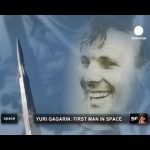
Esta semana, há 50 anos, pela primeira vez na história da humanidade, um homem deixou a Terra e viajou para o Espaço. Quem foi Yuri Gagarin? Como é que aquele voo mudou a sua vida e a da humanidade?
Hace 50 años, por primera vez en la historia, un hombre viajó al espacio. ¿Quién era Yuri Gagarin? ¿Cómo fue el vuelo que cambió su vida y el devenir de la humanidad?
50 years ago, for the first time in history, a human travelled into space. Who was Yuri Gagarin ? How did this flight change his life and the future of humankind?
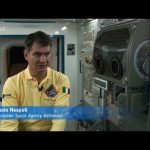
ESA’s Director of Human Spaceflight Simonetta Di Pippo together with ESA’s astronaut Paolo Nespoli introduce the MagISStra mission which is going to be launched in December 2010 from Baikonur Cosmodrome, Kazakhstan. This is the third six-month duration mission a European astronaut takes part to.
Frank De Winne is answering a question on the ISS submitted by Paul from Portugal: When you do your EVA (space walk), can you feel the speed (28.000 Km/h) at which the ISS is travelling?
Space touches us all on Earth – it is used for protecting our environment, for improving our everyday lives, for safety and security, and for stimulating our need for knowledge. Space is a key asset for Europe to face global challenges, for boosting our economic growth, for building our future.
Space touches us all on Earth – it is used for protecting our environment, for improving our everyday lives, for safety and security, and for stimulating our need for knowledge. Space is a key asset for Europe to face global challenges, for boosting our economic growth, for building our future.
Capturing the excitement of three highlights of European manned spaceflight in 2007 and 2008, these clips feature Paolo Nespoli’s STS-120 flight, the Columbus laboratory, and finally the ATV Jules Verne, Europe’s first space ferry.