We are Europe’s gateway to space. Our mission is to shape the development of Europe’s space capability and ensure that investment in space continues to deliver benefits to the citizens of Europe and the world. Check out http://www.esa.int/ESA to get up to speed on everything space related.
Where do we come from? Where are we going? Why are things the way they are? Space science and exploration are entering an ambitious new era, spanning the hunt for extraterrestrial planets and detecting the fundamental nature of our Universe to roving on Mars and returning to the Moon. However, we’re not simply acquiring new knowledge – we’re helping bring the benefits of these discoveries to European industry, through commercialisation in Earth orbit, integration with new space actors and cooperation on a global scale.
★ Subscribe: http://bit.ly/ESAsubscribe and click twice on the bell button to receive our notifications.
We are Europe’s gateway to space. Our mission is to shape the development of Europe’s space capability and ensure that investment in space continues to deliver benefits to the citizens of Europe and the world. Check out http://www.esa.int/ESA to get up to speed on everything space related.
Lunar exploration runs in the family for the Petros. NASA lunar scientist Noah Petro interviews his father, Denis, about his work as an Apollo program engineer. In a heartfelt conversation, Noah and his dad examine the human impact of the momentous Apollo 11 mission and their shared passion for science and learning.
Ginny from Danville, Kentucky, tells a story about celebrating the Moon landing with her childhood friends and a secret lemonade stand.
This video is public domain and along with other supporting visualizations can be downloaded from the Scientific Visualization Studio at: https://svs.gsfc.nasa.gov/13204
On July 20, 1969, humans walked on another world for the first time in history, achieving the goal that President John F. Kennedy had set in 1961, before Americans had even orbited the Earth. After a landing that included dodging a lunar crater and boulder field just before touchdown, Apollo 11 astronauts Neil Armstrong and Buzz Aldrin explored the area around their lunar landing site for more than two hours.
When the lunar module landed at 4:17 p.m EDT, only 30 seconds of fuel remained. Armstrong radioed “Houston, Tranquility Base here. The Eagle has landed.” Mission control erupted in celebration as the tension breaks, and a controller tells the crew “You got a bunch of guys about to turn blue, we’re breathing again.”
Our alien friend Paxi went to visit American astronaut Anne McClain on board the International Space Station. Anne explains some of the mental challenges of being an astronaut on the ISS.
★ Subscribe: http://bit.ly/ESAsubscribe and click twice on the bell button to receive our notifications.
We are Europe’s gateway to space. Our mission is to shape the development of Europe’s space capability and ensure that investment in space continues to deliver benefits to the citizens of Europe and the world. Check out http://www.esa.int/ESA to get up to speed on everything space related.
A European drill and sample analysis package will search for water ice and other chemicals under the lunar surface onboard the Russian-led Luna-27 mission to the South Polar region of the Moon.
Operating at temperatures of less than –100 °C and drilling over one metre down, Prospect first needs to penetrate the lunar surface. This video features a series of drilling tests carried out at the Leonardo facilities in Italy in 2019.
Prospect includes a miniature laboratory called ProSPA which will analyse the soil samples retrieved by the drill. Precise measurements will help unearth the secrets of the Moon’s history and indicate whether future explorers could use lunar resources on their missions to help set up a lunar base.
The lunar south polar region is of great interest to lunar researchers and explorers because the low angle of the Sun over the horizon leads to areas of partial or even complete shadow. These shadowed areas and permanently dark crater floors, where sunlight never reaches, are believed to hide water ice and other frozen substances that could be analysed to better understand the natural processes that formed them, and used to produce resources such as oxygen and propellant in the future.
We are Europe’s gateway to space. Our mission is to shape the development of Europe’s space capability and ensure that investment in space continues to deliver benefits to the citizens of Europe and the world. Check out http://www.esa.int/ESA to get up to speed on everything space related.
Celebrating the 50th anniversary of Apollo 11, moving toward the first flight of our Artemis Program, and a new crew to the space station on an historic date for humans in space … a few of the stories to tell you about – This Week at NASA!
This video is available for download from NASA’s Image and Video Library: https://images.nasa.gov/details-NHQ_2019_0722_Celebrating%20the%2050th%20anniversary%20of%20Apollo%2011%20on%20This%20Week%20@NASA%20%E2%80%93%20July%2022,%202019.html
The ride to the International Space Station sees astronauts launched on top of a rocket fuelled by 300 tonnes of propellant. Where on Earth do astronauts take off? When do they experience weightlessness for the first time? And how long does the trip take?
Watch in just over a minute the events from launch to docking. This video is based on a training lesson for ESA astronauts, and it features footage taken from inside the Soyuz spacecraft.
We are Europe’s gateway to space. Our mission is to shape the development of Europe’s space capability and ensure that investment in space continues to deliver benefits to the citizens of Europe and the world. Check out http://www.esa.int/ESA to get up to speed on everything space related.
We Go: To the Moon and on to Mars. Our generation, the Artemis generation, will explore farther than we’ve ever gone before. The Artemis program will send the first woman and next man to walk on the surface of the Moon and build a sustainable base to prepare for missions to Mars and beyond.
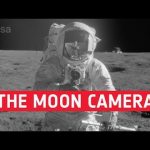
Which camera to send to the Moon? The iconic images taken with the Hasselblad 500 series captivated the world. Today, Hasselblad cameras are synonymous with the Apollo missions. We visited Gothenburg to find out how a Swedish camera made it to the Moon.
We are Europe’s gateway to space. Our mission is to shape the development of Europe’s space capability and ensure that investment in space continues to deliver benefits to the citizens of Europe and the world. Check out http://www.esa.int/ESA to get up to speed on everything space related.
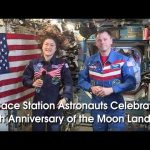
NASA Astronauts Christina Koch and Nick Hague join the world in celebrating the 50th anniversary of the Apollo 11 Moon landing — only, they do it from around 250 miles (~400 km) above the Earth’s surface on board the International Space Station.
The accomplishments of the Apollo program did not only take humans farther than ever before, but they have prepared us to take humans even farther. Learn more about our plans to bring humans to the Moon, Mars and beyond with our Artemis program: https://www.nasa.gov/specials/moon2mars/
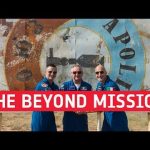
ESA astronaut Luca Parmitano is about to be launched to the International Space Station from the Baikonur Cosmodrome in Kazakhstan.
The six-month Beyond mission will be the Italian astronaut’s second flight to the Space Station.
He will be conducting an extensive series of scientific experiments and has multiple spacewalks planned to repair the antimatter hunter Alpha Magnetic Spectrometer-02. During the second half of his expedition, Luca will become the third European commander of the Space Station.
We are Europe’s gateway to space. Our mission is to shape the development of Europe’s space capability and ensure that investment in space continues to deliver benefits to the citizens of Europe and the world. Check out http://www.esa.int/ESA to get up to speed on everything space related.
We are Europe’s gateway to space. Our mission is to shape the development of Europe’s space capability and ensure that investment in space continues to deliver benefits to the citizens of Europe and the world. Check out http://www.esa.int/ESA to get up to speed on everything space related.
What does artificial intelligence mean for education? Will A.I. replace teachers? What’s a student’s educational journey look like with more A.I. in the classroom?
Ryan M. Cameron is a higher education administrator and artificial intelligence scholar. Give this episode a listen to learn about the A.I. developments happening right now in classrooms across the world. And get a glimpse into the future of the A.I./teacher/student relationship.
Plus, Ryan and I discuss what artificial intelligence really is, should we be afraid of A.I., and what happens if an A.I. goes around our kill switches!
“Machine Learning: Living in the Age of AI,” examines the extraordinary ways in which people are interacting with AI today. Hobbyists and teenagers are now developing tech powered by machine learning and WIRED shows the impacts of AI on schoolchildren and farmers and senior citizens, as well as looking at the implications that rapidly accelerating technology can have. The film was directed by filmmaker Chris Cannucciari, produced by WIRED, and supported by McCann Worldgroup.
Also, check out the free WIRED channel on Roku, Apple TV, Amazon Fire TV, and Android TV. Here you can find your favorite WIRED shows and new episodes of our latest hit series Tradecraft.
ABOUT WIRED
WIRED is where tomorrow is realized. Through thought-provoking stories and videos, WIRED explores the future of business, innovation, and culture.
Machine Learning: Living in the Age of AI | A WIRED Film
The International Space Station is open for commercial business, another space station resupply mission successfully completed, and making a virtual landing on the Moon … a few of the stories to tell you about – This Week at NASA!
This video is available for download from NASA’s Image and Video Library: https://images.nasa.gov/details-NHQ_2019_0607_Opening%20the%20International%20Space%20Station%20for%20Commercial%20Business%20on%20This%20Week%20@NASA%20%E2%80%93%20June%207,%202019.html
The first commercial robotic lunar landers to support our Artemis program, discussing our exploration goals, and a breakdown of the Apollo Moon landings … a few of the stories to tell you about – This Week at NASA!
This video is available for download from NASA’s Image and Video Library: https://images.nasa.gov/details-NHQ_2019_0531_The%20First%20Commercial%20Moon%20Landing%20Service%20Providers%20on%20This%20Week%20@NASA%20%E2%80%93%20May%2031,%202019.html
Did you know there are six humans living in space, and you can see their home from your home? NASA astronaut Nick Hague shares how you can use https://spotthestation.nasa.gov/ to find out when the International Space Station will be visible from your town!
Fifty years ago, Apollo 10 launched from Cape Kennedy on May 18, 1969. The Apollo 10 mission encompassed all aspects of an actual crewed lunar landing, except the landing. It was the first flight of a complete, crewed Apollo spacecraft to operate around the Moon. The crew members were Commander Thomas Stafford, Command Module Pilot John Young and Lunar Module Pilot Eugene Cernan. Objectives included a scheduled eight-hour lunar orbit of the separated lunar module, or LM, and descent to about nine miles off the moon’s surface before ascending for rendezvous and docking with the command and service module, or CSM, in about a 70-mile circular lunar orbit. Pertinent data to be gathered in this landing rehearsal dealt with the lunar potential, or gravitational effect, to refine the Earth-based crewed spaceflight network tracking techniques, and to check out LM programmed trajectories and radar, and lunar flight control systems. Twelve television transmissions to Earth were planned. All mission objectives were achieved.
One of the causalities of climate change is the diminishing ice cover, affecting our planet in a number of ways. Our satellites observe the planet’s cryosphere and provide key information to understand and respond to global thawing.
★ Subscribe: http://bit.ly/ESAsubscribe and click twice on the bell button to receive our notifications.
We are Europe’s gateway to space. Our mission is to shape the development of Europe’s space capability and ensure that investment in space continues to deliver benefits to the citizens of Europe and the world. Check out http://www.esa.int/ESA to get up to speed on everything space related.
NEW MASTERCLASS EACH WEEK: http://londonreal.tv/masterclass-yt
David Icke is an English writer and public speaker, known since the 1990s as a professional conspiracy theorist calling himself a “full time investigator into WHO and WHAT is really controlling the world.”
As a former footballer, BBC sports television presenter, and spokesman for the Green Party, his interview on Terry Wogan’s show in 1991 turned him from a respected household name into a laughingstock across the country.
Now, he is the author of over 20 books and over 10 DVDs, and have lectured in over 25 countries, speaking live for up to 10 HOURS to huge audiences, filling stadiums like Wembley Arena.
His new movie Renegade, is the first ever feature film about his life and work.
About London Real:
Founded by Brian Rose in 2011. London Real is the curator of people worth watching. Our mission is to promote personal transformation through inspiration, self-discovery and empowerment.
We feature interesting guests with fascinating stories and unique perspectives on life. We aim to take viewers on a journey through the lives of others and ultimately inspire them to embark on one of their own.
Our alien friend Paxi, went to visit American astronaut Anne McClain on board the International Space Station. Anne explains to Paxi how astronauts move around in weightlessness on the ISS.
Credits: ESA/NASA
★ Subscribe: http://bit.ly/ESAsubscribe and click twice on the bell button to receive our notifications.
ESA is Europe’s gateway to space. Our mission is to shape the development of Europe’s space capability and ensure that investment in space continues to deliver benefits to the citizens of Europe and the world. Check out http://www.esa.int/ESA to get up to speed on everything space related.
What could be the first sound of a marsquake, helping astronauts bust the dust on future missions to the Moon, and celebrating our home planet … a few of the stories to tell you about – This Week at NASA!
This video is available for download from NASA’s Image and Video Library: https://images.nasa.gov/details-NHQ_2019_0426_The%20First%20Possible%20Sound%20of%20a%20Marsquake%20on%20This%20Week%20@NASA%20%E2%80%93%20April%2026,%202019.html
Thanks for watching The Science KID “Artificial Intelligence In the Medical Field,” explaining what AI is, therapeutic robots, virtual presence, virtual reality, financial costs, death rates, etc.
Recommended Grade: 3rd, 4th, 5th, 6th, 7th, 8th, High School Science
Make sure to subscribe if you haven’t yet, what are you waiting for?!
The Science Kid is a scientific genius in a 13-year-old body! I post Science Videos on about everything Science. I hope you enjoy 😊 Remember “Science Can Always Be FUN!”
Accelerating our return to the Moon, another spacewalk outside the International Space Station, and testing our Mars Helicopter … a few of the stories to tell you about – This Week at NASA!
A spacewalk outside the space station, testing a motor critical to the safety of Orion, and some surprising findings about asteroid Bennu … a few of the stories to tell you about – This Week at NASA!
This video is available for download from NASA’s Image and Video Library: https://images.nasa.gov/details-A%20Spacewalk%20Outside%20The%20International%20Space%20Station%20on%20This%20Week%20@NASA%20%E2%80%93%20March%2022,%202019.html
NASA is going to the Moon and on to Mars, in a measured, sustainable way. Working with U.S. companies and international partners, NASA will push the boundaries of human exploration forward to the Moon. NASA is working to establish a permanent human presence on the Moon within the next decade to uncover new scientific discoveries and lay the foundation for private companies to build a lunar economy.
Right now, NASA is taking steps to begin this next era of exploration. #Moon2Mars
Satellites provides us with large volumes of spatio-temporal data, creating great opportunities for innovative entrepreneurs. ESA’s Business Applications programme is supporting European projects to turn these data into solutions for a wide range of socio-economic situations, as well as jobs and products. This video highlights three concrete examples: automated trains, rehabilitation and money transfers in isolated areas.
★ Subscribe: http://bit.ly/ESAsubscribe and click twice on the bell button to receive our notifications.
ESA is Europe’s gateway to space. Our mission is to shape the development of Europe’s space capability and ensure that investment in space continues to deliver benefits to the citizens of Europe and the world. Check out http://www.esa.int/ESA to get up to speed on everything space related.
Everybody is talking about 5G, the new generation of wireless communication. We are at the start of a revolution in connectivity for everything, everywhere, at all times.
Space plays at important roll in this revolution. We need satellites to ensure businesses and citizens can benefit smoothly from 5G.
★ Subscribe: http://bit.ly/ESAsubscribe and click twice on the bell button to receive our notifications.
ESA is Europe’s gateway to space. Our mission is to shape the development of Europe’s space capability and ensure that investment in space continues to deliver benefits to the citizens of Europe and the world. Check out http://www.esa.int/ESA to get up to speed on everything space related.
ESA is Europe’s gateway to space. Our mission is to shape the development of Europe’s space capability and ensure that investment in space continues to deliver benefits to the citizens of Europe and the world. Check out http://www.esa.int/ESA to get up to speed on everything space related.
Take a tour of the interior of SpaceX’s Crew Dragon, targeted to launch on its first (uncrewed) demonstration flight on March 2, 2019. Crew Dragon is designed to transport up to four astronauts for NASA missions, along with critical cargo and supplies, to the International Space Station as part of NASA’s Commercial Crew Program.
The Crew Dragon features solar arrays affixed to the side of the spacecraft’s trunk, a launch escape system that will allow crew members to escape an anomaly at any point during flight, a large hatch and windows and a redesigned outer mold line to enhance crew comfort. The first uncrewed flight is an important step in returning human launches on American rockets and spacecraft to the space station from U.S. soil since 2011.
On the latest Watch This Space, NASA administrator Jim Bridenstine looks back at 15 years of discoveries by our Opportunity rover on Mars, and forward to new commercial partnerships for missions to the Moon. Learn how we’ll work with American companies to design and develop human lunar landers and reusable systems so we can return to the Moon — to stay.
This video is available for download from NASA’s Image and Video Library: https://images.nasa.gov/details-NHQ_2019_0221_Watch%20This%20Space%20with%20NASA%20Administrator%20Jim%20Bridenstine%20with%20the%20latest%20from%20the%20Moon%20and%20Mars.html
ESA is Europe’s gateway to space. Our mission is to shape the development of Europe’s space capability and ensure that investment in space continues to deliver benefits to the citizens of Europe and the world. Check out http://www.esa.int/ESA to get up to speed on everything space related.
Microsoft’s AI for Good initiative empowers people around the world working to solve humanitarian issues and create a more sustainable and accessible world. Learn how SilviaTerra is empowering conservationists, government organizations and land owners to inventory forests for ecological social and economic health using AI.
No matter what team you’re rooting for, our technology is helping you play the game. Our discoveries off the planet have developed all sorts of equipment on the field — from shock-absorbent foam in helmets to retractable stadium roofs. 🏈 Go NASA!
The Moon has been circling the Earth for over four billion years, but where did it come from?
In this video, Ralf Jaumann, planetary geologist at the German Aerospace Centre, DLR, discusses the four theories that could explain the origin of the Earth-Moon system.
There are four theories about the origin of the Earth-Moon system.
The first is that Earth captured a celestial body in its orbit. Another possibility is that a rapidly rotating Earth could have thrown material out to form the Moon around it. A third theory is that Earth and the Moon formed at the same time out of the same material. Today, most scientists believe the Moon is ‘Earth’s child’ – a large body collided with Earth, destroying our planet’s mantle and sending material into orbit from which the Moon formed. This ‘big splash’ theory would explain why the Moon’s rocks are similar to those on Earth.
ESA is Europe’s gateway to space. Our mission is to shape the development of Europe’s space capability and ensure that investment in space continues to deliver benefits to the citizens of Europe and the world. Check out http://www.esa.int/ESA to get up to speed on everything space related.
50 years ago, three NASA astronauts embarked on a journey that would take them “Round the moon and back”. The Apollo 8 mission proved the performance of the command and service module. This historic mission launched on December 21, 1968 to demonstrate a lunar trajectory and was the first crewed launch of the Saturn V rocket. On Christmas Eve, Frank Borman, Jim Lovell, and Bill Anders were the first humans to orbit the Moon and the first to see an Earthrise above its surface.
It’s 5 a.m. on a normal September day and #NASAExplorers have gathered in a California field to watch a rocket launch light up the pre-dawn sky. On board the rocket is a satellite more than 10 years in the making, with one single instrument that will revolutionize the study of ice on Earth. Join the team in the excitement and stress of watching ICESat-2 launch into space and begin its work measuring our home planet.
Launched in December 2013, ESA’s Gaia satellite has been scanning the sky to perform the most precise stellar census of our Milky Way galaxy, observing more than one billion stars and measuring their positions, distances and motions to unprecedented accuracy.
The second Gaia data release, published in April, has provided scientists with extraordinary data to investigate the formation and evolution of stars in the Galaxy and beyond, giving rise to hundreds of scientific studies that are revolutionising our view of the cosmos.
Credits: ESA / CNES / Arianespace; ESA / Gaia / DPAC; Gaia Sky / S. Jordan / T. Sagristà; Koppelman, Villalobos and Helmi; Marchetti et al. 2018; NASA / ESA / Hubble; ESO, M. Kornmesser, L. Calçada
★ Subscribe: http://bit.ly/ESAsubscribe and click twice on the bell button to receive our notifications.
ESA is Europe’s gateway to space. Our mission is to shape the development of Europe’s space capability and ensure that investment in space continues to deliver benefits to the citizens of Europe and the world. Check out http://www.esa.int/ESA to get up to speed on everything space related.
This video recorded during the Rosetta Science Operations Scheduling Legacy Workshop in October 2017, show university students learning how science operations scheduling is done at ESA and what tools are used. Exercises were performed with the support of the experts who did the scheduling for the real mission using the actual science operations scheduling software (MAPPS) that produced the final experiment commanding for the spacecraft.
ESA Academy’s training courses are part of the Training and Learning Programme that aims at complementing the standard academic formation in space-related disciplines offered in the ESA Member and Associate States’ universities. The goal is to better prepare the future workforce for the space community, and to show students the many opportunities offered by space research, facilities, and applications for science and engineering in fields unrelated to space.
ESA is Europe’s gateway to space. Our mission is to shape the development of Europe’s space capability and ensure that investment in space continues to deliver benefits to the citizens of Europe and the world. Check out http://www.esa.int/ESA to get up to speed on everything space related.