NASA Administrator Charlie Bolden visited Marshall Space Flight Center to see work being done on the avionics and flight software for NASA’s Space Launch System rocket. Marshall’s System Integration Lab conducts flight simulations of the avionics system — including hardware, software and operating systems — that will guide the launch vehicle, to see how the SLS will perform during launch. Also, Dream Chaser agreement expanded, ISS crew returns safely, Senate Youth Program, More high marks for Morpheus, Asteroid Data Hunter challenge, SXSW Interactive and more!
Category: Astronomie
-
Mike Oldfield sends greeting to ESA and the Sentinel team
World-renowned musician Mike Oldfield, composer of the music used in ESA’s Sentinel-1 video, is a big space fan. From his home, Mike and his two sons (the future generation of space scientists and explorers) sent this message to ESA and the Sentinel-1 team with best wishes for the upcoming launch.
Sentinel-1 is an important mission, its launch will mark a new shift in Earth observation, focusing on operational missions to support users for decades to come. This first mission carries an advanced radar sensor to image Earth’s surface through cloud and rain and regardless of whether it is day or night.
Video copyright: ESA/M. Oldfield
Sentinel written by M. Oldfield
Graphics: ESA/ATG medialab
Music: copyright EMI Virgin -
Earth from Space: Special edition
Discover more about our planet with the Earth from Space video programme. In this special edition, ESA astronaut Luca Parmitano joins the show to share his view of Earth from space while on the International Space Station.
More Earth from Space videos:
http://www.youtube.com/playlist?list=PL221A6233C4B4DD9E
More videos from Luca’s Volare Mission:
http://www.youtube.com/playlist?list=PLbyvawxScNbsm55jUs-r5JdC1vYI9qD8A -
NASA Astronaut Mike Massimino on “Gravity” Award Win
NASA Astronaut Mike Massimino congratulates the filmmakers and actors of the Academy Award-winning film “Gravity” on their achievement.
-
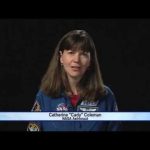
NASA Astronaut Cady Coleman on ‘Gravity’ Oscar Win
NASA Astronaut Cady Coleman congratulates the cast and crew of the Academy Award-winning film “Gravity” on their achievement. Coleman lived aboard the International Space Station during Expedition 27, while “Gravity” was being filmed, and spoke with the film’s star, Sandra Bullock, from space. Coleman thanks the filmmakers for “sharing that world and that view with everyone.”
-
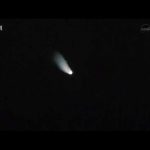
NASA and the Japanese Aerospace Agency Launch GPM Satellite
From the Tanegashima Space Center near the southernmost tip of Japan, NASA and the Japanese Aerospace Exploration Agency (JAXA) launched a joint mission to study global measurements of rainfall and snowfall abroad JAXA’s H-IIA rocket. The Global Precipitation Measurement (GPM) Core Observatory is a new NASA built science satellite that will link data from a constellation of current and planned satellites and produce the most precise observations of rain and snow every three hours from anywhere on the globe. The GPM Core Observatory will fly 253 miles (407 kilometers) above Earth in an orbit inclined at 65-degrees to the equator and will begin normal operations in about 60 days after launch. Data will be downlinked through NASA’s Tracking and Data Relay Satellite System to the agency’s Goddard Space Flight Center’s Precipitation Processing Center in Greenbelt, Md., where it will be processed and distributed over the Internet.
-
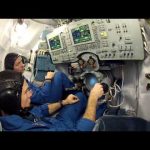
Soyuz Simulator
Learning to fly the Soyuz with ESA astronauts Andreas Mogensen and Thomas Pesquet in the Soyuz simulator at Star City, near Moscow. Latest installment from Andreas’ video diary during his training for a mission to the International Space Station in 2015.
-

ESA Euronews: Accidents and Asteroids
How real is the threat of an asteroid hitting Earth, and is there anything we can do to prevent it from happening? Asteroid impacts are nothing new. Only last year, one exploded over the city of Chelyabinsk in Russia injuring 1500 people and damaging some 7,000 buildings.
“It was a pretty nasty event, luckily nobody was killed, but it just shows the sort of force that these things have,” says Alan Harris, Senior Scientist, DLR Institute of Planetary Research Berlin.
While there was surprise nobody saw it coming, the asteroid itself wasn’t that big, measuring no more than 20 metres across. It was tricky to spot, arriving into Earth’s atmosphere backlit by the Sun.
In fact, much bigger threats lurk out in space. Just a few days ago another asteroid 270 metres wide passed near Earth. That kind of object could cause much more damage.
“Something with the size of a hundred metres for instance, which still isn’t very big, you’re talking about something that would fit into a football field, and that could actually completely destroy an urban area in the worst case. So those are the things that we’re really looking out for, and that we’re trying to find ways to tackle,” says Harris.
Action to address the asteroid threat is already underway. Earlier in February, space scientists and policy experts from all the major space-faring nations held talks to create a framework for action.
-
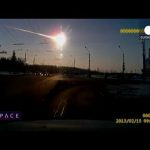
ESA Euronews: Enfrentar a ameaça dos asteroides
Qual é o perigo real das colisões de asteroides e satélites? A cidade de Chelyabinsk, na Rússia, viveu momentos dramáticos há um ano, com a explosão de um asteróide. O fenómeno deixou 15 pessoas feridas e mais de sete mil edifícios danificados. Foi surpreendente e ninguém estava à espera.
Não era um grande asteroide, com cerca de 20 metros de diâmetro, e entrou na atmosfera ofuscado pelo Sol. Há poucos dias, um asteroide com 270 metros de diâmetro passou perto da Terra.
O impacto de um objeto como este pode significar uma verdadeira catástrofe: “Algo com cerca de cem metros, por exemplo, que não é muito grande, estamos a falar de algo que cabe num campo de futebol, pode destruir por completo uma área urbana, no pior dos casos.
São esses asteróides que procuramos e estamos a estudar meios de os neutralizar”, explica Alan Harris, do Instituto de Estudos Planetários de Berlim. O trabalho já está em marcha.
No início de fevereiro, este encontro reuniu cientistas espaciais e especialistas políticos da maioria das potências espaciais do planeta, com o objetivo de criar um quadro de ação. “No ano passado, estávamos ainda numa situação em que, se um asteróide estivesse a ameaçar a terra, não teríamos um processo de reação.
-
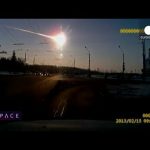
ESA Euronews: Harc az aszteroidák ellen
Valós-e veszélye annak, hogy aszteroidák és műholdak ütköznek össze az űrben?
Drámai pillanat volt, amikor egy aszteroida fölrobbant az oroszországi Cseljabinszk fölött, egy évvel ezelőtt. A robbanásban 1500 ember megsérült, és több mint 7000 épület megrongálódott.Meglepő módon senki nem látta, hogy az aszteroida közelít. Nem volt nagy, csak húsz méter széles, és úgy érkezett a légkörbe, hogy a Nap hátulról megvilágította. A világűrben sokkal nagyobb veszélyek is leselkednek ránk. Néhány nappal ezelőtt egy 270 méter széles aszteroida haladt el nem messze a Földtől. Egy ilyen tárgy sokkal nagyobb károkat okozhat.
– Egy néhány száz méter nagyságú tárgy, amely még mindig nem számít igazán nagynak, hiszen olyasmiről beszélünk, ami egy futballpályán elfér, legrosszabb esetben teljesen elpusztíthat egy lakóövezetet. Ezekre az esetekre próbálunk fölkészülni, és kitalálni, hogyan előzzük meg őket – mondja Alan Harris brit kutató.
Már tettek is lépéseket azért, hogy elhárítsák az aszteroidaveszélyt. Február elején a nagy űrkutató nemzetek tudósai és szakértői tanácskoztak, hogy akciótervet dolgozzanak ki. A csoportot az ENSZ támogatja. Miközben a tudósok azon dolgoznak, hogy fölfedezzék a Föld közelében lévő aszteroidákat, ez a csoport dönt arról, mi a teendőnk, ha komoly veszély alakul ki.
-
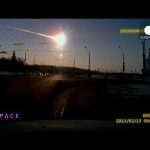
ESA Euronews: Asteroid wird Erde treffen
Es wird passieren, ob wir wollen oder nicht: Eines Tages wird ein Asteroid die Erde treffen, die Zerstörung könnte enorm sein. Was lässt sich dagegen tun? Im vergangenen Jahr erhielten wir einen kleinen Vorgeschmack, welch zerstörerische Wucht ein Asteroidentreffer auf der Erde haben kann. Über der russischen Stadt Tscheljabinsk explodierte ein solches Himmelsgeschoss. 1500 Menschen wurden verletzt, 7000 Gebäude beschädigt.
Alan Harris arbeitet am Deutschen Zentrum für Luft- und Raumfahrt in Berlin. Er erinnert sich an Tscheljabinsk: “Das war ein ziemlich heftiges Ereignis, bei dem zum Glück niemand umkam. Doch es zeigte, welche Kraft diese Dinger haben.”
Vor allem aber hat niemand den Einschlag kommen seien. Mit seinen rund 19 Metern Durchmesser war der Asteroid nicht sonderlich groß, es war praktisch unmöglich, ihn gegen die Sonne zu entdecken. Dabei gibt es tausende deutlich größere Asteroiden in Umlaufbahnen rund um die Erde, und nicht wenige von ihnen könnten zu einer Gefahr für uns werden.
Harris: “Ein Hundert-Meter-Asteroid wäre noch nicht ein mal sonderlich groß, er würde auf ein Fußballfeld passen, und doch könnte er im schlimmsten Fall eine ganze Großstadt vernichten. Das sind die Dinger, nach denen wir Ausschau halten, und wir müssen Wege finden, mit ihnen umzugehen.”
*Mensch gegen Meteor*
Um diese Wege zu finden, wurde am Raumfahrtzentrum der ESA in Darmstadt eine Expertengruppe zur Asteroidenabwehr ins Leben gerufen. An ihr sind Forscher aus den wichtigsten Raumfahrtnationen beteiligt.
-
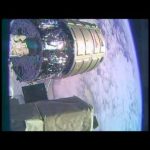
U.S. resupply ship released from ISS
Orbital Sciences’ Cygnus cargo craft was detached and released from the International Space Station Feb. 18, more than a month after delivering a ton of supplies and experiments to the Expedition 38 crew. Cygnus will be commanded by Orbital Sciences’ flight controllers to fire its engines Feb. 19, which will send it into a destructive reentry into the Earth’s atmosphere.
-
NASA Mars Curiosity Rover Report — February 14, 2014
A NASA Mars Curiosity rover team member gives an update on developments and status of the planetary exploration mission. The Mars Science Laboratory spacecraft delivered Curiosity to its target area on Mars at 1:31:45 a.m. EDT on Aug. 6, 2012 which includes the 13.8 minutes needed for confirmation of the touchdown to be radioed to Earth at the speed of light. The rover will conduct a nearly two-year prime mission to investigate whether the Gale Crater region of Mars ever offered conditions favorable for microbial life.
Curiosity carries 10 science instruments with a total mass 15 times as large as the science payloads on NASA’s Mars rovers Spirit and Opportunity. Some of the tools, such as a laser-firing instrument for checking rocks’ elemental composition from a distance, are the first of their kind on Mars. Curiosity will use a drill and scoop, which are located at the end of its robotic arm, to gather soil and powdered samples of rock interiors, then sieve and parcel out these samples into the rover’s analytical laboratory instruments.
-

2014 NASA African-American History Month Profile: Charles Doxley, Glenn Research Center
Charles Doxley is an electronics engineer at the NASA Glenn Research Center. His work for the avionics division includes working on a project that tests future space radios to make sure they are compatible with NASA’s spacecraft tracking and data relay satellite system. Doxley earned his Bachelor’s Degree in Mathematics from Albany State University in Albany, Georgia and a Master’s Degree from Tuskegee University in Tuskegee, Alabama.
-
Welcome to Star City
ESA astronaut Andreas Mogensen introduces us to Star City, near Moscow, where he is currently training for his mission to the International Space Station in 2015.
-
Webb Telescope’s progress on This Week @NASA
NASA Administrator Charlie Bolden, Senator Barbara Mikulski of Maryland and Goddard Center Director Chris Scolese congratulated the Goddard team recently for progress in development of the James Webb Space Telescope. The telescope’s flight instruments and primary mirrors are being integrated at Goddard. JWST is the agency’s flagship science project and the most powerful space telescope ever built. Scheduled to launch in 2018, it will study every phase in the history of our universe, including the first luminous glows after the big bang and the evolution of our own solar system. Also, Crawler-Transporter test drive, Adapter ring complete, Engine test, Progress up, Progress down and more!
-

Ariane 5 flight VA217 liftoff replay
The first Ariane 5 launch of 2014 lifted off from Europe’s Spaceport in French Guiana on its mission to place two telecommunications satellites, ABS-2 & Athena–Fidus, into their planned transfer orbits.
Credit: ESA / CNES / Arianespace
-

NASA Highlights James Webb Space Telescope Progress
NASA Administrator Charles Bolden and Senator Barbara Mikulski of Maryland participated in a news conference Feb. 3 at NASA’s Goddard Space Flight Center in Greenbelt, Md., to discuss the status of the agency’s flagship science project, the James Webb Space Telescope (JWST). Bolden and Mikulski congratulated the JWST team for the integration at Goddard of all the telescope’s flight instruments and primary mirrors.
The most powerful space telescope ever built, Webb will be the premiere observatory of the next decade, serving thousands of astronomers worldwide. It will study every phase in the history of our universe, including the first luminous glows after the big bang, the formation of solar systems capable of supporting life on planets similar to Earth, and the evolution of our own solar system.
-
Astronaut Class in DC on This Week @NASA
NASA’s newest astronaut class was in Washington, DC recently, discussing the future of human exploration and STEM education at the annual White House State of Science, Technology, Engineering, and Math address hosted by Presidential Science Advisor John Holdren. The astronaut candidates shared advice and insight with some students at that event and with more students at a Smithsonian National Air and Space Museum event that included a live conversation with the International Space Station crew. Also, Russian spacewalk, SLS sound test, LADEE mission extended, GPM briefing, and Day of Remembrance.
-
ESA Euronews – Rosetta: The Comet Hunter Awakes
The exploits of comet-hunting spacecraft Rosetta are generating intense interest as it speeds towards a dramatic climax this autumn.
The craft will catch up with comet 67p/Churyumov–Gerasimenko, fly alongside, and put a lander on its surface. Throughout this fantastic voyage, Euronews will have special access to the engineers and scientists who are making it happen.
On 20th January Rosetta woke up from two and a half years of hibernation. It was a moment of extreme tension for everyone at ESA’s European Space Operations Centre in Darmstadt, Germany. Strained, nervous faces searched for a signal from a probe in deep space.
After some 45 minutes of anxiety the all-important first signal came through. The scientists burst into energetic applause.
-
ESA Euronews: Rosetta prepara su cita con el cometa
Hace unos días, la sonda Rosetta se reactivó tras casi dos años y medio de hibernación. La comunidad científica del mundo entero estaba pendiente de la sala de control en el momento en el que Rosetta, tras reactivarse, enviaba su señal de confirmación.
A ocho cientos millones de kilómetros, en algún lugar del espacio, Rosetta se despertaba.
Este proceso tardó varias horas, a las 18:18 de la tarde, hora central europea, el equipo del Centro de Operaciones de la Agencia Espacial Europea, en Darmstadt, Alemania, estallaba de alegría.
-
ESA Euronews: Rosetta lassú ébredése
Pár nappal ezelőtt az Európai Űrügynökség sikeresen felébresztette a hibernációból a Rosetta nevű műholdat, amely hamarosan egyedülálló küldetésre indul: leszállóegységet próbál ereszteni egy üstökös felszínére.
2014. január huszadikán a világ szeme az Európai Űrügynökség csapatára szegeződött, amint arra vártak, hogy az űreszköz válaszoljon.
-

Thank you for helping us to wake up Rosetta!
Compilation of some of the 218 video entries and messages received as part of the “Wake up, Rosetta!” video shout-out contest.
http://www.esa.int/rosetta
http://www.facebook.com/rosettamissionCredits: ESA
#wakeuprosetta
-

On board – ESA’s Newcomers Integration Programme
Newly hired ESA staff met for an information day at the European Astronaut Centre and were introduced to particular aspects of the ESA working culture.
-
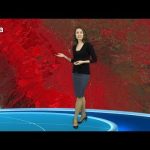
Earth from Space: Kilimanjaro
Earth from Space is presented by Kelsea Brennan-Wessels from the ESA Web-TV virtual studios. Mount Kilimanjaro in Tanzania and the plains in southern Kenya are pictured in a false-colour image featured in the ninetieth edition.
See also http://www.esa.int/spaceinimages/Images/2014/01/Kilimanjaro_Tanzania to download the image.
-

NASA Event Reflects on Accomplishments of Mars Rover
NASA will reflected on the work of Mars rover Opportunity during a news conference on Jan. 23.
Opportunity landed on the Red Planet Jan. 24, 2004, three weeks behind a twin rover named Spirit. Both rovers made important discoveries about wet environments that could have supported microbial life on ancient Mars. Spirit stopped communicating with Earth in 2010, but Opportunity is continuing to provide scientific results, and currently is investigating the rim of a crater 14 miles (22 kilometers) wide.
-
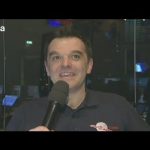
Rosetta wakes up from deep space hibernation
Replay of Part 3 of the Rosetta wake-up media briefing at the ESA Operations Centre ESOC, in Darmstadt, Germany, on 20 January 2014.
Waiting for the signal from Rosetta. View inside the Mission Control Room at ESOC as the team waits for a first signal that Rosetta has successfully come out of deep space hibernation.
Rosetta was launched in 2004 and has since travelled around the Sun five times, picking up energy from Earth and Mars to line it up with its final destination: comet 67P/Churyumov–Gerasimenko. For the coldest, loneliest leg of the mission, as Rosetta travelled out towards the orbit of Jupiter, the spacecraft was put into deep-space hibernation.
In 2014, Rosetta will complete its cruise towards the comet, rendezvousing with it in August, before putting its Philae lander onto the comet’s surface in November, as it begins its journey closer to the Sun.
The spacecraft’s internal alarm clock is set for 10:00 GMT (11:00 CET) on 20 January. Once it has warmed itself up, it should re-establish communication with Earth several hours later.
-
Rosetta calls home
Video highlight showing receipt of signal from ESA’s Rosetta comet chaser after 31 months of deep-space hibernation. Teams at ESA’s operations centre in Darmstadt, Germany, leapt for joy as the signal was confirmed via NASA’s 70m tracking stations in California and Australia.
-
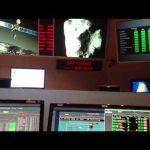
ESOC Main Mission Control counts down to #wakeuprosetta
The clock inside ESOC’s Main Mission Control counts down to 10:00 GMT (11:00 CET) on 20 January 2014 – the moment when ESA’s Rosetta spacecraft was woken from a 31-month deep space hibernation.
-

ESA Director General meets the media
ESA Director General Jean-Jacques Dordain met with media at the traditional start-of-year briefing on the activities and challenges for 2014. Friday 17 January, ESA-HQ Daumesnil, Paris
-

Chasing comets in space
Space missions have been chasing comets since the launch of the Giotto spacecraft in 1985. NASA’s Stardust mission flew through a comet’s tail in 2006 and brought a sample of dust back to Earth. Glycene was found in this sample, one of the four basic amino acids in our DNA. We can make a fake comet on Earth using a recipe of water ice, liquid nitrogen and fine carbon particles. By testing the fake comet and simulating the conditions of space, this will help scientists interpret data from ESA’s latest comet chaser – Rosetta. With ESA’s comet chaser Rosetta expectations are great : for the first time a probe will be flying alongside a comet and even placing a lander on its surface.
-

Wake up sleeping satellite – #wakeuprosetta
Singer Tasmin Archer kindly sent this message to Europe’s ‘sleeping satellite’, ESA’s comet-chaser Rosetta. Thanks, Tasmin!
Tasmin Archer is the well-known British singer, whose song ‘Sleeping Satellite’ about the Apollo missions to the Moon was her first single released in 1992. The song went to Number 1 in the UK and Ireland singles charts, and also broke into the US, German and Australian music charts. The song has been covered by numerous artists, including Kim Wilde. Tasmin famously performed an acoustic version of Sleeping Satellite at the International Astronautical Congress Opening ceremony in Glasgow, September 2008 (see http://youtu.be/owYZOOIXUAs).
Video copyright: T. Archer
Sleeping Satellite written by: T. Archer, J. Beck, J. Hughes (courtesy Quiverdisc)
Video produced by tasminarcher.com -
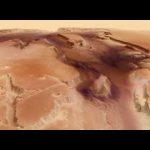
The floodwaters of Mars
Travel across the dramatic flood plains of Mars to celebrate ten years of imaging the Red Planet with Mars Express
Ten years ago, on 14 January 2004, Mars Express took its very first images of Mars in colour and in 3D.
To mark the occasion, the team produced a fly-through movie of the ancient flood plain Kasei Valles. The movie is based on the 67-image mosaic released as part of the ten-years-since-launch celebrations in June 2013. See http://www.esa.int/Our_Activities/Space_Science/Mars_Express/The_floodwaters_of_Mars.
The scene spans 987 km in the north–south direction, 19–36°N, and 1550 km in the east–west direction (280–310°E). It covers 1.55 million square kilometres, an area equivalent to the size of Mongolia.
Kasei Valles is one of the largest outflow channel systems on Mars, created during dramatic flood events. From source to sink, it extends some 3000 km and descends 3 km.
Kasei Valles splits into two main branches that hug a broad island of fractured terrain — Sacra Mensa — rising 2 km above the channels that swerve around it. While weaker materials succumbed to the erosive power of the fast-flowing water, this hardier outcrop has stood the test of time.
Slightly further downstream, the flood waters did their best to erase the 100 km-wide Sharonov crater, crumpling its walls to the south. Around Sharonov many small streamlined islands form teardrop shapes rising from the riverbed as water swept around these natural obstacles.
The Planetary Science and Remote Sensing Group at Freie Universität Berlin produced the movie. The processing of the High Resolution Stereo Camera image data was carried out at the DLR German Aerospace Center.
Credit: ESA/DLR/FU Berlin (G. Neukum) / Music: Crabtambour
-

Rosetta — the story so far
This short movie tells the story of Rosetta’s journey through the Solar System so far, through the voices of some of the many people involved in this exciting mission. ESA’s Rosetta spacecraft launched in March 2004 and has since been chasing down comet 67P/Churyumov-Gerasimenko, where it will become the first space mission to orbit a comet, the first to attempt a landing on a comet’s surface, and the first to follow a comet as it swings around the Sun. In the last ten years Rosetta has made 3 flybys of Earth and 1 of Mars, and passed by and imaged asteroids Steins and Lutetia. Operating on solar energy alone, in June 2011 Rosetta was placed into deep space hibernation as it cruised nearly 800 million kilometres from the warmth of the Sun, close to the orbit of Jupiter. On 20 January, Rosetta will wake up at 673 million kilometres from the Sun and about 9 million km from the comet, ready for the next leg of its epic adventure.
Credits: ESA
-

ISS Extended to 2024 on This Week @NASA
NASA Administrator Charlie Bolden and White House Science Advisor John Holdren, announced that the Obama administration is extending usage of the International Space Station to at least the year 2024. In his blog, Bolden noted that NASA is hopeful and optimistic that our ISS partners will join this extension effort and enable continuation of the groundbreaking research being conducted on the unique orbiting laboratory. Also, International Space Exploration Forum, Cygnus’ resupply flight, Super Bowl of Astronomy, 10 years roving Mars, TDRS-L Update and more!
-
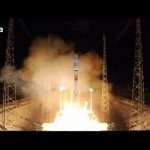
Timelapse film Soyuz flight VS06, with Gaia
Soyuz flight VS06, with the Gaia space observatory, lifted off from Europe’s Spaceport, French Guiana, on 19 December 2013. This timelapse movie shows Gaia sunshield deployment test, the transfer of the Soyuz from the assembly building to the launch pad and the lift off.
ESA–S. Corvaja, M. Pedoussaut, 2013
-
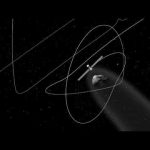
Rosetta’s orbit around the comet
After a ten year journey through space, ESA’s Rosetta spacecraft will reach comet 67P/Churyumov-Gerasimenko in August 2014. After catching up with the comet Rosetta will slightly overtake and enter orbit from the ‘front’ of the comet as both the spacecraft and 67P/CG move along their orbits around the Sun. Rosetta will carry out a complex series of manoeuvres to reduce the separation between the spacecraft and comet from around 100 km to 25-30 km. From this close orbit, detailed mapping will allow scientists to determine the landing site for the mission’s Philae lander. Immediately prior to the deployment of Philae in November, Rosetta will come to within just 2.5 km of the comet’s nucleus.
This animation is not to scale; Rosetta’s solar arrays span 32 m, and the comet is approximately 4 km wide.Credit: ESA — C. Carreau
-
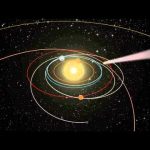
Chasing a comet
Rosetta’s journey from launch in March 2004 to comet 67P/Churyumov-Gerasimenko in August 2014, including 3 flybys of Earth and 1 of Mars. By January 2014 Rosetta is about 9 million kilometres from comet 67P/CG. By early May, Rosetta will be 2 million kilometres from the comet and at the end of May the spacecraft will execute a major rendezvous manoeuvre to line it up for orbit insertion at the start of August.
The comet and planets are not to scale.Credits: ESA — C. Carreau
-

#WakeUpRosetta — Wake up!
At 10:00 UTC on 20 January 2014, ESA’s comet-chasing Rosetta spacecraft will wake up from 31 months in deep space hibernation. Save the date and join the adventure — enter our #wakeuprosetta contest by adding your wake up shout video to the Rosetta Mission Facebook page http://www.facebook.com/rosettamission.
More details and competition rules: http://www.esa.int/Our_Activities/Space_Science/Rosetta/Wake_up_Rosetta
