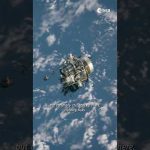
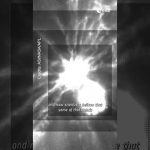
In 2022 NASA’s DART spacecraft made history, and changed the Solar System forever, by impacting the Dimorphos asteroid and measurably shifting its orbit around the larger Didymos asteroid. In the process a plume of debris was thrown out into space.
The latest modelling, available on the preprint server arXiv and accepted for publication in the September volume of The Planetary Science Journal, shows how small meteoroids from that debris could eventually reach both Mars and Earth – potentially in an observable (although quite safe) manner.
– Number of rocket launches since the start of the space age in 1957: About 6500 (excluding failures).
– Number of satellites these rocket launches have placed into Earth orbit: About 16 990
– Number of these still in space: About 11 500
– Number of these still functioning: About 9000
– Number of debris objects regularly tracked by Space Surveillance Networks and maintained in their catalogue: About 35 150
– Estimated number of break-ups, explosions, collisions, or anomalous events resulting in fragmentation: More than 640
– Total mass of all space objects in Earth orbit: More than 11500 tonnes
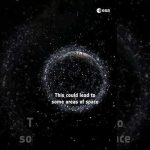
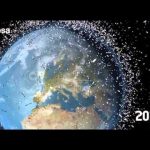
– Not all objects are tracked and catalogued. The number of debris objects estimated based on statistical models to be in orbit [MASTER-8, future population 2021]: ・36500 space debris objects greater than 10 cm ・1 000 000 space debris objects from greater than 1 cm to 10 cm ・130 million space debris objects from greater than 1 mm to 1 cm
Embark on a cosmic journey with ESA as we explore the universe through the lens of ‘One Million’. From the scorching temperatures of the Sun’s corona to the cosmic gaze of the NASA/ESA/CSA James Webb Space Telescope — discover the astronomical wonders that surround us. 🚀
🎉 Join our space community in celebrating a momentous occasion — 1 MILLION subscribers on YouTube! 🌟 Thank you for your enthusiasm and support. ✨
★ Subscribe: http://bit.ly/ESAsubscribe and click twice on the bell button to receive our notifications.
We are Europe’s gateway to space. Our mission is to shape the development of Europe’s space capability and ensure that investment in space continues to deliver benefits to the citizens of Europe and the world. Check out https://www.esa.int/ to get up to speed on everything space related.
2409 new objects were launched into space in 2022, that’s more than ever before.
Last year though, also saw a record number of satellites reenter Earth’s atmosphere.
The rising number of reentries is not necessarily a bad thing. Disposing of satellites efficiently is one of the most important things for keeping low-Earth orbits safe.
However, most objects reenter in an uncontrolled manner: they are switched off at the end of their mission and left to fall and burn up in Earth’s atmosphere.
There is good news though. Advancing technology has seen a recent increase in “controlled reentries” for rocket bodies. A controlled reentry allows operators to remove their hardware from protected regions more quickly and with greater control over where, when and how it reenters – and even lands – at the cost of allocating some fuel to do so.
By the way, just because an older satellite wasn’t designed to be controlled during its descent doesn’t mean it’s impossible to do so. In July 2023, our teams guided the Aeolus satellite to burn up over uninhabited regions in the Atlantic and Antarctica, even though the satellite was designed in the late 1990s with no intention to control it in this way.
ESA DG Josef Aschbacher, accompanied by TAS CEO Hervé Derrey, Airbus DS EVP Jean-Marc Nasr and OHB Board Member Lutz Bertling, among others, will unveil the Zero Debris Charter initiative, an ambitious drive towards European leadership in space debris mitigation and remediation.
★ Subscribe: http://bit.ly/ESAsubscribe and click twice on the bell button to receive our notifications.
We are Europe’s gateway to space. Our mission is to shape the development of Europe’s space capability and ensure that investment in space continues to deliver benefits to the citizens of Europe and the world. Check out https://www.esa.int/ to get up to speed on everything space related.
By using concrete examples of the water and carbon cycles, the speakers in this session will focus on the grand science questions before us and how we can turn them into answers and solutions most useful to decision-makers at the front line of the climate crisis. Earth is a highly dynamic system where the transport and exchanges of energy and matter are influenced by a multitude of processes and feedback mechanisms. Untangling these complex processes to better understand how Earth works as a system is a major challenge; a challenge that satellites, with their global view, are ideally positioned to tackle. While each mission gives us unique insights, it is by combining their data that makes scientific findings shine the brightest. This, in turn, puts European and international collaboration at the heart of Earth observation today.
★ Subscribe: http://bit.ly/ESAsubscribe and click twice on the bell button to receive our notifications.
We are Europe’s gateway to space. Our mission is to shape the development of Europe’s space capability and ensure that investment in space continues to deliver benefits to the citizens of Europe and the world. Check out https://www.esa.int/ to get up to speed on everything space related.
The Drag Augmentation Deorbiting System Nano – a 3.6-sq-m aluminium-coated polyamide membrane attached to four metallic booms – deployed from a 10 cm box aboard a satellite platform launched in 2021 used to deliver miniature ‘CubeSats’ into their individual orbits.
By increasing the overall area of the satellite, the sail will increase the gradual air drag acting upon it from atoms at the top of the atmosphere, and speed up its atmospheric reentry.
📹 @EuropeanSpaceAgency 📸 @hpsgermany on Instagram
★ Subscribe: http://bit.ly/ESAsubscribe and click twice on the bell button to receive our notifications.
We are Europe’s gateway to space. Our mission is to shape the development of Europe’s space capability and ensure that investment in space continues to deliver benefits to the citizens of Europe and the world. Check out https://www.esa.int/ to get up to speed on everything space related.
Recently, Andreas Mogensen, now getting ready for his ‘Huginn’ mission to the ISS in 2023, stopped by ESA’s ESOC mission control centre in Darmstadt, Germany, to meet with some of the experts who keep our satellites flying.
Andreas usually works at NASA’s Johnson Space Center in Houston as an ISS ‘capcom’, and we don’t often see him in Europe. A few months back, while returning to Germany for some training at ESA’s Astronaut Centre in Cologne, we seized the opportunity to ask him if he’d like to stop over in Darmstadt for a look behind the scenes at mission control, and he immediately answered, ‘yes’!
Andreas’ studied aeronautical engineering with a focus on ‘guidance, navigation and control of spacecraft’ and we thought he’d be delighted to meet with the teams at mission control doing precisely that sort of work for our robotic missions.
We figured he’d also enjoy meeting colleagues from our Space Safety programme, especially the ones working on space debris and space weather, as these are crucial areas that influence the daily life of astronauts on the ISS.
Andreas met with Bruno Sousa and Julia Schwartz, who help keep Solar Orbiter healthy and on track on its mission to gather the closest-ever images of the Sun, observe the solar wind and our Star’s polar regions, helping unravel the mysteries of the solar cycle.
He also met with Stijn Lemmens, one of the analysts keeping tabs on the space debris situation in orbit, and Melanie Heil, a scientist helping ESA understand how space weather and our active Sun can affect missions in orbit and crucial infrastructure – like power grids – on ground.
We hope you enjoy this lively and informative day at mission control as much as Andreas and the teams at ESOC did!
★ Subscribe: http://bit.ly/ESAsubscribe and click twice on the bell button to receive our notifications.
We are Europe’s gateway to space. Our mission is to shape the development of Europe’s space capability and ensure that investment in space continues to deliver benefits to the citizens of Europe and the world. Check out https://www.esa.int/ to get up to speed on everything space related.
We are Europe’s gateway to space. Our mission is to shape the development of Europe’s space capability and ensure that investment in space continues to deliver benefits to the citizens of Europe and the world. Check out https://www.esa.int/ to get up to speed on everything space related.
Our planet is surrounded by spacecraft helping us study our changing climate, save lives following disasters, deliver global communication and navigation services and help us answer important scientific questions.
But these satellites are at risk. Accidental collisions between objects in space can produce huge clouds of fast-moving debris that can spread and damage additional satellites with cascading effect.
In this animation, find out how teams at ESA’s European Space Operations Centre in Darmstadt, Germany, take action to keep satellites safe after receiving an alert warning of a possible collision between an active satellite and a piece of space debris.
When the alert is raised, ESA experts determine the risk of a collision and plan a collision avoidance manoeuvre that can be used to get the satellite out of harm’s way if necessary.
Additional observations of the piece of space debris help the team better understand its path and the risk of collision. If that risk remains too high (typically 1 in 10 000), the planned manoeuvre is carried out to temporarily change the orbit of the satellite until the threat has passed.
Each manoeuvre comes at a price. They take skill and time to plan, cost precious fuel – shortening the lifetime of the mission – and often require instruments to be temporarily shut off, preventing them from collecting important data.
While most alerts do not end up requiring evasive action, the number of alerts is rapidly increasing. Hundreds are already issued every week. Several companies have begun to launch large constellations into low-Earth orbit to provide global internet access. They have great benefits, but could be a source of huge disruption if we do not change our behaviour.
In just a few years, our current methods for avoiding collisions in space will no longer be enough. To safeguard humankind’s continued access to space for future generations, ESA is developing technologies for an automated collision avoidance system.
We are Europe’s gateway to space. Our mission is to shape the development of Europe’s space capability and ensure that investment in space continues to deliver benefits to the citizens of Europe and the world. Check out https://www.esa.int/ to get up to speed on everything space related.
The launch of Sputnik, humankind’s first satellite, in 1957 marked the dawn of a new era for the people of the ‘Pale Blue Dot’.
Decades later, our planet is now surrounded by spacecraft carrying out extraordinary work to study our changing climate, save lives following disasters, deliver global communication and navigation services and help us answer important scientific questions.
But these satellites are at risk. Accidental collisions between objects in space can produce huge clouds of fast-moving debris. These clouds can spread and damage additional satellites with cascading effect, eventually making the most useful orbits around Earth no longer safe for spacecraft or people.
Satellites today have to carry out collision avoidance manoeuvres to avoid possible impact with debris. These are costly, and hundreds of collision avoidance alerts are already issued every week. [add para space}
And this is nothing compared to what is coming. Several companies have begun to launch mega-constellations into low-Earth orbit to provide global internet access. They have great benefits, but could be a source of huge disruption if we do not change our behaviour.
Our current methods for avoiding collisions in space will become inadequate in just a few years – and even compliance with space debris mitigation guidelines may no longer be enough.
It’s time to act.
ESA is developing technologies for an automated collision avoidance system, as well as methods for refuelling, repairing and upgrading satellites in orbit, extending the lifetime of missions and potentially reducing the number of new satellites that need to be launched.
ESA is also working on debris removal missions that will fly up to dead spacecraft and debris objects, capture them and move them to safety – either by sending them down to burn up in Earth’s atmosphere or up into ‘graveyard orbits’.
By reaching into space, we have brought huge benefits down to Earth, providing technologies that enrich our societies, connect people in previously unimaginable ways and give us an incredible perspective and understanding of our planet.
We know what will happen if we continue on our current path, but we also know exactly what we need to do to change that fate and ensure humankind’s access to space is guaranteed for future generations.
We are Europe’s gateway to space. Our mission is to shape the development of Europe’s space capability and ensure that investment in space continues to deliver benefits to the citizens of Europe and the world. Check out https://www.esa.int/ to get up to speed on everything space related.
On 20 April 2021, ESA will host the 8th European Conference on Space Debris from Darmstadt, in Germany. Scientists, engineers, industry experts and policy makers will spend the virtual four day conference discussing the latest issues surrounding space debris. They will exchange the latest research, try to come up with solutions for potential problems and define the future direction of any necessary action.
There are currently over 129 million objects larger than a millimetre in orbits around Earth. These range from inactive satellites to flakes of paint. But no matter how small the item of debris, anything travelling up to 56 000 km/h in an orbit is dangerous if it comes into contact with the many satellites that connect us around the world, be it for GPS, mobile phone data or internet connectivity. The solution is to take action before it’s too late. This is why ESA has commissioned ClearSpace-1 – the world’s first mission to remove space debris – for launch in 2025.
We are Europe’s gateway to space. Our mission is to shape the development of Europe’s space capability and ensure that investment in space continues to deliver benefits to the citizens of Europe and the world. Check out https://www.esa.int/ to get up to speed on everything space related.
ESA has signed an €86 million contract with an industrial team led by Swiss start-up ClearSpace SA to purchase a unique service: the first-ever removal of an item of space debris from orbit.
As a result, in 2025, ClearSpace will launch the first active debris removal mission, ClearSpace-1, which will rendezvous, capture and take down for reentry the upper part of a Vespa (Vega Secondary Payload Adapter) used with Europe’s Vega launcher. This object was left in an approximately 801 km by 664 km-altitude gradual disposal orbit, complying with space debris mitigation regulations, following the second flight of Vega back in 2013.
★ Subscribe: http://bit.ly/ESAsubscribe and click twice on the bell button to receive our notifications.
We are Europe’s gateway to space. Our mission is to shape the development of Europe’s space capability and ensure that investment in space continues to deliver benefits to the citizens of Europe and the world. Check out https://www.esa.int/ to get up to speed on everything space related.
A lot goes into planning a space mission, including how to de-orbit the spacecraft once it completes its mission. Systems engineer Sara Morales Serrano of ESA’s Clean Space office discusses the problem of space debris and the tools available to clean up space.
We are Europe’s gateway to space. Our mission is to shape the development of Europe’s space capability and ensure that investment in space continues to deliver benefits to the citizens of Europe and the world. Check out http://www.esa.int/ESA to get up to speed on everything space related.
With this webinar about CubeSats in the context of space debris, we want to raise awareness of the space debris problem to the CubeSat community, present the Space Debris Mitigation (SDM) requirements and what they mean for CubeSats, discuss Post Mission Disposal (PMD) technologies, and finally, close the gap between the community and ESA to attempt involving it more in future events
★ Subscribe: http://bit.ly/ESAsubscribe and click twice on the bell button to receive our notifications.
ESA is Europe’s gateway to space. Our mission is to shape the development of Europe’s space capability and ensure that investment in space continues to deliver benefits to the citizens of Europe and the world. Check out http://www.esa.int/ESA to get up to speed on everything space related.
What’s the difference between spotting asteroids in space, and debris objects in Earth orbit? At first, both look like tiny dots streaming across the sky, against a backdrop of twinkling stars. As part of its Space Safety & Security activities, ESA brings together experts in asteroid and debris detection, asking what these two vital fields have in common, and how they can protect us from hazards in space.
★ Subscribe: http://bit.ly/ESAsubscribe and click twice on the bell button to receive our notifications.
ESA is Europe’s gateway to space. Our mission is to shape the development of Europe’s space capability and ensure that investment in space continues to deliver benefits to the citizens of Europe and the world. Check out http://www.esa.int/ESA to get up to speed on everything space related.
Every week, on average, a substantial, inert satellite drops into our atmosphere and burns up. Monitoring these reentries and warning European civil authorities has become routine work for ESA’s space debris experts.
Each year, about 100 tonnes of defunct satellites, uncontrolled spacecraft, spent upper stages and discarded items like instrument covers are dragged down by Earth’s upper atmosphere, ending their lives in flaming arcs across the sky.
Some of these objects are big and chunky, and pieces of them survive the fiery reentry to reach the surface. Our planet, however, is a big place, mostly covered by water, and much of what falls down is never seen by anyone, sinking to the bottom of some ocean, or landing far from human habitation.
While still in orbit, these and many other objects are tracked by a US military radar network, which shares the data with ESA, since Europe has no such capability of its own.It’s the task of ESA’s Space Debris team to look at these data and issue updates to ESA Member States and partner civil authorities around the globe.
The European Space Agency (ESA) is part of an international effort to monitor and – ultimately – tackle space debris. This junk – accumulated in orbit since the dawn of the space age sixty years ago – poses an increasing risk to operational spacecraft.
ESA is developing missions to tackle the problem to help prevent a serious collision in space. The Agency is also monitoring possible dangers caused by fragments of redundant spacecraft falling to Earth, such as China’s space station Tiangong-1 – due to enter the atmosphere in the coming months.
Space debris has become a pressing issue, with objects in orbit flying out of control, posing a risk to satellites and to astronauts. We attended a meeting of space debris experts at ESA’s ESTEC technology base in the Netherlands to find out more about what can be done to deal with the problem.
O lixo espacial é um problema premente na órbita da Terra. Existem milhões de objetos a voar pelo espaço, descontrolados, colocando em perigo satélites e astronautas.
Em busca de uma solução para evitar uma colisão trágica para lá da última fronteira ou, quem sabe, o infortúnio de um qualquer detrito cair e atingir alguém na Terra, cerca de 200 cientistas reúnem-se todos os anos na Holanda, na base da Agência Espacial Europeia (ESA, na sigla original), para debater a limpeza do espaço e confrontar ideias sobre o desenvolvimento, por exemplo, de satélites mais seguros no fim de vida.
Existem quase 8000 toneladas de lixo espacial em órbita, incluindo cerca 29.000 objetos com mais de dez centímetros e mais de um milhão pequenos demais para poderem ser seguidos.
As colisões acontecem e todos os pedaços, mesmo os mais pequenos de apenas um milímetro, revelam-se perigosos, sublinha a diretora do gabinete da ESA para a limpeza do espaço.
I detriti spaziali sono un problema sempre più urgente. In orbita ci sono circa 8mila tonnellate di detriti spaziali: 29mila oggetti di oltre 10 centimetri e più di un milione di frammenti troppo piccoli per essere tracciati. Sono un pericolo per i satelliti e per gli astronauti. Le collisioni sono possibili, perciò ogni detrito rappresenta un pericolo.
Ogni anno 200 esperti in materia di spazzatura spaziale si riuniscono nella sede dell’Esa per affrontare la questione. Tra loro ci sono i rappresentanti delle agenzie spaziali e delle aziende che producono satelliti e razzi.
Körülbelül 8 000 tonna törmelék kering az űrben. 29 000 10 cm méretű, és több mint egymillió darab ennél is kisebb tárgy.
Az ütközések megtörténnek, és minden törmelék veszélyt jelent. Ezen a ponton még egy nagyon kicsi törmelék is jelentős, mert a sebessége, amivel utazik, ha egy másik testet vagy műholdat elér, felrobbanthatja azt, így még a legapróbb törmelékeknek is fontos a szerepük.
Minden évben 200 európai űrkutatási szakember találkozik az Európai Űrügynökség, az ESA hollandiai technológiai központjában, hogy megvitassák a fontos kérdéseket.
Ők képviselik a fontosabb szereplőket, és mindannyian egyetértenek abban, hogy mit kell tenniük.
Καλωσήλθατε στην εκπομπή Space. Ας ρίξουμε μια προσεκτική ματιά στο πιεστικό πρόβλημα των «διαστημικών σκουπιδιών». Υπάρχουν εκατομμύρια τέτοια αντικείμενα στο διάστημα εκτός ελέγχου. Ενέχουν κινδύνους για τους δορυφόρους και τους αστροναύτες. Τι μπορεί να γίνει; Βρισκόμαστε στη βάση του Ευρωπαϊκού Οργανισμού Διαστήματος στην Ολλανδία.
Υπάρχουν περίπου 8.000 τόνοι διαστημικών σκουπιδιών σε τροχιά — 29.000 αντικείμενα εντοπισμένα μεγέθους πάνω από 10 εκατοστά και πάνω από ένα εκατομμύριο μικρά «διαστημικά σκουπίδια .
Dans ce numéro de Space, Jeremy Wilks s’est penché sur l’épineuse question des débris spatiaux, avec les experts du centre européen de technologie spatiale de l’Agence Spatiale Européenne, aux Pays-Bas.
Este mes estamos observando de cerca el apremiante problema de los desechos espaciales. Literalmente hay millones de objetos en órbita volando fuera de control. ¿Qué se puede hacer?.
Estamos en el Centro Europeo de Investigación y Tecnología Espacial de los Países Bajos para averiguarlo.
Se estima que hay 8.000 toneladas de desechos espaciales orbitando: 29.000 objetos rastreados de más de 10 centímetros de tamaño y más de un millón de fragmentos demasiado pequeños para poder seguir.
Haz colisiones y cada pedazo de escombro es un peligro.
Space debris – a journey to Earth (3D stereoscopic version) takes the audience on a journey from the outer solar system back to our home planet. The objects encountered along the way are manmade. Originally designed to explore the universe, these are now a challenge for modern space flight. An estimated number of 700,000 objects larger than 1 cm and 170 million objects larger than 1mm are expected to reside in Earth orbits.
The video gives a closer look at the different regions used for space flight and explains how mitigation and removal measures could preserve future usage of these orbits.
Space debris – a journey to Earth takes the audience on a journey from the outer solar system back to our home planet. The objects encountered along the way are manmade. Originally designed to explore the universe, these are now a challenge for modern space flight. An estimated number of 700,000 objects larger than 1 cm and 170 million objects larger than 1mm are expected to reside in Earth orbits.
The video gives a closer look at the different regions used for space flight and explains how mitigation and removal measures could preserve future usage of these orbits.
Produced for the 7th European Conference on Space Debris, 18-21 April 2017.
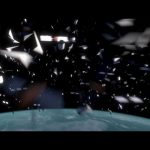
Earth is surrounded by a cloud of space debris. This material ranges from dead satellites and rocket stages to fragments of material and even flecks of paint… and all this junk could do enormous damage to working satellites.
During 18–21 April, experts from around the world will meet at ESA’s European Space Operations Centre, Darmstadt, Germany for the 7th European Conference on Space Debris.
Delegates will discuss the extent of the debris problem and what can be done to ensure that satellites we rely on – providing us with services such as navigation, TV and weather forecasting – can operate safely in the future.
Talks will address acute issues like current practices in debris avoidance, novel concepts for removing debris, and the deployment of large constellations of several thousand satellites for telecommunications.
The conference will be opened by ESA Director General Jan Woerner and NASA’s former orbital debris chief scientist, Donald Kessler.
On 18 April and 21 April, live webcasts will cover the keynote address and press briefing, respectively. Details via esa.int/debris.
ESA’s proposed e.Deorbit mission plans to demonstrate the retrieval and disposal of a derelict satellite from low-Earth orbit. The mission needs to capture a massive, drifting object left in an uncertain state, which may well be tumbling rapidly. Several capture mechanisms are being studied in parallel – including casting a net.
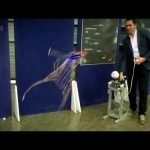
Polish company SKA Polska won this new ESA Member State’s first competitive contract to design a prototype net gun that could be tested in microgravity on a parabolic flight. Wojtek Gołebiowski of SKA Polska brought it along to the Industry Days of ESA’s Clean Space initiative – tasked with safeguarding both terrestrial and orbital environments – in May 2016. The net gun is comparatively low power (because it was designed for weightlessness) but here he demonstrates how it works on some low-flying drones. Results from firing the net, which is multi-coloured to make it easier to track by cameras, are being used to sharpen the fidelity of software models of net behaviour.
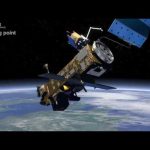
ESA’s Clean Space initiative is studying an active debris removal mission called e.Deorbit, which will target an ESA-owned derelict satellite in low orbit, capture it, then safely burn it up in a controlled atmospheric reentry. e.Deorbit will be the world’s first active debris removal mission, and will provide an opportunity for European industries to showcase their technological capabilities to a global audience.
The story of space debris highlighting how the unintended consequences of intense spaceflight activity during the past 60 years has resulted in a growing population of debris objects that pose hazards to safe space navigation. In 2013, experts estimate that 29 000 objects larger than 10 cm were orbiting Earth.
The video also highlights the current state of debris mitigation measures and presents several concepts for removing defunct satellites from economically vital orbits now being studied by space agencies and industry across Europe.
This video was produced for the 6th European Conference on Space Debris, 22-25 April 2013.
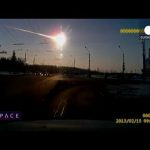
How real is the threat of an asteroid hitting Earth, and is there anything we can do to prevent it from happening? Asteroid impacts are nothing new. Only last year, one exploded over the city of Chelyabinsk in Russia injuring 1500 people and damaging some 7,000 buildings.
“It was a pretty nasty event, luckily nobody was killed, but it just shows the sort of force that these things have,” says Alan Harris, Senior Scientist, DLR Institute of Planetary Research Berlin.
While there was surprise nobody saw it coming, the asteroid itself wasn’t that big, measuring no more than 20 metres across. It was tricky to spot, arriving into Earth’s atmosphere backlit by the Sun.
In fact, much bigger threats lurk out in space. Just a few days ago another asteroid 270 metres wide passed near Earth. That kind of object could cause much more damage.
“Something with the size of a hundred metres for instance, which still isn’t very big, you’re talking about something that would fit into a football field, and that could actually completely destroy an urban area in the worst case. So those are the things that we’re really looking out for, and that we’re trying to find ways to tackle,” says Harris.
Action to address the asteroid threat is already underway. Earlier in February, space scientists and policy experts from all the major space-faring nations held talks to create a framework for action.
Qual é o perigo real das colisões de asteroides e satélites? A cidade de Chelyabinsk, na Rússia, viveu momentos dramáticos há um ano, com a explosão de um asteróide. O fenómeno deixou 15 pessoas feridas e mais de sete mil edifícios danificados. Foi surpreendente e ninguém estava à espera.
Não era um grande asteroide, com cerca de 20 metros de diâmetro, e entrou na atmosfera ofuscado pelo Sol. Há poucos dias, um asteroide com 270 metros de diâmetro passou perto da Terra.
O impacto de um objeto como este pode significar uma verdadeira catástrofe: “Algo com cerca de cem metros, por exemplo, que não é muito grande, estamos a falar de algo que cabe num campo de futebol, pode destruir por completo uma área urbana, no pior dos casos.
São esses asteróides que procuramos e estamos a estudar meios de os neutralizar”, explica Alan Harris, do Instituto de Estudos Planetários de Berlim. O trabalho já está em marcha.
No início de fevereiro, este encontro reuniu cientistas espaciais e especialistas políticos da maioria das potências espaciais do planeta, com o objetivo de criar um quadro de ação. “No ano passado, estávamos ainda numa situação em que, se um asteróide estivesse a ameaçar a terra, não teríamos um processo de reação.
Valós-e veszélye annak, hogy aszteroidák és műholdak ütköznek össze az űrben? Drámai pillanat volt, amikor egy aszteroida fölrobbant az oroszországi Cseljabinszk fölött, egy évvel ezelőtt. A robbanásban 1500 ember megsérült, és több mint 7000 épület megrongálódott.
Meglepő módon senki nem látta, hogy az aszteroida közelít. Nem volt nagy, csak húsz méter széles, és úgy érkezett a légkörbe, hogy a Nap hátulról megvilágította. A világűrben sokkal nagyobb veszélyek is leselkednek ránk. Néhány nappal ezelőtt egy 270 méter széles aszteroida haladt el nem messze a Földtől. Egy ilyen tárgy sokkal nagyobb károkat okozhat.
– Egy néhány száz méter nagyságú tárgy, amely még mindig nem számít igazán nagynak, hiszen olyasmiről beszélünk, ami egy futballpályán elfér, legrosszabb esetben teljesen elpusztíthat egy lakóövezetet. Ezekre az esetekre próbálunk fölkészülni, és kitalálni, hogyan előzzük meg őket – mondja Alan Harris brit kutató.
Már tettek is lépéseket azért, hogy elhárítsák az aszteroidaveszélyt. Február elején a nagy űrkutató nemzetek tudósai és szakértői tanácskoztak, hogy akciótervet dolgozzanak ki. A csoportot az ENSZ támogatja. Miközben a tudósok azon dolgoznak, hogy fölfedezzék a Föld közelében lévő aszteroidákat, ez a csoport dönt arról, mi a teendőnk, ha komoly veszély alakul ki.
Es wird passieren, ob wir wollen oder nicht: Eines Tages wird ein Asteroid die Erde treffen, die Zerstörung könnte enorm sein. Was lässt sich dagegen tun? Im vergangenen Jahr erhielten wir einen kleinen Vorgeschmack, welch zerstörerische Wucht ein Asteroidentreffer auf der Erde haben kann. Über der russischen Stadt Tscheljabinsk explodierte ein solches Himmelsgeschoss. 1500 Menschen wurden verletzt, 7000 Gebäude beschädigt.
Alan Harris arbeitet am Deutschen Zentrum für Luft- und Raumfahrt in Berlin. Er erinnert sich an Tscheljabinsk: “Das war ein ziemlich heftiges Ereignis, bei dem zum Glück niemand umkam. Doch es zeigte, welche Kraft diese Dinger haben.”
Vor allem aber hat niemand den Einschlag kommen seien. Mit seinen rund 19 Metern Durchmesser war der Asteroid nicht sonderlich groß, es war praktisch unmöglich, ihn gegen die Sonne zu entdecken. Dabei gibt es tausende deutlich größere Asteroiden in Umlaufbahnen rund um die Erde, und nicht wenige von ihnen könnten zu einer Gefahr für uns werden.
Harris: “Ein Hundert-Meter-Asteroid wäre noch nicht ein mal sonderlich groß, er würde auf ein Fußballfeld passen, und doch könnte er im schlimmsten Fall eine ganze Großstadt vernichten. Das sind die Dinger, nach denen wir Ausschau halten, und wir müssen Wege finden, mit ihnen umzugehen.”
*Mensch gegen Meteor*
Um diese Wege zu finden, wurde am Raumfahrtzentrum der ESA in Darmstadt eine Expertengruppe zur Asteroidenabwehr ins Leben gerufen. An ihr sind Forscher aus den wichtigsten Raumfahrtnationen beteiligt.