On the latest Watch This Space, NASA administrator Jim Bridenstine looks back at 15 years of discoveries by our Opportunity rover on Mars, and forward to new commercial partnerships for missions to the Moon. Learn how we’ll work with American companies to design and develop human lunar landers and reusable systems so we can return to the Moon — to stay.
This video is available for download from NASA’s Image and Video Library: https://images.nasa.gov/details-NHQ_2019_0221_Watch%20This%20Space%20with%20NASA%20Administrator%20Jim%20Bridenstine%20with%20the%20latest%20from%20the%20Moon%20and%20Mars.html
Several NASA instruments see their first light, another active week for our administrator, and discover just how much space is in our daily lives … a few of the stories to tell you about – This Week at NASA!
This video is available for download from NASA’s Image and Video Library: https://images.nasa.gov/details-A%20Festival%20of%20%E2%80%9CFirst%20Lights%E2%80%9D%20on%20This%20Week%20@NASA%20%E2%80%93%20September%2021,%202018.html
Mohamad Jebara loves mathematics — but he’s concerned that too many students grow up thinking that this beautiful, rewarding subject is difficult and boring. His company is experimenting with a bold idea: paying students for completing weekly math homework. He explores the ethics of this model and how it’s helping students — and why learning math is crucial in the era of fake news.
The TED Talks channel features the best talks and performances from the TED Conference, where the world’s leading thinkers and doers give the talk of their lives in 18 minutes (or less). Look for talks on Technology, Entertainment and Design — plus science, business, global issues, the arts and more.
On Sept. 15, our Cassini spacecraft concluded its remarkable mission with a plunge into Saturn’s atmosphere. This was the last of 22 close orbits Cassini made between Saturn and its rings as part of the mission’s Grand Finale. No other spacecraft has ever explored this unique region. Although the spacecraft may be gone after the finale, the enormous amount of data collected about Saturn, its magnetosphere, rings and moons during this last dive is expected to yield new discoveries for decades. Also, Recovering from Irma, New Crew Launches to the Space Station, Successful Orion Chute Test and Shane Kimbrough in Washington!
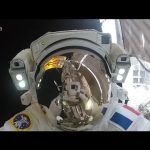
This unedited video without sound lasts over five hours and shows almost all of ESA astronaut Thomas Pesquet’s spacewalk outside the International Space Station.
NASA astronaut Shane Kimbrough and Thomas left the International Space Station airlock 24 March 2017 on their second spacewalk together. Thomas and Shane worked separately throughout their sortie.
Thomas was tasked to inspected the Station’s cooling system for leaks. He took photos and videos as he patted and prodded the cooling pipes to see if any coolant leaked out. This video starts when he turns on the camera used to record cooling system inspection for analysis by ground control.
Thomas’ second task was to maintain the multipurpose robotic hand Dextre – he had the laborious job of applying lubricant. After setting up a foot restraint to allow him to work with both hands, NASA astronaut Peggy Whitson moved Dextre into position using the controls inside the Station.
The video ends with Thomas returning to the Quest airlock – the spacewalk lasted six hours and 34 minutes in total with time spent in the airlock included.
The mission is part of ESA’s vision to use Earth-orbiting spacecraft as a place to live and work for the benefit of European society while using the experience to prepare for future voyages of exploration further into the Solar System.
2016 marked record-breaking progress in NASA’s exploration objectives. The agency advanced the capabilities needed to travel farther into the solar system while increasing observations of our home and the universe, learning more about how to continuously live and work in space and, of course, inspiring the next generation of leaders to take up our Journey to Mars and make their own discoveries.
Japan has a unique fascination with androids and the quest to make robots more like humans. One of the country’s most original thinkers in this area is Professor Takashi Ikegami of the University of Tokyo. He has created androids filled with sensors and artificial intelligence software. The technology allows them to perceive the outside world and react to it as they see fit. Hello World host Ashlee Vance traveled to Tokyo to meet with Professor Ikegami and see his latest android creation. The robot they encounter flails about and makes strange gurgling noises as it responds to their movements and conversation. While it all looks rudimentary today, the technology is the precursor of what Ikegami predicts will be a new robotic life form that has its own culture, language, and desires. What could go wrong?
Kasha Patel and Mike Behrenfeld chat about the North Atlantic Aerosols and Marine Ecosystems Study (NAAMES). This NASA field experiment took to the sea in May to investigate the world’s largest plankton bloom and how it gives rise to small organic particles that leave the ocean and end up in the atmosphere, ultimately influencing clouds and climate.
On May 16, the International Space Station completed its 100,000th orbit of Earth since the launch of the first component on Nov. 20, 1998. In that time, the station has traveled more than 2.6 billion miles – which is roughly the equivalent of about 10 round trips between Earth and Mars, at the average distance between the two planets. The space station zips around our planet at 17,500 miles per hour – completing each orbit in just 90 minutes – giving the crew onboard the unique opportunity to experience 16 sunrises and sunsets per day and to capture some great images of Earth. Also, CubeSats Deployed from ISS, Humans to Mars Summit 2016, Orion’s Water Drop Test “Passengers”, There’s No Place Like Space and more!
In 2015, NASA explored the expanse of our solar system and beyond, and the complex processes of our home planet, while also advancing the technologies for our journey to Mars, and new aviation systems as the agency reached new milestones aboard the International Space Station. Here’s a look at some of the top NASA stories of the year!
When you mix red and green, what do you get? White light is all of the colors, right? So, how do computer screens show you every wavelength of light? Or do they?
On April 24, 1990, NASA’s Hubble Space Telescope rode to space aboard space shuttle Discovery – on a mission to do just that – discover. The results over the past 25 years have been nothing short of remarkable.
The storied and historic journey into the cosmos that Hubble’s eyes have taken us on, has led to groundbreaking discoveries, captivated imaginations and given humans a better understanding of our place in the universe. NASA celebrated Hubble’s Silver anniversary with a variety of events including the unveiling of the official Hubble 25th anniversary image at the Newseum in Washington and a gala at the Smithsonian’s National Air and Space Museum, during which many of the astronauts, scientists, engineers, technicians, educators, and others who have contributed to Hubble’s success were honored. Also, NASA celebrates Earth Day, 3-D printed copper engine part and more!
A few days after his one-year mission to study the effects of long duration spaceflight on the human body began aboard the International Space Station, Expedition 43 Flight Engineer Scott Kelly was congratulated by NASA Administrator Charlie Bolden from Washington DC. Also on the call – Kelly’s twin brother and former astronaut Mark. The pair will be studied during the mission as part of a science investigation. White House science advisor John Holdren also joined the call and echoed the importance of the mission. Kelly and Russian cosmonaut Mikhail Kornienko will conduct the one-year research mission through March 2016. Also, Super typhoon seen from space, Asteroid mission milestone, LDSD spin test and Sniffing the history of the Martian atmosphere!
Replay of our ‘Out of this world’ Google hangout between ESA astronaut Tim Peake and pupils from Rode Heath Primary from Cheshire, UK.
On Wednesday 25 February at 11:00 CET (10:00 GMT) Tim spoke to Rode Heath as part of their ‘Out of this world’ project. Hosted by Manchester Metropolitan University, representatives from all year groups at Rode Heath asked Tim their questions.
Tim is currently training for launch to the International Space Station on 20 November 2015. He will spend six months living and working on the ISS for his Principia mission.
The SpaceX Dragon spacecraft is loaded with more than 5,000 pounds of supplies and experiments for delivery to the International Space Station on CRS-5 – the company’s fifth resupply mission to the ISS. One of the experiments, the Cloud Aerosol Transport System – or CATS, is designed to study the global distribution of clouds and aerosols in our atmosphere. Launch from Cape Canaveral Air Force Station is no earlier than Jan. 10. Also, NASA astronomical findings, Soil moisture mission previewed, Weaving the way to Mars and more!
In 2014, NASA took significant steps on the agency’s journey to Mars — testing cutting-edge technologies and making scientific discoveries while studying our changing Earth and the infinite universe as the agency made progress on the next generation of air travel. Here’s a look at some of the top NASA stories of the year!
The successful first flight test of NASA’s Orion spacecraft on Dec. 5 not only was a historic moment for the agency – but also was a critical step on NASA’s Journey to Mars. Orion rode to space from Cape Canaveral Air Force Station on a Delta IV heavy rocket with no crew, but loaded with about 1,200 sensors. The flight test basically was a compilation of the riskiest events that will happen when astronauts fly on Orion on deep space missions. Also, Journey to Mars briefing, 1st SLS flight barrel and Commercial crew milestone.
During an October 15 spacewalk outside the International Space Station – the second U.S. spacewalk in as many weeks – Expedition 41 Flight Engineers Reid Wiseman and Barry Wilmore of NASA, replaced a failed voltage regulation device to restore the station’s electrical power output to full capacity. The pair also relocated camera and TV equipment as part of a major reconfiguration to accommodate new docking adapters for use by U.S. commercial crew spacecraft in the next few years. Also, MAVEN’s “First Light”, Hubble finds extremely distant galaxy, Possible bonus destination for New Horizons, New information about volcanic activity on our moon and more!
The Morpheus prototype lander took to the skies above the Kennedy Space Center to test a suite of landing and hazard avoidance technology and self-navigate to a safe landing. Over in Hawaii, NASA’s Low-Density Supersonic Decelerator, a rocket-powered, saucer-shaped test vehicle, has completed final assembly and will be flown in an experimental flight test is planned for June. And, NASA is moving ahead with construction of the lander for the InSight mission to Mars where it will probe the Martian sub-surface. An ISS Science Forum took place Wednesday at Johnson Space Center, a Spacex Dragon Cargo craft departed the space station while a new expedition crew trains in Russia and students launch rockets that reach nearly 20,000 feet this week on This Week at NASA!
NASA Administrator Charlie Bolden, Senator Barbara Mikulski of Maryland and Goddard Center Director Chris Scolese congratulated the Goddard team recently for progress in development of the James Webb Space Telescope. The telescope’s flight instruments and primary mirrors are being integrated at Goddard. JWST is the agency’s flagship science project and the most powerful space telescope ever built. Scheduled to launch in 2018, it will study every phase in the history of our universe, including the first luminous glows after the big bang and the evolution of our own solar system. Also, Crawler-Transporter test drive, Adapter ring complete, Engine test, Progress up, Progress down and more!
NASA’s newest astronaut class was in Washington, DC recently, discussing the future of human exploration and STEM education at the annual White House State of Science, Technology, Engineering, and Math address hosted by Presidential Science Advisor John Holdren. The astronaut candidates shared advice and insight with some students at that event and with more students at a Smithsonian National Air and Space Museum event that included a live conversation with the International Space Station crew. Also, Russian spacewalk, SLS sound test, LADEE mission extended, GPM briefing, and Day of Remembrance.
NASA Administrator Charlie Bolden and White House Science Advisor John Holdren, announced that the Obama administration is extending usage of the International Space Station to at least the year 2024. In his blog, Bolden noted that NASA is hopeful and optimistic that our ISS partners will join this extension effort and enable continuation of the groundbreaking research being conducted on the unique orbiting laboratory. Also, International Space Exploration Forum, Cygnus’ resupply flight, Super Bowl of Astronomy, 10 years roving Mars, TDRS-L Update and more!
In 2013, NASA helped transform access to low Earth orbit … even as one of our venerable spacecraft reached the boundaries of the solar system … and we moved ahead on technologies — that will help us carry out an ambitious asteroid mission we announced … and, eventually, move on to Mars.
Here’s a quick trip back through 2013 for those and some of the other big things that happened This Year at NASA.
With a more than ninety percent probability that Comet ISON broke apart from a major heating event on its approach to the sun Thanksgiving Day, the search is on for what’s left of it. NASA will use a variety of space and Earth based telescopes to monitor the comet over the next several weeks, before the fate of ISON can be confirmed. Also, Orion’s heat shield, Blue Origin milestone, Rover Challenge, Stone awarded medal and Celebrating Centaur.
The MAVEN spacecraft is the latest NASA probe designed to help piece together a complete picture of The Red Planet’s past. MAVEN’s piece of the puzzle — to understand what happened to Mars’ upper atmosphere. Following its launch from Cape Canaveral Air Force Station — MAVEN is scheduled to reach Mars in September 2014. Also, Getting to deep space, A stunning new view of Saturn, Commercial success, Earth science satellite, Antarctica campaign, Tail wing technology and more!
With the government shutdown over, Administrator Charlie Bolden welcomed employees back to the work of NASA’s mission. Bolden visited Goddard Space Flight Center with Maryland Senator Barbara Mikulski for an update on several projects, including the Global Precipitation Measurement mission, the Magnetospheric Multiscale spacecraft and the James Webb Space Telescope. Bolden also visited Mississippi to thank employees at Stennis Space Center for their critical engineering and testing work on the agency’s next generation rocket engines and the staff of the NASA Shared Services Center for their support of the agency during the shutdown. Also, While we were away, Cygnus Completes!, MAVEN in Waiting, SLS Tests, and More Arctic Sea Ice!
Orbital Sciences Corporation’s Cygnus cargo craft launched aboard the company’s Antares rocket from Wallops Flight Facility on a demonstration mission to the International Space Station. The Cygnus demo mission is part of NASA’s Commercial Orbital Transportation Services program to develop viable partnerships to resupply the space station. Also, Closing In On Launch, Curiosity Rover Update, Innovation & Tech Day, National Aerospace Week, A New Partner, Business to Business, Hip Hop Physics and more!
During a press briefing at NASA headquarters, scientists announced that the Voyager 1 spacecraft has officially left our solar bubble and has reached interstellar space. The Voyager Interstellar Mission (VIM) seeks to extend NASA’s exploration of the solar system beyond the outer planets — to the outer limits of the Sun’s sphere of influence, and possibly beyond. Voyager 1 and its twin Voyager 2 were launched 16 days apart in 1977. Also, Off the Earth, For the Earth, Comings and Goings, Flight Of Cygnus, Rockets 2 Racecars, InSight Landing Sites and more!
LADEE, the Lunar Atmosphere and Dust Environment Explorer robotic probe launched Friday night atop an Orbital Sciences Corporation Minotaur V rocket. The first deep space mission from Wallops Flight Facility, LADEE will orbit the moon to collect information about its atmosphere and environmental influences on lunar dust. Data from LADEE will help scientists better understand other planetary bodies in our solar system. Also, Antares Update, Asteroid Ideas Selected, MAVEN’s Wings, Next ISS Crew, Testing, Testing!, Lori Garver Farewell, Be Prepared! and more!
So what can a planetary rover do with a year on Mars? All NASA’s Curiosity rover did was beam back over 190 gigabits of data, more than 36-thousand images and zap 75-thousand-plus laser shots at science targets … and oh by the way, it also completed the mission’s main science goal by finding evidence that life was possible on Mars in the past. The agency celebrated the one year anniversary of Curiosity’s landing on Mars with live events from the Jet Propulsion Laboratory — featuring rover team members. And at NASA Headquarters — a discussion about how Curiosity and other robotic projects are benefitting future human space exploration. Also, Maven Arrives, Garver Leaving NASA, Great Ball of Fire, Supply Ship Arrives Safely, Carbon Copy, The First Barrel Segment and more!
Celebration, when the Curiosity Rover safely found the surface of Mars on August 6, 2012 … and celebration this week on Capitol Hill as NASA and members of Congress mark the one year anniversary of the Martian landing and showcase the ways the rover is helping us get to know Mars. During another event to celebrate Curiosity at the Eisenhower Executive Office Building, members of the Curiosity team presented White House officials with a replica of the plaque flown on the mission and signed by the President. Curiosity’s landing ignited a new generation of excitement which grew even more when the rover found evidence that Mars could’ve sustained life in the past. NASA and the rest of Earth looks forward to future finds on Mars from Curiosity and other missions. Also, Bolden Visits Wallops, Asteroid Mission Formulation Review, Following The Water, Preparing For Tomorrow, SLS Design Gets “OK”, NASA Gets New Chief Scientist, X-Ray Eclipse, Commercial Crew Industry Day, Train Like An Astronaut, Promoting Stem & Safety and more!
During a Google+ Hangout NASA announced its newest class of astronaut trainees. The eight candidates selected to the 2013 astronaut class were chosen from a pool of 63-hundred applications — the second largest NASA has ever received. In August, the group will begin a wide array of technical training at Johnson Space Center, other NASA centers and space agencies around the world.
Also, Science Day on The Hill, Technology Day, Dry Ice Movement on Mars, Sample Return Robot Challenge, Engineering Leaders Graduate, I’m an Engineer! and more!
Two Open Houses at Headquarters in Washington kicked off NASA’s participation in the city’s Presidential Inaugural activities. Public visitors to the James Webb Auditorium could hear from Administrator Charles Bolden, Deputy Administrator Lori Garver and other agency officials about NASA’s current and future plans, programs and missions. Also, Bigelow’s BEAM; ESA and Orion; Curiosity Update; Robotic Refueling; Next ISS Mission; Monitoring Air Quality; Draper Medal Winner; and more!
With their launch from Kazakhstan to the International Space Station fast approaching, Expedition 34/35 Soyuz Commander Roman Romanenko, Flight Engineer Tom Marshburn of NASA and Flight Engineer Chris Hadfield of the Canadian Space Agency continue to train and finalize plans for the December 19 flight. Also, Orion taking shape; Mars field trip: GRAIL’s impact; FASTSat’s finale; “Big Wind”; rocket holiday; and more!
Atop the Shuttle Carrier Aircraft, Endeavour completes its journey from the Kennedy Space Center in Florida to Los Angeles, where it’ll go on display at the California Science Center next month. Also, Shuttle Social, Curiosity Cruises, Helping Hangout, Ride Remembered, and more.
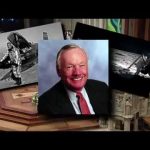
NASA Administrator Charles Bolden joined other agency officials and dignitaries at the Washington National Cathedral to honor the life and career of astronaut Neil Armstrong, the first man to walk on the moon, who died Aug. 25. The memorial was broadcast live on NASA Television and streamed on nasa.gov and the National Cathedral’s website.
The Curiosity rover continues to make its way to Mars and its scheduled landing in Gale Crater on Monday, Aug. 6. Also Mars Yard; New record set; New heat shield test and new mission previewed; Landsat 40 and remembering Sally Ride and more….
NASA Television helped observe the last transit of Venus we’ll see here on Earth until 2117 by showcasing live-streaming Websites the world over, including observations made by scientists in central Australia, by the NASA Edge team, stationed atop the Mauna Kea Observatory in Hawaii, by scientists at NASA Headquarters and other NASA Centers around the country. Also, development of technologies to enable exploration of extreme environments such as those found on Venus, The Voyage of Space Shuttle Enterprise concludes in New York, Girl Scouts Rock at NASA Headquarters, Development of inflatable spacecraft and the NASA family mourns the passing of Ray Bradbury, one of our era’s greatest and most noted science fiction/fantasy writers.
The European Space Agency has successfully launched its third Automated Transfer Vehicle. The cargo ferry, named Edoardo Amaldi for the Italian physicist and spaceflight pioneer, was sent on its way to the International Space Station atop an Ariane 5 rocket from Europe’s Spaceport in Kourou, French Guiana. The ATV brings essential supplies and propellant to the ISS, as well as the ability to re-boost the station’s altitude. ATV Edoardo Amaldi follows the two highly successful supply missions carried out by ATV Jules Verne in March 2008 and ATV Johannes Kepler in February of last year. Also, members of the International Space Station’s Expedition 32 crew discuss their upcoming mission aboard the orbiting laboratory with the media, Engineers at the Marshall Space Flight Center test fire a scaled down solid rocket booster for NASA’s Space Launch System, or SLS, the 100th anniversary of the birth of a space pioneer and more!