Chris Pine and Zachary Quinto sit down to answer NASA trivia questions with Gay Yee Hill of NASA’s Jet Propulsion Laboratory.
For more information:
http://www.nasa.gov/startrek

Chris Pine and Zachary Quinto sit down to answer NASA trivia questions with Gay Yee Hill of NASA’s Jet Propulsion Laboratory.
For more information:
http://www.nasa.gov/startrek
Meet Scoot, a self-employed 7 year old boy. Scoot is going to show you how easy it is to create your own personal chatbot using the API.AI Conversational User Experience Platform. We hope this inspires you to create your own intelligent bot.
The mission of the Office of Planetary Protection is to promote the responsible exploration of the solar system by implementing and developing efforts that protect the science, explored environments, and Earth. The objectives of planetary protection are several-fold and include: Preserving our ability to study other worlds as they exist in their natural states; avoiding the biological contamination of explored environments that may obscure our ability to find life elsewhere – if it exists; and to ensure that we take prudent precautions to protect Earth’s biosphere in case life does exist elsewhere.
The team developing NASA’s next rover mission to Mars has received a go-ahead from the agency to proceed with building the rover for launch in 2020. A July 15 Facebook Live event from NASA’s Jet Propulsion Laboratory featured updated news about the Mars 2020 rover and its mission. It will be almost identical to the Curiosity rover currently on Mars, but will have enhanced landing technology, the ability to prepare soil and rock samples for return to Earth and microphones to capture sound. The rover will look for signs of past life in a region of the Red Planet where the ancient environment was favorable for microbial life.
Earth from Space is presented by Malì Cecere from the ESA Web-TV virtual studios. The one hundred ninety-third edition features a Sentinel-2 image of Sundarbans in Bangladesh.
See also http://www.esa.int/spaceinimages/Images/2016/07/Sundarbans_web to download the image.
Cozmo is a mini companion robot powered by a so-called emotion engine that develops as it learns about you. Developers will have access to an SDK to program the robot.
Click here for the Cozmo CNET review – http://cnet.co/29Lz56z
Subscribe to CNET: http://bit.ly/17qqqCs
Watch more CNET videos: http://www.cnet.com/video
Follow CNET on Twitter: http://twitter.com/CNET
Follow CNET on Facebook: http://www.facebook.com/cnet
#Cozmo #Anki #CozmoAnki
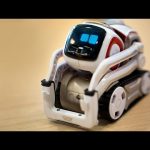
Cozmo is an AI robot from startup Anki, a company best known for making small race cars that connect to your smartphone. With Cozmo, the company hopes it can sell kids and adults alike on the promise of advanced artificial intelligence and robotics all bundled together in a Pixar-like toy. When Cozmo launches in October, Anki will let anyone access the company’s code to start tinkering with the robot and building third-party apps.
Subscribe: https://goo.gl/G5RXGs
Check out our full video catalog: https://goo.gl/lfcGfq
Visit our playlists: https://goo.gl/94XbKx
Like The Verge on Facebook: https://goo.gl/2P1aGc
Follow on Twitter: https://goo.gl/XTWX61
Follow on Instagram: https://goo.gl/7ZeLvX
Read More: http://www.theverge.com
Our alien friend Paxi, ESA Education’s mascot, went to visit Japanese astronaut Kimiya Yui on board the International Space Station. Kimiya shows Paxi what it’s like to prepare and eat food in weightlessness, an important part of the day when living on the ISS.
#ESA
#Paxi
#InternationalSpaceStation

Behold The Future…Imagine a machine that can laugh and cry, learn and dream, and can express its inner responses to how it perceives you to feel. It can express itself in a natural manner but also allows you to visualise the mental imagery emerging in its mind.
The Laboratory for Animate Technologies is creating ‘live’ computational models of the face and brain by combining Bioengineering, Computational and Theoretical Neuroscience, Artificial Intelligence and Interactive Computer Graphics Research.
We are developing multidisciplinary technologies to create interactive autonomously animated systems which will define the next generation of human computer interaction and facial animation.
“If I had my time again I’d want to spend it in this lab” – Alvy Ray Smith, Co-founder of Pixar (on his visit to the Laboratory for Animate Technologies).
We believe the best way to simulate biological behaviour is through biological models. We model the brain processes which give rise to behaviour and social learning and use these to animate lifelike models of the face that can interact with you.
BabyX is an interactive animated virtual infant prototype. BabyX is a computer generated psychobiological simulation under development in the Laboratory of Animate Technologies and is an experimental vehicle incorporating computational models of basic neural systems involved in interactive behaviour and learning.
These models are embodied through advanced 3D computer graphics models of the face and upper body of an infant. The system can analyse video and audio inputs in real time to react to the caregiver’s or peer’s behaviour using behavioural models.
BabyX embodies many of the technologies we work on in the Laboratory and is under continuous development, in its neural models, sensing systems and also the realism of its real time computer graphics.
We create interactive models of neural systems and neuroanatomy enabling visualisation of the internal processes generated by computational simulations giving rise to behaviour.
The Auckland Face Simulator is being developed to cost effectively create extremely realistic and precisely controllable models of the human face and its expressive dynamics for Psychology research.
We are developing the technology to simulate faces both inside and out. We simulate how faces move and how they look, and even their underlying anatomic structure.
We are developing a visual modelling methodology for the construction, visualisation and animation of neural systems called Brain Language [BL], a novel simulation environment for neural models.
This allows users to create animations and real-time visualisations from biologically based neural network models, allowing simulation effects to be viewed in an interactive context. Such a visual environment is not only suitable for visualising a simulation; it is also ideal for model development.
We are developing computer vision based systems to track and analyse facial expression and state of the art algorithms to solve for individual facial muscle activation.
Applications range from real-time expression recognition to microdynamic interaction analysis for psychology research.
http://www.abi.auckland.ac.nz/en/about/our-research/animate-technologies.html
————————————————————————————
This Freaky Baby Could Be the Future of AI. Watch It in Action
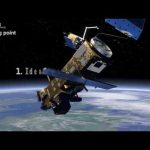
ESA’s Clean Space initiative is studying an active debris removal mission called e.Deorbit, which will target an ESA-owned derelict satellite in low orbit, capture it, then safely burn it up in a controlled atmospheric reentry. e.Deorbit will be the world’s first active debris removal mission, and will provide an opportunity for European industries to showcase their technological capabilities to a global audience.
Read more about e.Deorbit:
http://www.esa.int/Our_Activities/Space_Engineering_Technology/Clean_Space/e.Deorbit
A version of this video without annotations was previously published here:
https://www.youtube.com/watch?v=R6yZLbUCU2c

To all Americans — in space and on Earth — NASA wishes you a safe and happy July 4th Independence Day.
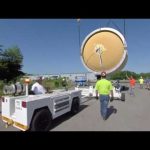
On June 28, the booster for NASA’s Space Launch System (SLS) rocket was fired up for a major two-minute full-duration qualification ground test at Orbital ATK Propulsion Systems’ test facilities in Promontory, Utah. Engineers will evaluate test data on the motor’s performance using cold propellant, the steering operation of its redesigned nozzle, and other operational data to help qualify the booster for flight. This is the last time the booster will be fired in a test environment before it’s used for the first uncrewed test flight of SLS with NASA’s Orion spacecraft, known as Exploration Mission-1, in late 2018. Also, SLS Test Hardware Arrives at Marshall, Juno Arrives at Jupiter July 4th, Test Lab Launched to Streamline Air Travel, Russian Docking System Tested on ISS, and NASA 2016 Agency Honor Award Distinguished Honorees.
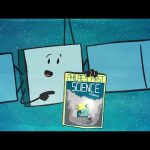
Rosetta describes the exciting discoveries she made during her second year at Comet 67P/Churyumov-Gerasimenko, after the comet made its closest approach to the Sun along its orbit. She also tells us about her efforts to contact Philae, and starts counting down to her own mission finale.
This video is available in the following languages:
English https://www.youtube.com/watch?v=lxdDx8frN_Y
Spanish https://www.youtube.com/watch?v=zM-ZJBinuBk
French https://www.youtube.com/watch?v=bFF1izh10PM
Italian https://www.youtube.com/watch?v=3aS1pgOU8Gs
German https://www.youtube.com/watch?v=ne_PvPJZYL4

On 10 September 2016 about 2000 citizens from 22 European countries will participate in the first Citizens’ Debate on Space for Europe. In the course of the day, citizens will have the opportunity to learn, debate, have their say and participate by suggesting priorities on all aspects of current and future space programmes. This consultation on an unprecedented scale will take place simultaneously in all 22 Member States of the European Space Agency (ESA).
Approximately 100 citizens per Member State will be gathered at various locations. Those selected will be as representative as possible of the population of their country according to socio-demographic criteria. The results of the consultation will be collated – as early as 48 hours after the debate takes place – and communicated to ESA.
The Citizens’ Debate on Space for Europe is a major first – never before has the future of space activities been addressed in such an event held across so many countries.
For more information, and to apply to take part in the debate, visit http://www.citizensdebate.space
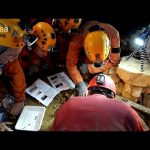
Scenes from training of six astronauts who will spend six nights underground in a cave in Sardinia, Italy. After a week of training, the astronauts descend into the caves to set up basecamp 800 m underground.
One of the last unexplored environments on our planet, caves offer parallels to exploring space. ESA’s underground training course “Cooperative Adventure for Valuing and Exercising human behaviour and performance Skills” – CAVES – prepares astronauts over two weeks to work safely and effectively in multicultural teams.
This year’s participants are an even more international team than ever, including ESA’s Pedro Duque, NASA’s Jessica Meir and Richard Arnold, Japan’s astronaut Aki Hoshide, China’s Ye Guangfu and Russia’s Sergei Korsakov.
The similarities between caving and spaceflight are highlighted throughout the course. Speleologists and astronauts adopt the ‘buddy system’, and both astronaut trainers and CAVES instructors repeat the same mantras of “slow is fast,” “check your gear, and then trust it,” and “always be aware of where you are and where your buddy is”.
Follow the underground adventure on Twitter with @ESA_Caves, and on the CAVES blog: http://blogs.esa.int/caves/.

Currently around 63% of students are disengaged at school, meaning that they withdrawal either physically or mentally before they have mastered the skills that are required to flourish in later life. In this talk Scott Bolland explores the science of learning, the mismatch between how we teach and how the brain natural learns, and the important role that artificial intelligence could take in addressing the limitations in our current education system.
Dr Scott Bolland is the founder of New Dawn Technologies, a high-tech software company aiming to revolutionise education through the use of artificial intelligence. He has spent the last 20 years actively researching and teaching in the field of cognitive science – the scientific study of how the mind works – which spans disciplines such as psychology, philosophy, neuroscience, artificial intelligence and computer science. He holds a PhD in this field, as well as a university medal for outstanding academic scholarship.
This talk was given at a TEDx event using the TED conference format but independently organized by a local community. Learn more at http://ted.com/tedx
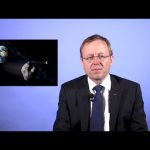
ESA Director General Jan Woerner sends a message to mark Asteroid Day 2016, an annual global movement to increase public awareness of potential asteroid impacts with Earth, and the importance of guarding against them. It is held each year on 30 June, the anniversary of the largest impact in recent history, the 1908 Tunguska event in Siberia.
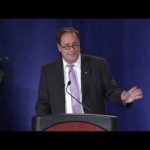
During the 2016 NASA Honor Awards Ceremony on June 28 at Ames Research Center, NASA Administrator Charlie Bolden presented Distinguished Service and Distinguished Public Service Medals to individual employees who have made extraordinary and indelible contributions to the agency’s mission success. These awards are the agency’s most prestigious and distinguished honors.

NASA tested the largest, most powerful booster ever built for flight for the agency’s new rocket, the Space Launch System(SLS) on June 28 at Orbital ATK Aerospace System’s test facility in Promontory, Utah. SLS and NASA’s Orion spacecraft will launch astronauts on missions to explore multiple destinations on the journey to Mars.
This was the second two-minute, full duration qualification test for the booster, and will provide NASA with critical data to support booster qualification for flight. This second test measured the booster’s performance at the colder end of the accepted propellant temperature range, a targeted 40 degrees Fahrenheit. It was also the last time the booster will be fired in a test environment before the first flight of SLS and Orion in 2018.
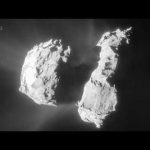
Rosetta has another three months of science to collect before its historic mission comes to an end. But the mission is not resting on its laurels. It has just broken a new record by flying an orbit 7 kms from the comet’s centre – just 5 kms from the surface – and there are more breathtaking manoeuvres to come.
This film describes the orbits that Rosetta will undertake around comet 67P/Churyumov-Gerasimenko, the changes in the amount of gas coming off the comet, and examines the importance of finding phosphorus and glycine – an amino acid that is essential for life.
It also discusses the mission’s most recent discoveries of Xenon and Krypton, together with most of their isotopes. These noble gases were detected by the ROSINA instrument during the period when Rosetta was flying extremely close to the comet. More important science is expected to be released during the next few months.
More about Rosetta:
http://blogs.esa.int/rosetta
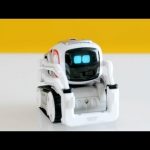
Anki aims to bring a Pixar character to life with Cozmo, its plucky little robot. TechCrunch talks so Anki co-founder and CEO, Anki Boris Sofman.
Read more: https://techcrunch.com/2016/06/27/cozmo/
TechCrunch is a leading technology media property, dedicated to obsessively profiling startups, reviewing new Internet products, and breaking tech news.
Subscribe to TechCrunch today: http://bit.ly/18J0X2e
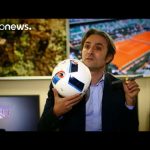
Dozens of Euro 2016 matches are being beamed via satellite to television sets and phones all over the world this summer. But did you know that there is a technology, based on internet and satellite, that allows even a small football club to live stream their games and target a new audience?
Claudio Rosmino and the Space team travelled to Italy to see this innovation in action – and also to France to explore the science behind the technology.
This video is available in the following languages:
English: https://www.youtube.com/watch?v=sI9He-OCyY0
French: https://www.youtube.com/watch?v=PS6HbTzUvkE
German: https://www.youtube.com/watch?v=tFys7MGwrVk
Italian: https://www.youtube.com/watch?v=T82rBP-bBow
Spanish: https://www.youtube.com/watch?v=c-gJxC7ch1Y
Portuguese: https://www.youtube.com/watch?v=hmVgrd5CoXY
Greek: https://www.youtube.com/watch?v=h41xGsJ745Y
Hungarian: https://www.youtube.com/watch?v=nKhGZKaXnmQ

While there are no ironclad rules for producing children who perform well in school, pursue healthy behavior, and work towards wise goals, there are proven strategies that can help. Lucky are those with natural talent, but some work suggests grit, perseverance, and pure stick-to-it-ness may matter even more. Research also highlights the value of finding meaningful life purpose. Artificial intelligence has emerged as an effective tool for predicting long-term outcomes, but can it also help maximize a child’s potential? How do we cultivate characteristics in our youth that will lead to a fulfilling adulthood? What can early coaching accomplish?
Featuring:
Robin Koval
Vivienne Ming
Vic Strecher
Kevin Vigilante, Moderator

NASA works with the Maker community to create new ideas and technologies to drive exploration here on Earth and out in space. The agency uses prizes and challenges, like the Future Engineers 3-D printing challenge for students, and programs like the CubeSat Launch Initiative, which works with students across the country to build and launch small satellites, to encourage innovation and STEM development. During the National Week of Making 2016, NASA committed to continuing its work in order to help groups in all 50 states launch a satellite into orbit.
For more information:
http://www.nasa.gov/feature/calling-all-makers-visit-nasa-solve
http://www.nasa.gov/mission_pages/station/research/news/multipurpose_precision_maintenance_tool
http://www.nasa.gov/feature/first-cubesat-built-by-an-elementary-school-deployed-into-space
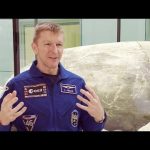
This interview with ESA astronaut Tim Peake was recorded in Cologne, Germany, one day after his return from a six-month stay on the International Space Station.
Tim Peake, NASA astronaut Tim Kopra and commander Yuri Malenchenko landed in the steppe of Kazakhstan on Saturday, 18 June in their Soyuz TMA-19M spacecraft at 09:15 GMT. The trio spent 186 days on the International Space Station.
The landing brings Tim Peake’s Principia mission to an end but the research continues. Tim is the eighth ESA astronaut to complete a long-duration mission in space. He was the third after Alexander Gerst and Andreas Mogensen to fly directly to ESA’s astronaut home base in Cologne, Germany, for medical checks and for researchers to collect more data on how Tim’s body and mind have adapted to living in space.
More about the Principia mission: http://www.esa.int/principia
Follow Tim Peake via http://timpeake.esa.int
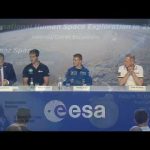
The first news conference with ESA astronaut Tim Peake on return to Earth after spending 186 days in space on the International Space Station on his Principia mission.
The media event was held at ESA’s astronaut centre in Cologne, Germany, 21 July just three days after landing on Earth. The European Astronaut Centre is the home base of all ESA astronauts
Tim Peake, NASA astronaut Tim Kopra and commander Yuri Malenchenko landed in the steppe of Kazakhstan on Saturday, 18 June in their Soyuz TMA-19M spacecraft.
The landing brings Tim Peake’s Principia mission to an end but the research continues. Tim is the eighth ESA astronaut to complete a long-duration mission in space. He is the third after Alexander Gerst and Andreas Mogensen to fly directly to the European Astronaut Centre for medical checks and for researchers to collect more data on how Tim’s body and mind have adapted to living in space.
More about the Principia mission:
http://www.esa.int/principia
Follow Tim on social media:
http://timpeake.esa.int
Follow Thomas on social media:
http://thomaspesquet.esa.int
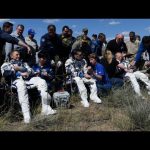
ESA astronaut Tim Peake, NASA astronaut Tim Kopra and commander Yuri Malenchenko landed in the steppe of Kazakhstan on Saturday, 18 June in their Soyuz TMA-19M spacecraft. The trio spent 186 days on the International Space Station. The landing brings Tim Peake’s Principia mission to an end but the research continues. Tim is the eighth ESA astronaut to complete a long-duration mission in space. He is the third after Alexander Gerst and Andreas Mogensen to fly directly to ESA’s astronaut home base in Cologne, Germany, for medical checks and for researchers to collect more data on how Tim’s body and mind have adapted to living in space.
Follow Tim Peake via timpeake.esa.int

Expedition 47 Commander Tim Kopra of NASA, Soyuz Commander Yuri Malenchenko of Roscosmos and Flight Engineer Tim Peake of ESA (European Space Agency) were greeted in a traditional ceremony in Kazakhstan June 18, a few hours after their safe return to Earth from a 186 day mission on the International Space Station.
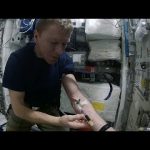
ESA astronaut Tim Peake shows how to draw blood for research on the International Space Station. Researchers often request samples before, during and after a spaceflight to examine differences.
The tubes of blood are put in a refrigerated centrifuge and then stored in the International Space Station’s –80°C freezer called MELFI for later analysis on Earth.
Read more about the experiments Tim Peake took part in: http://www.esa.int/Our_Activities/Human_Spaceflight/Principia/Body_and_mind

Here’s the E3 2016 premiere trailer for Detroit: Become Human.
May contain content inappropriate for children, visit www.esrb.org for rating information
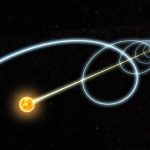
It’s here! Science stuff, mind-blowing stuff, Vsauce stuff, oh my!! THE CURIOSITY BOX: https://www.thecuriositybox.com/
Jake’s video about The Curiosity Box: https://www.youtube.com/watch?v=p91-GhjgeEU
Minute Physics on why December days are the longest: https://www.youtube.com/watch?v=nZMMuv0Ltyo
StandUpMaths on calendars and leap days: https://www.youtube.com/watch?v=qkt_wmRKYNQ
Tom Scott on the Equation of Time: https://www.youtube.com/watch?v=d9Qnobvx_kM
My video on what would happen if the Earth stopped spinning: https://www.youtube.com/watch?v=K0-GxoJ_Pcg
GREAT visuals showing how Earth moves around the sun: https://www.youtube.com/watch?v=82p-DYgGFjI
George Washington’s birthday: https://www.archives.gov/legislative/features/washington/
real-time sub solar point location: http://rl.se/sub-solar-point
Lahaina noon images from the Oahu Astrophotography club: https://www.facebook.com/OahuAstrophotoClub
analemma: https://en.wikipedia.org/wiki/Analemma
great solargraph and analemma images: http://analemma.pl/english-version
interactive seasons and ecliptic simulator: http://astro.unl.edu/classaction/animations/coordsmotion/eclipticsimulator.html
Nasa video of seasonal movement of Earth: https://svs.gsfc.nasa.gov/20063
Tropical year: https://en.wikipedia.org/wiki/Tropical_year
Earth rotation specifics: https://svs.gsfc.nasa.gov/cgi-bin/details.cgi?aid=20196
How Earth moves through the universe:
https://astrosociety.org/edu/publications/tnl/71/howfast.html
http://www.slate.com/blogs/bad_astronomy/2013/03/04/vortex_motion_viral_video_showing_sun_s_motion_through_galaxy_is_wrong.html
http://space.gizmodo.com/racing-while-standing-still-1558642922/1559622011
https://www.reddit.com/r/askscience/comments/1rhu7r/i_always_see_representations_of_the_solar_system
minute physics on cab: https://www.youtube.com/watch?v=_mZQ-5-KYHw
PBS spacetime on the cosmic microwave background:
https://www.youtube.com/watch?v=3tCMd1ytvWg
https://www.youtube.com/watch?v=wcBjibuHxEk
CMB rest frame:
http://physics.stackexchange.com/questions/25928/is-the-cmb-rest-frame-special-where-does-it-come-from
https://www.reddit.com/r/AskPhysics/comments/2va4t6/does_no_absolute_reference_frame_contradict_the/
Wikipedia:
https://en.wikipedia.org/wiki/Day
https://en.wikipedia.org/wiki/Solar_time
https://en.wikipedia.org/wiki/Sidereal_time
https://en.wikipedia.org/wiki/Calendar
https://en.wikipedia.org/wiki/Gregorian_calendar
https://en.wikipedia.org/wiki/Calendar_reform
https://en.wikipedia.org/wiki/Day_length_fluctuations
https://en.wikipedia.org/wiki/Cosmic_microwave_background
wikicommons images:
https://en.wikipedia.org/wiki/Sundial#/media/File:Kew_Gardens_0502.JPG
https://video.kidibot.ro/wp-content/uploads/2020/12/youtubomatic/a-3ECathedralofLearningLawinWinter.jpg
https://video.kidibot.ro/wp-content/uploads/2020/12/youtubomatic/File-3ASouth_Beach_20080315.jpg
To explore space, I highly recommend these:
http://www.shatters.net/celestia/
http://en.spaceengine.org/
music by http://www.youtube.com/jakechudnow
and http://www.audionetwork.com
Awesome 3D graphics by Eric Langlay: https://www.youtube.com/user/ericdraven30
Lame 2D stuff by me.
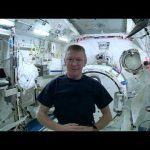
ESA astronaut Tim Peake set out to discover if he could make himself dizzy on board the International Space Station. His NASA crewmate Tim Kopra lent a hand to put Tim in a spin.
When astronauts first arrive in space, they usually feel pretty rough for about the first 24 hours. They report feeling dizzy, disorientated and sometimes nauseous. This has to do with the vestibular system. In microgravity the fluid in the inner ear is floating and so the brain is getting mixed signals compared to what the eyes are seeing. After about 24 to 48 hours, the brain starts relying more on information that is coming from the eyes. Once this happens, in theory, their brain is better able to cope with all kinds of different orientations and of course spinning…
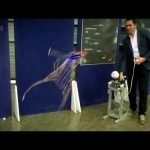
ESA’s proposed e.Deorbit mission plans to demonstrate the retrieval and disposal of a derelict satellite from low-Earth orbit. The mission needs to capture a massive, drifting object left in an uncertain state, which may well be tumbling rapidly. Several capture mechanisms are being studied in parallel – including casting a net.
Polish company SKA Polska won this new ESA Member State’s first competitive contract to design a prototype net gun that could be tested in microgravity on a parabolic flight. Wojtek Gołebiowski of SKA Polska brought it along to the Industry Days of ESA’s Clean Space initiative – tasked with safeguarding both terrestrial and orbital environments – in May 2016. The net gun is comparatively low power (because it was designed for weightlessness) but here he demonstrates how it works on some low-flying drones. Results from firing the net, which is multi-coloured to make it easier to track by cameras, are being used to sharpen the fidelity of software models of net behaviour.
Följ med Paxi till utkanten av Solsystemet för att upptäcka en värld av kometer och lära dig om det fascinerande Rosetta-projektet till kometen 67P/Churyumov-Gerasimenko.
I den här videofilmen, som är avsedd för barn mellan 6 och 12 år, tar Paxi med sig barn för att utforska kometer och Rosetta, ESA:s fascinerande rymdfarkost som flyger sida vid sida med kometen 67P/Churyumov-Gerasimenko och ska försöka släppa ned en landningsenhet på kometen den 12 November 2014.
Den här videofilmen är den tredje i en serie av animationer i vilka Paxi, ESA:s utbildningsmaskot, berör olika aspekter av Solsystemet, Universum, planeten Jordens hemligheter och mycket mer.
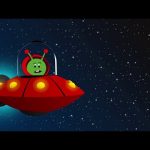
Lär känna Paxi, ESA:s utbildningsmaskot. Var han kommer ifrån, varför han gillar rymdresor, vilka hans vänner är …
I den här videofilmen som är avsedd för barn mellan 6 och 12 år, introduceras Paxi, en liten rymdvarelse från planeten Ally-O, och som har kommit till Jorden för att träffa nya vänner och ta med barn på en äventyrlig upptäcktsresa i rymden. Det är den första i en serie av animationer i vilka Paxi, ESA:s utbildningsmaskot, berör olika aspekter av Solsystemet, Universum, planeten Jordens hemligheter och mycket mer.
Följ med Paxi på en resa genom vårt Solsystem. Från de steniga inre planeterna nära Solen och förbi de jättestora planeterna, ut till den iskalla utkanten där kometerna bor.
I den här videofilmen som är avsedd för barn mellan 6 och 12 år, tar Paxi med oss på en resa i vårt eget Solsystem där vi besöker alla åtta planeterna samt andra mindre himlakroppar såsom asteroider, kometer och dvärgplaneten Pluto.
Den här videofilmen är den andra i en serie av animationer i vilka Paxi, ESA:s utbildningsmaskot, berör olika aspekter av Solsystemet, Universum, planeten Jordens hemligheter och mycket mer.
Acompanhe o Paxi numa viagem através do sistema solar, dos planetas rochosos interiores próximos do Sol, passando pelos planetas gigantes até à orla gelada onde se encontram os cometas.
Neste vídeo, destinado a crianças entre os 6 e os 12 anos de idade, o Paxi leva-nos a dar uma volta pelo sistema solar, visitando os oitos planetas e outros corpos menores como asteroides, cometas e o planeta anão Plutão.
Este vídeo é o segundo de uma série de animações em que o Paxi, a mascote educacional da ESA, aborda diferentes aspetos do sistema solar e do Universo, os segredos do planeta Terra e muito mais.
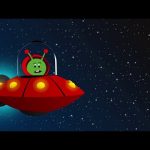
Este é o Paxi, a mascote educacional da ESA: de onde vem, do que gosta nas viagens espaciais, quem são os seus amigos…
Este vídeo, destinado a crianças entre os 6 e os 12 anos de idade, apresenta o Paxi, um pequeno extraterrestre originário do planeta Ally-O e que veio à Terra para fazer novos amigos e levar as crianças numa viagem de aventura e exploração do espaço. É o primeiro de uma série de animações em que o Paxi, a mascote educacional da ESA, aborda diferentes aspetos do sistema solar e do Universo, os segredos do planeta Terra e muito mais.
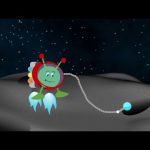
Følg Paxi til udkanten af solsystemet for at udforske kometernes verden og lære om den fantastiske Rosetta-mission til kometen 67P/Churyumov-Gerasimenko.
I denne video, som er rettet mod børn i aldersgruppen 6 til 12 år, tager Paxi børnene med for at udforske kometer og se på Rosetta – det fantastiske ESA-rumfartøj, som flyver ved siden af kometen 67P/Churyumov-Gerasimenko, hvorpå den prøver at placere en lander den 12. november 2014.
Denne video er den tredje i en serie af animationer, hvori Paxi, ESA’s uddannelsesmaskot, kommer ind på forskellige aspekter af solsystemet, universet, hemmelighederne bag planeten Jorden og meget mere.
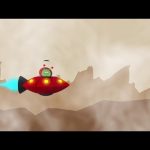
Tag med Paxi på hans rejse gennem vores solsystem, fra de klippefyldte indre planeter tæt på Solen, forbi de gigantiske planeter og ud til den iskolde udkant, hvor kometerne hører hjemme.
I denne video, som er rettet mod børn mellem 6 og 12 år, tager Paxi os med på en rundvisning gennem vores solsystem og besøger alle otte planeter samt andre mindre legemer såsom asteroider, kometer og dværgplaneten Pluto.
Denne video er den anden i en serie af animationer, hvori Paxi, ESA’s uddannelsesmaskot, kommer ind på forskellige aspekter af solsystemet, universet, hemmelighederne bag planeten Jorden og meget mere.