On 10 September 2016, about 2000 Europeans helped to shape the future of space by taking part in a world first: the Citizens’ Debate on Space for Europe. The future of ESA’s space missions were discussed and the different debate sites connected via video conferencing.
Tag: esa
-
Citizens’ debate 2016: ESA Director General Jan Woerner’s Welcome (Italian)
On 10 September 2016, about 2000 Europeans helped to shape the future of space by taking part in a world first: the Citizens’ Debate on Space for Europe. The future of ESA’s space missions were discussed and the different debate sites connected via video conferencing.
-
Citizens’ debate 2016: The role of Europe in space exploration and exploitation (Norwegian)
On 10 September 2016, about 2000 Europeans helped to shape the future of space by taking part in a world first: the Citizens’ Debate on Space for Europe. The future of ESA’s space missions were discussed and the different debate sites connected via video conferencing.
-
Citizens’ debate 2016: ESA Director General Jan Woerner’s Welcome (Greek)
On 10 September 2016, about 2000 Europeans helped to shape the future of space by taking part in a world first: the Citizens’ Debate on Space for Europe. The future of ESA’s space missions were discussed and the different debate sites connected via video conferencing.
-
Citizens’ debate 2016: ESA Director General Jan Woerner’s Welcome (Romanian)
On 10 September 2016, about 2000 Europeans helped to shape the future of space by taking part in a world first: the Citizens’ Debate on Space for Europe. The future of ESA’s space missions were discussed and the different debate sites connected via video conferencing.
-
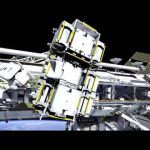
NASA Previews Spacewalks to Upgrade ISS Power System
On Jan. 4, NASA held a press briefing at the agency’s Johnson Space Center in Houston to preview a pair of planned spacewalks to perform a complex upgrade to the International Space Station’s power system. NASA’s Shane Kimbrough and Peggy Whitson will conduct the spacewalk on Jan. 6. The second spacewalk, on Jan. 13, will be performed by Kimbrough and Thomas Pesquet of ESA (European Space Agency). Working on the right side truss of the space station, the crew members will install adapter plates and hook up electrical connections for six new lithium-ion batteries that were delivered to the station in December.
-
ESA Euronews: Ministerial 2016, Europe’s future in space
Lucerne offered a scenic backdrop to ESA’s space summit – the crucial ministerial meeting held every two years when the agency’s 22 member states spend 48 hours debating one subject – Europe’s future in space.
After posing for the family photo, the leaders of the European space sector closed the doors to begin debating the big questions – ExoMars and the International Space Station.
This video is available in the following languages:
Spanish: https://www.youtube.com/watch?v=556Cu6ltE94
Portuguese: https://www.youtube.com/watch?v=cIcEywRwoTw
Greek: https://www.youtube.com/watch?v=GRznfZWQVxs
Italian: https://www.youtube.com/watch?v=d2udiXhc-oo
Hungarian: https://www.youtube.com/watch?v=pF-ED0NzEh8
German: https://www.youtube.com/watch?v=EdzNFyYTnoU
French: https://www.youtube.com/watch?v=YnLPv-sHicY -
ESA Euronews: Europas Zukunft in der Raumfahrt
Europas Raumfahrtminister haben sich für ein Gipfeltreffen in Luzern getroffen, um über die Zukunft einiger der wichtigsten Missionen wie die Internationale Raumstation (ISS) und die ExoMars-Mission zu sprechen.
Luzern bot eine malerische Kulisse für den Weltraumgipfel der ESA – das wichtige Ministertreffen, das alle zwei Jahre stattfindet, und die 22-EU-Mitgliedstaaten, die 48 Stunden über ein Thema reden: Europas Zukunft im Weltraum.
Nach dem Gruppenfoto wurden die Türen geschlossen, um über die großen Themen zu diskutieren: die Zukunft der ExoMars-Mission und der ISS.
-
ESA Euronews: Fontos döntések az európai űrkutatás jövőjéről
A luzerni csúcstalálkozón az Európai Űrügynökség (ESA) 22 tagállamának miniszterei tárgyaltak 48 órán át arról, milyen legyen Európa jövője az űrben.
A családi fotó után nagy kérdéseket kezdtek megvitatni – az ExoMarsot és a Nemzetközi Űrállomást.
-
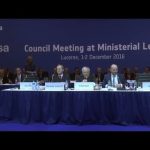
ESA Ministerial Council 2016: Into Space 4.0
Ministers from ESA’s 22 member states plus Canada and Slovenia have agreed a €10.3 billion package ofspace programme funding. At the two-day council meeting at ministerial level in Lucerne, Switzerland, subscriptions were agreed for a future Marsrovermission,continued funding of missions tothe International Space Station, new elements of ESA’s launcher programme as well as developments in telecommunications, Earth observation and technology.
More about the ESA Ministerial Council 2016:
http://www.esa.int/cm16 -
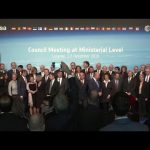
Opening of the ESA Ministerial Council 2016
Scenes from the opening day of the ESA Ministerial Council 2016 in Lucerne, Switzerland. Ministers in charge of space activities from the 22 ESA Member States, Slovenia and Canada met on 1 and 2 December to decide on future space activities for Europe.
Read more about the ESA Ministerial Council:
http://www.esa.int/cm16 -
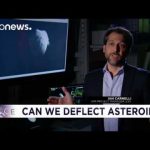
ESA Euronews: Can we deflect asteroids?
In the edition of Space, Euronews correspondent Jeremy Wilks reports from the Observatory of the Côte d’Azur in the south of France on a unique mission to deflect an asteroid.
Asteroids have the potential to cause a catastrophe – a small asteroid could wipe out an entire city, while a large one could mean the end for us all.
It’s a threat we’re aware of, and which scientists and engineers are working to overcome.
This video is also available in the following languages:
German: https://www.youtube.com/watch?v=M1p6fl7sCGk
French: https://www.youtube.com/watch?v=pCehifF8C78
Italian: https://www.youtube.com/watch?v=Qyyjp7Rjip0
Spanish: https://www.youtube.com/watch?v=UiUgVncmKo4
Portuguese: https://www.youtube.com/watch?v=bddwRV07usc
Hungarian: https://www.youtube.com/watch?v=F1dfH4BzeEI
Greek: https://www.youtube.com/watch?v=OcL4oEAG-L8 -

Paxi joins ESA Education’s Fly Your Thesis! 2016 campaign
Paxi has joined ESA Education’s Fly Your Thesis! 2016 campaign where 4 teams of university students are running their experiments in an environment of microgravity.
More about Fly Your Thesis!:
http://www.esa.int/Education/Fly_Your_ThesisMore about Paxi:
http://www.esa.int/paxi/ -

ESA Euronews: ExoMars at Mars
Scientists and engineers on the ExoMars project had their hearts in their mouths as the ExoMars mission reached the red planet, with the Schiaparelli probe going missing in action at the end of its descent just as the TGO mothership swept into a perfectly timed orbit.
The rollercoaster ride of arrival at Mars is the first installment in this ambitious Russian and European project that aims for the first time to directly search for signs of life on Mars.
The plight of Schiaparelli remains unclear. It is certainly on the Martian surface, but may well have hit the red dust much harder then engineers had planned, and nothing has been heard from it since.
Data relayed during the lander’s descent shows the initial high-speed entry to the Martian atmosphere went well, with the heatshield slowing the craft and the parachute deploying. However once the back heat shield and parachute were ejected the flow of events did not go to plan.
This video is available in the following languages:
English https://www.youtube.com/watch?v=S3eIilSYrok
French https://www.youtube.com/watch?v=mEXA_Fo7ABg
German https://www.youtube.com/watch?v=jCCFOjP0ocw
Spanish https://www.youtube.com/watch?v=bMnSKkSLLbA
Italian https://www.youtube.com/watch?v=wqi7XU0ojqI
Portuguese https://www.youtube.com/watch?v=-VyaoG_f51s
Hungarian https://www.youtube.com/watch?v=S7QLUBb5QbI
Greek https://www.youtube.com/watch?v=hlrNu0vselk -
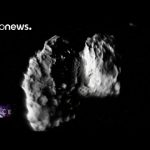
ESA Euronews: Rosetta heads for glorious crash-landing
In just a few days’ time ESA’s Rosetta mission is going to come to a close in a most extraordinary fashion, because the spacecraft is going to slowly, and deliberately crash-land into the comet that it has been orbiting for the past two years.
Euronews is with the team as they prepare for this dramatic finale.
This video is available in the following languages:
English https://www.youtube.com/watch?v=K_7u71Lu3S4
German https://www.youtube.com/watch?v=MX7SYFWzUp8
French https://www.youtube.com/watch?v=WXTn3mDWH-Y
Spanish https://www.youtube.com/watch?v=SjenXVAFTTw
Italian https://www.youtube.com/watch?v=32nyF3IkzU8
Portuguese https://www.youtube.com/watch?v=4_CTvNZfXxc
Greek https://www.youtube.com/watch?v=CdUgVQibZWo
Hungarian https://www.youtube.com/watch?v=i3OTRPHckSM -

ESA Euronews: El final programado de Rosetta
En pocos días, la misión Rosetta de la Agencia Espacial Europea (ESA) tocará a su fin. Y lo hará de la forma más extraordinaria, porque la nave espacial irá a chocar, lenta y deliberadamente, contra el cometa alrededor del cual ha estado orbitando durante los últimos dos años. Nos reunimos con el equipo mientras preparan este dramático final.
-

ESA Euronews: Rosetta se prépare au choc fatal sur la comète Tchouri
Le 30 septembre prochain, la sonde Rosetta s’écrasera lentement et délibérément sur la comète autour de laquelle elle orbite depuis deux ans. Or elle n’a pas été conçue pour cela. L’issue sera fatale. Mais avant cette dernière manoeuvre, les scientifiques ont prévu d’effectuer des relevés inédits à l’approche de “Tchouri”.
-
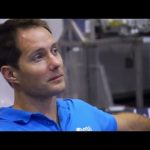
ESA astronauts training for ISS mission
Thomas Pesquet from France will shortly become the last member of ESA’s 2009 astronaut class to fly to the International Space Station.
He is scheduled to fly next November for a six-month stay in orbit, during which time he’ll carry out maintenance activities and a packed schedule of experiments.
He has been training at NASA’s Johnson Space Centre in Houston, Texas, alongside veteran ESA astronaut Paolo Nespoli from Italy, who will be going to the ISS for the third time after Thomas’s return to Earth.
This video shows new images of Thomas and Paolo training at Johnson Space Center in Houston, USA.
-
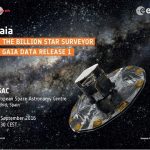
Press Conference: First Data Release from ESA’s Gaia Mission
Launched in December 2013, Gaia is destined to create the most accurate map yet of the Milky Way. By making accurate measurements of the positions and motions of stars in the Milky Way, it will answer questions about the origin and evolution of our home galaxy.
The first intermediate data release, containing among other things three-dimensional positions and two-dimensional motions of a subset of two million stars, demonstrates that Gaia’s measurements are as precise as planned, paving the way to create the full map of one billion stars to be released towards the end of 2017.
-
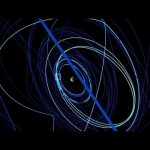
Rosetta’s journey around the comet
Animation visualising Rosetta’s two-year journey around Comet 67P/Churyumov–Gerasimenko.
The animation begins on 31 July 2014, during Rosetta’s final approach to the comet after its ten-year journey through space. The spacecraft arrived at a distance of 100 km on 6 August whereupon it gradually approached the comet and entered initial mapping orbits that were needed to select a landing site for Philae. These observations also enabled the first comet science of the mission. The manoeuvres in the lead up to, during and after Philae’s deployment on 12 November are seen, before Rosetta settled into longer-term science orbits.
In February and March 2015 the spacecraft made several flybys. One of the closest flybys triggered a ‘safe mode’ event that forced it to retreat temporarily until it was safe to gradually draw closer again. The comet’s increased activity in the lead up to and after perihelion in August 2015 meant that Rosetta remained well beyond 100 km distances for several months.
In June 2015, contact was restored with Philae again – albeit temporary, with no permanent link able to be maintained, despite a series of dedicated trajectories flown by Rosetta for several weeks.
Following perihelion, Rosetta performed a dayside far excursion some 1500 km from the comet, before re-approaching to closer orbits again, enabled by the reduction in the comet’s activity. In March–April 2016 Rosetta went on another far excursion, this time on the night side, followed by a close flyby and orbits dedicated to a range of science observations.
The animation finishes at 9 August 2016, before the details of the end of mission orbits were known. A visualisation of the trajectories leading to the final descent to the surface of the comet on 30 September will be provided once available.
The trajectory shown in this animation is created from real data, but the comet rotation is not. An arrow indicates the direction to the Sun as the camera viewpoint changes during the animation.
-
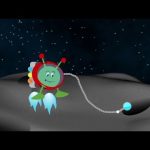
Paxi – Rosetta og kometer
Følg Paxi til randen av solsystemet, oppdag kometenes verden og lær om det fantastiske Rosetta har på kometen 67P/Churyumov-Gerasimenko.
I videoen, som retter seg mot barn mellom 6–12 år, tar Paxi barna med seg for å oppdage kometer og Rosetta – det fantastiske ESA-romfartøyet som flyr langs kometen 67P/Churyumov-Gerasimenko. 12.11.2014 skal det prøve å slippe en lander på denne.
Videoen er den tredje i en serie av animasjoner hvor Paxi, ESAs utdannelsesmaskot, kommer i kontakt med forskjellige sider ved solsystemet, universet, jordens hemmeligheter og mye mer.
-
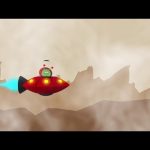
Paxi – Solsystemet
Bli med Paxi på en reise i solsystemet vårt, fra de steinete indre planetene i nærheten av solen, forbi de store planetene, til den iskalde utkanten og hjemstedet til kometene.
I denne videoen, som retter seg mot barn mellom 6–12 år, tar Paxi oss med på en tur i solsystemet. I løpet av turen besøker dere alle de åtte planetene og andre mindre ting som asteroider, kometer og dvergplaneten Pluto.
Videoen er den andre i en serie av animasjoner hvor Paxi, ESAs utdannelsesmaskot, kommer i kontakt med forskjellige sider ved solsystemet, universet, jordens hemmeligheter og mye mer.
-
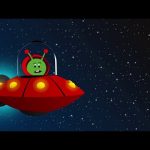
Hvem er Paxi?
Møt Paxi, ESAs utdannelsesmaskot: hvor han kommer fra, hva han liker med romfart, hvem vennene hans er …
I videoen, som retter seg mot barn mellom 6–12 år, presenteres seeren for Paxi, et lite romvesen som kommer fra planeten Ally-O. Paxi har kommet til jorden for å møte nye venner og ta med seg barn på eventyrlige reiser i verdensrommet. Videoen er den første i en serie av animasjoner hvor Paxi, ESAs utdannelsesmaskot, kommer i kontakt med forskjellige sider ved solsystemet, universet, jordens hemmeligheter og mye mer. -
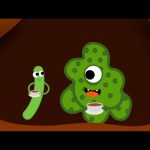
Paxi – Finns det Marsianer?
Följ med Paxi på hans resa till Mars där han utforskar planetens uttorkade flodfåror, vulkaner och polernas istäcken.
-
Paxi – ¿Los marcianos existen?
Sigue a Paxi en su viaje a Marte, donde explorará los lechos secos de los ríos, un enorme volcán y los casquetes polares del planeta.
-

Paxi – Există marțienii ?
Urmează-l pe Paxi în călătoria sa spre Marte, unde va explora albiile secate ale râurilor de pe planetă, vulcanii şi calotele polare de gheaţă.
-
Paxi – Os marcianos existem?
Siga o Paxi na sua viagem a Marte, onde ele irá explorar os leitos de rios secos do planeta, vulcões e calotas polares.
-
Paxi – Czy Marsjanie istnieją?
Podróżując razem z Paxim na Marsa, zbadacie wyschnięte koryta rzek tej planety, wulkany oraz polarne czapy lodowe.
-
Paxi – Den röda planetens hemligheter
Följ med Paxi på hans resa till den röda planeten för att undersöka om det finns marsmänniskor och lär dig samtidigt om europeiska rymdsamarbetets ExoMars-projekt.
-
Paxi – Secretos del planeta rojo
Acompaña a Paxi en su viaje al Planeta Rojo para investigar si existen los marcianos y descubrir más cosas sobre las misiones ExoMars de la Agencia Espacial Europea.
-
Paxi – Secretele Planetei Roșii
Însoţeşte-l pe Paxi în călătoria sa spre Planeta Roşie, pentru a investiga dacă există marţieni şi pentru a afla mai multe despre misiunile ExoMars ale Agenţiei Spaţiale Europene.
-
Paxi – Sekrety Czerwonej Planety
Leć razem z Paxim na Czerwoną Planetę, aby sprawdzić, czy Marsjanie istnieją i dowiedzieć się więcej o misjach ExoMars Europejskiej Agencji Kosmicznej.
-
Paxi – Segredos do Planeta Vermelho
Acompanhe o Paxi na sua viagem ao Planeta Vermelho para investigar se existem marcianos e ficar a conhecer as missões ExoMars da Agência Espacial Europeia.
-

ESA Euronews: Canada’s robot masters
Robots are an essential companion to mankind in space, and many of the modern-day masters of these robots are to be found in Montreal, home to the Canadian Space Agency.
Euronews Space has unique access to the team, among them operations engineer Mathieu Caron, who can steer the Canadarm 2 directly from his control room, or instruct astronauts piloting it in space.
This video is available in the following languages:
English https://www.youtube.com/watch?v=VizQJUAmegQ
German https://www.youtube.com/watch?v=y2ES9dggnjs
French https://www.youtube.com/watch?v=HA110F9db2g
Italian https://www.youtube.com/watch?v=4NGg1hv6RIE
Spanish https://www.youtube.com/watch?v=WzGZHJBFdH4
Portuguese https://www.youtube.com/watch?v=TeFFCzIZaa8
Hungarian https://www.youtube.com/watch?v=cKjQhvKb5_M
Greek https://www.youtube.com/watch?v=bUqP2swWllE -
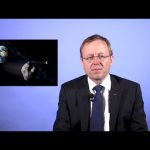
ESA Director General marks Asteroid Day 2016
ESA Director General Jan Woerner sends a message to mark Asteroid Day 2016, an annual global movement to increase public awareness of potential asteroid impacts with Earth, and the importance of guarding against them. It is held each year on 30 June, the anniversary of the largest impact in recent history, the 1908 Tunguska event in Siberia.
-
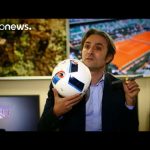
ESA Euronews: Sport and Internet via satellite
Dozens of Euro 2016 matches are being beamed via satellite to television sets and phones all over the world this summer. But did you know that there is a technology, based on internet and satellite, that allows even a small football club to live stream their games and target a new audience?
Claudio Rosmino and the Space team travelled to Italy to see this innovation in action – and also to France to explore the science behind the technology.
This video is available in the following languages:
English: https://www.youtube.com/watch?v=sI9He-OCyY0
French: https://www.youtube.com/watch?v=PS6HbTzUvkE
German: https://www.youtube.com/watch?v=tFys7MGwrVk
Italian: https://www.youtube.com/watch?v=T82rBP-bBow
Spanish: https://www.youtube.com/watch?v=c-gJxC7ch1Y
Portuguese: https://www.youtube.com/watch?v=hmVgrd5CoXY
Greek: https://www.youtube.com/watch?v=h41xGsJ745Y
Hungarian: https://www.youtube.com/watch?v=nKhGZKaXnmQ -
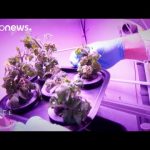
ESA Euronews: Growing food in space
Is is possible to produce food to eat and air to breathe while in space? The short answer: it’s not easy, but it can be done.
Right now, if you’re an astronaut, you’re given pre-prepared food that was cooked on Earth and sent into space on a rocket. But if humankind wants to realise its ambition of travelling much further into the solar system it needs to find ways to create food and air while surrounded by the nothingness of space.
This video is also available in the following languages:
French: https://www.youtube.com/watch?v=rInfAI-dRWY
German: https://www.youtube.com/watch?v=WGmxOz3YsrA
Italian: https://www.youtube.com/watch?v=DwQY0ne2oTo
Spanish: https://www.youtube.com/watch?v=Wh_RiJp3kCU
Portuguese: https://www.youtube.com/watch?v=-0lFwmb6xcU
Hungarian: https://www.youtube.com/watch?v=87J0azIBnYE
Greek: https://www.youtube.com/watch?v=Lufj1HnomQo -
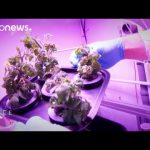
ESA Euronews: Mezőgazdaság az űrben
Ha manapság valaki kiruccan az űrbe, egyfajta űrmenüt kap enni. A Földön gyártják, csomagolják, majd kilövik az űrbe egy rakétán. Ez működik is addig, amíg a Föld körüli pályán keringünk, de mi van, ha valaki messzebbre akar utazni? Ehhez élelmet és levegőt kellene előállítani az űrhajón. Lehetséges ez? A Space Brémában és Barcelonában próbált utánajárni.
Nem könnyű élelmiszert termelni az űrben, de nem is lehetetlen. Orosz űrhajósok fogyasztottak először űrgabonát 2003-ban, és tavaly augusztusban amerikai kozmonauták majszolták el az első űrben termett salátát. De egy hosszú űrutazáshoz ennél több kell. A Melissa konzorcium – az Európai Űrügynökség támogatásával készült – kutatásából kiderült, pontosan mennyi.
-
ESA Euronews: Comida espacial
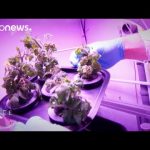
¿A qué se parece la comida espacial? Iremos a Bremen y Barcelona para conocer la respuesta.
No es fácil producir comida en el espacio pero es posible. Cosmonautas rusos le hincaron el diente al primer cultivo experimental en 2003 y, el pasado mes de agosto, astronautas estadounidenses se deleitaron con la primera lechuga espacial. Pero aventurarse a ser agricultor espacial no es tan fácil.
-
ESA astronaut Tim Peake controls rover from space
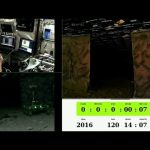
On 29 April 2016, ESA astronaut Tim Peake on the International Space Station took control of a rover, nicknamed ‘Bridget’, in the UK and over two hours drove it into a simulated cave and found and identified targets despite the dark and limited feedback information.
Before and after Tim came online from the orbiting Station, control of the rover was passed several times between engineers at the Airbus D&S ‘Mars Yard’ in Stevenage, UK, Belgium’s ISS User Support Centre in Brussels and ESA’s ESOC operations centre in Darmstadt, Germany. This complex real-time choreography was possible thanks to the ‘Internet in space’ – a network that tolerates disruptions – put in place by teams at ESOC. This network enables remote control of rovers or other devices in the difficult environment of space, with its long distances and frequent connection blackouts inevitable with orbital motion.
During the experiment, a representative mission scenario was set up in which the rover was commanded to go from a lit environment into a challenging dark location (simulating a cave or a shaded crater) and identified a number of science targets. The Mars yard (30 x 13 m) was split into two areas, one lit and one in the dark. From one end of the yard, Bridget was commanded from ESOC until it reached the edge of the shaded area. Then at the edge of the ‘cave’, control was passed to astronaut Tim Peake, on board the Station, who controlled Bridget to drive across the yard, avoiding obstacles and identifying potential science targets, which were marked with a distinctive ultraviolet fluorescent marker. Once the targets were identified and mapped, Tim drove the rover out of the shaded area and handed control back to ESOC, who drove the rover back to its starting point.
This video is a compressed extract that includes highlights of the experiment and includes scenes of the network control centre at ESOC, the Mars Yard at Stevenage and Tim Peake on the ISS. On audio, the voices of astronaut Time Peake, Lionel Ferra, the Eurocom ‘capcom’ controller at ESA’s Astronaut Centre in Cologne, Germany, and Kim Nergaard, the ground segment manager at ESOC, can be heard periodically.
More information
https://www.flickr.com/photos/esa_events/albums/72157667946502135