
Outside the International Space Station, Expedition 42 Commander Barry Wilmore and Flight Engineer Terry Virts of NASA conducted their third spacewalk in eight days March 1 to install antennas and communications gear that will be used to provide rendezvous and navigational information to visiting vehicles approaching the complex in the future, including the new U.S. commercial crew vehicles. Wilmore and Virts installed about 400 feet of cable along the truss of the station as part of the new Common Communications for Visiting Vehicles (C2V2) system. In two previous spacewalks on Feb. 21 and Feb. 25, the two astronauts rigged cables for new International Docking Adapter ports that will be delivered to the complex this year and lubricated the grappling end of the Canadian-built Canadarm2 robotic arm.
Tag: NASA
-
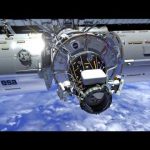
NASA Holds Expedition 42 Space Walk Briefing from Johnson Space Center in Houston
As two NASA astronauts from the International Space Station’s Expedition 42 crew prepare to venture outside the orbital complex on Friday, Feb. 20, NASA Television provided a preview news briefing on Wednesday, Feb. 18. The preview briefing was held at NASA’s Johnson Space Center in Houston with the following panelists:
Kenneth Todd, International Space Station Operations and Integration manager
Tomas Gonzalez-Torres, Expedition 42 lead flight director
Karina Eversley, Extravehicular Activity (EVA) # 29 officer
Sarah Korona, EVA # 30 officer
Arthur Thomason, EVA # 31 officer
Expedition 42 Commander Barry Wilmore and Flight Engineer Terry Virts will exit the station from the Quest airlock for each of the three spacewalks around 7:10 a.m. NASA TV coverage of the approximately six-and-a-half hour spacewalks will begin at 6 a.m.Built by Boeing under contract to NASA, the International Docking Adapters are a critical component of the station’s reconfiguration to ensure long-term docking ports for future commercial crew and other visiting spacecraft. They will permit the standard station crew size to grow from six to seven, potentially doubling the amount of time devoted to research aboard the orbiting laboratory.
The two new docking adapters will be launched to the station on a pair of SpaceX Dragon cargo spacecraft this year. Astronauts will install the first of two adapters on Pressurized Mating Adapter-2 on the forward end of the station’s Harmony module during a future spacewalk. The second adapter will be installed on Pressurized Mating Adapter-3 after it is relocated robotically to the space-facing port of Harmony later this year.
The spacewalks will be the 185th, 186th and 187th in support of space station assembly and maintenance. Wilmore has conducted one spacewalk in his career last October. The spacewalks will be the first of Virts’ career.
-

NASA African American History Month Profile – Shawn Goodman (Jet Propulsion Laboratory)
Shawn Goodman is an engineer at NASA’s Jet Propulsion Laboratory in Pasadena, California. He currently serves as the Deputy Division Manager for the Mechanical Systems Fabrication and Test Division. Additionally, he is the Project System Engineer and Engineering Technical Authority for the agency’s Soil Moisture Active Passive (SMAP) Mission. SMAP is the first Earth satellite designed to collect global observations of the vital soil moisture hidden just beneath our feet. Its high resolution space-based measurements will give scientists a new capability to better predict natural hazards of extreme weather, climate change, floods and droughts and improve our understanding of Earth’s water, energy and carbon cycles.
-
The State of NASA on This Week @NASA
NASA Administrator Charles Bolden, speaking during his Feb. 2 “State of NASA” address at Kennedy Space Center in Florida after the release of President Obama’s Fiscal Year 2016 $18.5 billion budget proposal for NASA said, “I can unequivocally say that the State of NASA is strong.” The proposed budget is a half-billion-dollar increase over last year’s enacted budget, which, the Administrator noted, “is a clear vote of confidence to you – the employees of NASA and the ambitious exploration program you are executing.” The budget facilitates NASA’s plan moving forward, which includes development of new vehicles and technologies needed for unprecedented human missions to an asteroid and to Mars, commercial partnerships to provide transportation to and from the International Space Station from the United States and research on the station for the benefit of future deep space travelers and people living on our home planet. Also, New views of Pluto, Soil moisture mission underway and Virginia Aerospace Day!
-

Administrator Discusses the State of NASA
During his “State of NASA” speech from Kennedy Space Center on Feb. 2, Administrator Charles Bolden touched on the agency’s scientific and technological achievements and the exciting work ahead as NASA pushes farther into the solar system and continues to lead the world in a new era of exploration.
-
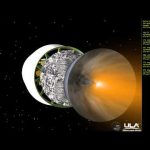
NASA Earth Science Mission Launches
NASA’s Soil Moisture Active Passive (SMAP) spacecraft launched Jan. 31 from California’s Vandenberg Air Force Base. SMAP is the first U.S. Earth-observing satellite designed to collect global observations of surface soil moisture. The mission’s high resolution space-based measurements of soil moisture will give scientists a new capability to better predict natural hazards of extreme weather and improve our understanding of Earth’s water, energy and carbon cycles.
-

Space Station Crew Discusses Life in Space With Students and NASA Administrator Charles Bolden
Aboard the International Space Station, Expedition 42 Commander Barry Wilmore and Flight Engineer Terry Virts of NASA discussed their mission and life and research on the complex during an in-flight chat Jan. 21 with NASA Administrator Charles Bolden, officials of the White House Office of Science and Technology Policy and middle and high school students. The unique discussion was part of the third annual State of Science Technology, Engineering and Math event (SoSTEM), a type of science fair that included students from schools in Maryland, Virginia and Washington.
-
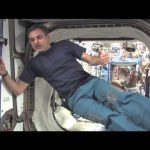
Dragon arrives at ISS on This Week @NASA
The SpaceX Dragon cargo spacecraft arrived at the International Space Station on Jan. 12, two days after its launch from Cape Canaveral Air Force Station in Florida. SpaceX’s fifth contracted resupply mission to the ISS includes delivery of more than two tons of supplies and experiments for the station’s crew. Also, One-year ISS mission previewed, Record global warmth in 2014, Successful RS-25 engine test and more!
-

NASA International Space Station Briefing of the Cloud-Aerosol Transport System (CATS)
NASA held an Earth Science Briefing from the Kennedy Space Center about the Cloud-Aerosol Transport System (CATS) mission aboard the SpaceX CRS-5 Dragon cargo resupply spacecraft. The research will characterize and measure the worldwide distribution of clouds and aerosols — the tiny particles that make up haze, dust, air pollutants and smoke; model organism research using fruit flies to study the biological effects of spaceflight; and, a new study using flatworms to better understand wound healing in space.
The fifth SpaceX cargo mission to the International Space Station (ISS) under NASA’s Commercial Resupply Services contract will carry more than 3,700 pounds of scientific experiments, technology demonstrations and supplies, including critical materials to support 256 science and research investigations that will take place on the space station during ISS Expeditions 42 and 43.
-
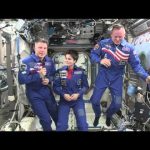
NASA Space Station Crew Discusses Life In Space With The Media
Aboard the International Space Station, Expedition 42 Commander Barry Wilmore and Flight Engineer Terry Virts of NASA and Flight Engineer Samantha Cristoforetti of the European Space Agency discussed the progress of their research, other work on the orbital outpost and upcoming spacewalks in February by Wilmore and Virts in a pair of in-flight interviews Jan. 6 with the Associated Press and KGO-TV, San Francisco. Wilmore has been aboard the complex since September, while Virts and Cristoforetti arrived on the station in late November
-

2014 What Happened This Year @NASA
In 2014, NASA took significant steps on the agency’s journey to Mars — testing cutting-edge technologies and making scientific discoveries while studying our changing Earth and the infinite universe as the agency made progress on the next generation of air travel. Here’s a look at some of the top NASA stories of the year!
-
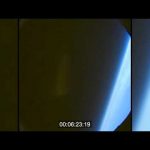
Video Gives Inside Look at Trial by Fire for NASA’s Orion Spacecraft
The video begins 10 minutes before Orion’s 11:29 a.m. EST splashdown in the Pacific Ocean, just as the spacecraft was beginning to experience Earth’s atmosphere. Peak heating from the friction caused by the atmosphere rubbing against Orion’s heat shield comes less than two minutes later, and the footage shows the plasma created by the interaction change from white to yellow to lavender to magenta as the temperature increases. The video goes on to show the deployment of Orion’s parachutes and the final splash as it touches down.
-
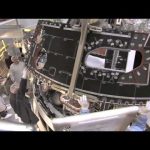
Orion’s first flight on This Week @NASA – December 8, 2014
The successful first flight test of NASA’s Orion spacecraft on Dec. 5 not only was a historic moment for the agency – but also was a critical step on NASA’s Journey to Mars. Orion rode to space from Cape Canaveral Air Force Station on a Delta IV heavy rocket with no crew, but loaded with about 1,200 sensors. The flight test basically was a compilation of the riskiest events that will happen when astronauts fly on Orion on deep space missions. Also, Journey to Mars briefing, 1st SLS flight barrel and Commercial crew milestone.
-
NASA TV Presents: Inside the ISS – December 2014
A look inside the life, science and adventure of being an astronaut aboard the International Space Station.
www.nasa.gov/mission_pages/station
-
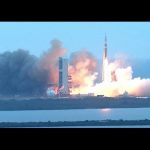
Orion Soars on First Flight Test
NASA’s Orion spacecraft launched successfully atop a United Launch Alliance Delta IV Heavy rocket Dec. 5 at 7:05 a.m. EST from Space Launch Complex 37 at Cape Canaveral Air Force Station in Florida. Orion’s Exploration Flight Test-1 (EFT-1), is the first flight test for NASA’s new deep space capsule and is a critical step on NASA’s journey to Mars. The 4.5 hour flight is scheduled to conclude with the splashdown of Orion in the Pacific Ocean.
-
NASA is with you when you fly on This Week @NASA – November 21, 2014
NASA invited social media members Nov. 18 and 19 to the agency’s Armstrong Flight Research Center for a two-day event highlighting the ways NASA is with you when you fly. The NASA social gave participants an exclusive look at the latest tools and technologies being developed to improve the efficiency, safety and adaptability of air transportation. Also, Next ISS crew trains, 3D printer installed in space, Asteroid capture technology test, Journey to Mars media day and more!
-
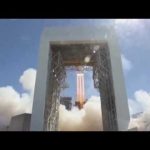
Orion flight test previewed on This Week @NASA – November 7, 2014
A NASA media briefing on Nov. 6 at Kennedy Space Center highlighted the fully assembled Orion spacecraft and details of its first test flight, scheduled for Dec. 4. The 4 and-a-half hour flight, called Exploration Flight Test-1, will send Orion 3,600 miles from Earth on a two-orbit flight to confirm its critical systems are ready for the challenges of eventually sending astronauts on deep space missions to an asteroid and Mars. Also, Delta IV Heavy wet dress test, Next ISS crew trains, Space agency leaders support ISS, Curiosity confirms orbital data and more!
-
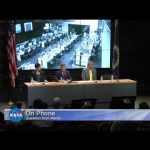
NASA Holds News Conference Following Orbital Launch Mishap
NASA held a news conference Tuesday October 28 following the mishap that occurred at NASA’s Wallops Flight Facility in Virginia during the attempted launch of Orbital Sciences Corp’s Antares rocket and Cygnus cargo spacecraft to the International Space Station. Briefing participants were, Bill Gerstenmaier, associate administrator of NASA’s Human Exploration and Operations Mission Directorate, Frank Culbertson, Executive Vice President and General Manager of Advanced Programs Group at Orbital Sciences Corp, Bill Wrobel, director of NASA’s Wallops Flight Facility, and Mike Suffredini, NASA’s International Space Station Program Manager.
-

2014 NASA Halloween Animated Greetings
There might be more Trick than Treat at this house. Can you spot the ISS as it darts past this dark and for foreboding scene? Happy Halloween from NASA.
-
Images From Comet’s Mars Flyby On This Week @NASA- October 24, 2014
Several Mars-based NASA spacecraft had prime viewing positions for comet Siding Spring’s October 19 close flyby of the Red Planet. Early images included a composite photo from NASA’s Hubble Space Telescope that combined shots of Mars, the comet, and a star background to illustrate Siding Spring’s distance from Mars at closest approach. Also, images from the Mars Reconnaissance Orbiter’s HiRISE camera, which represent the highest-resolution views ever acquired of a comet that came from the Oort Cloud, at the outer fringe of the solar system. The comet flyby – only about 87,000 miles from Mars – was much closer than any other known comet flyby of a planet. Also, Partial solar eclipse, Space station spacewalk, Preparing to release Dragon, Cygnus launch update, Welding begins on SLS, Astronaut class visits Glenn and more!
-
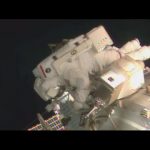
Power Spacewalk on This Week @NASA – October 17, 2014
During an October 15 spacewalk outside the International Space Station – the second U.S. spacewalk in as many weeks – Expedition 41 Flight Engineers Reid Wiseman and Barry Wilmore of NASA, replaced a failed voltage regulation device to restore the station’s electrical power output to full capacity. The pair also relocated camera and TV equipment as part of a major reconfiguration to accommodate new docking adapters for use by U.S. commercial crew spacecraft in the next few years. Also, MAVEN’s “First Light”, Hubble finds extremely distant galaxy, Possible bonus destination for New Horizons, New information about volcanic activity on our moon and more!
-
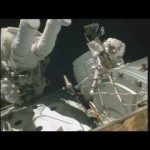
NASA Astronauts Conduct Space Walk To Make Important Repairs On International Space Station
Outside the International Space Station, Expedition 41 Flight Engineers Reid Wiseman and Barry Wilmore of NASA replaced a voltage regulation device and relocated camera and television equipment during a spacewalk Oct. 15, the second excursion outside the Quest airlock by station astronauts in U.S. spacesuits in as many weeks. The voltage regulator, called a Sequential Shunt Unit, failed in May, taking down one of eight power channels for station systems. Its replacement brought the station’s electrical output back to full capacity. The repositioning of the camera and television equipment was the first step in a major reconfiguration of station systems and modules to accommodate next year’s delivery of new docking adapters that will be used by commercial crew vehicles later this decade. The spacewalk was the 183rd in support of station assembly and maintenance, the second by Wiseman and the first for Wilmore.
-
NASA Prepares to Eye Comet’s Flyby of Mars
During an October 9 press briefing at NASA headquarters, panelists discussed the Earth and space-based assets that will be in position to observe the October 19 flyby of Mars by comet C/2013 A1, also known as comet Siding Spring. These assets include NASA’s iconic Hubble Space Telescope and spacecraft orbiting and roving Mars.
During the once-in-a-lifetime flyby, Siding Spring will pass within about 88,000 miles (139,500 kilometers) of the Red Planet — less than half the distance between Earth and our moon and less than one-tenth the distance of any known comet flyby of Earth. This proximity will provide an unprecedented opportunity for researchers to gather data on both the comet and its effect on the Martian atmosphere.
-
NASA Premieres ‘Trial By Fire’ video on Orion’s Flight Test
As the flight test of NASA’s Orion spacecraft nears, the agency released Oct. 8 a video detailing the spacecraft’s test and the critical systems engineers will evaluate during the Dec. 4 flight. Orion is in the final stages of preparation for the uncrewed flight test that will take it 3,600 miles above Earth on a 4.5-hour mission to test many of the systems necessary for future human missions into deep space. After two orbits, Orion will reenter Earth’s atmosphere at almost 20,000 miles per hour, and reach temperatures near 4,000 degrees Fahrenheit, before its parachute system deploys to slow the spacecraft for a splashdown in the Pacific Ocean.
On future missions, the Orion spacecraft will carry astronauts farther into the solar system than ever before, including to an asteroid and Mars.
-

NASA Astronauts Conduct Spacewalk on ISS
Clad in U.S. spacesuits, Expedition 41 Flight Engineers Reid Wiseman of NASA and Alexander Gerst of the European Space Agency conducted a spacewalk outside the International Space Station Oct. 7 to relocate a failed cooling pump and to install a power cable device designed to provide backup electrical capability to the station’s rail car system. The spacewalk was the 182nd in support of station assembly and maintenance and the first for both Wiseman and Gerst.
-

NASA Chooses Boeing and SpaceX Companies to Transport U.S. Astronauts to ISS
NASA officials at the agency’s Kennedy Space Center in Florida announced Sept. 16 the selection of Boeing and SpaceX to develop and certify crew transportation systems that will transport U.S. astronaut crews from American soil to and from the International Space Station. Participants in the announcement included NASA Administrator Charles Bolden, Kennedy Director Bob Cabana, Commercial Crew Program Manager Kathy Lueders, and Astronaut Mike Fincke.
-
Rocket welding tool ready on This Week @NASA – September 12, 2014
NASA Administrator Charlie Bolden, other NASA officials and representatives from The Boeing Company participated in a September 12 ribbon cutting for the new 170-foot-high Vertical Assembly Center at NASA’s Michoud Assembly Facility in New Orleans. The Vertical Assembly Center is a new tool that will be used to assemble parts of NASA’s Space Launch System rocket that will send humans to an asteroid and Mars. The administrator also visited Stennis Space Center in nearby Bay St. Louis, Mississippi, where engineers plan to test the RS-25 engines that will power the core stage of SLS. Also, Orion moved for fueling, Curiosity to climb Martian mountain, Possible geological activity on Europa, Expedition 40 returns, Earth Science on ISS and Hurricane-hunting aircraft!
-
Orion’s protective backshell installed on This Week @NASA – August 25, 2014
Engineers at Kennedy Space Center have finished installing the Orion spacecraft’s backshell – the black protective tiles on the cone-shaped sides of NASA’s new deep space capsule. The backshell tiles are the same type that protected the underside of space shuttles — and will not only provide protection from debris while in space but from extreme temperatures in that area of the spacecraft as it returns from space – which could exceed 31-hundred degrees Fahrenheit. Also, SLS anti-geyser testing, Webb’s replica backplane, Arctic Sea ice loss, Ancient Earth, Alien Earths and more!
-
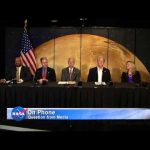
Mars 2020 Rover and Beyond News Teleconference from NASA Headquarters in Washington DC
During a July 31 briefing at NASA headquarters, agency officials announced seven science instruments, out of fifty-eight proposed, have been selected to be part of the next rover NASA will send to Mars in 2020. The Mars 2020 rover will be a new version of the Curiosity rover currently operating on Mars – with more sophisticated hardware to conduct unprecedented science and exploration technology investigations, including geological assessments, habitability of the environment and searching for signs of past life on the Red Planet.
-
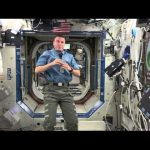
NASA Astronaut ISS Crew Member Reid Wiseman Discusses Life in Space with ABC’s “Nightline”
Aboard the International Space Station, Expedition 40 Flight Engineer Reid Wiseman of NASA discussed the status of his five and a half month mission on the orbital laboratory with the ABC News “Nightline” program during an in-flight interview July 31. Wiseman, who has garnered international attention for his enthusiastic involvement in social media, arrived on the station in late May and will remain in orbit until November, when he returns to Earth in a Russian Soyuz spacecraft.
-

Apollo 11 celebration, Next Giant Leap anticipation on This Week @NASA
There was more celebration of Apollo 11’s 45th anniversary at several events around the country – and more opportunity for the agency to highlight its “next giant leap” to send humans to Mars. Those events included a ceremony during which Kennedy Space Center’s Operations and Checkout Building was renamed on July 21, in honor of Apollo 11 Commander Neil Armstrong, who passed away in 2012. The facility, which was used to process and test Apollo spacecraft, is now being used to assemble NASA’s Orion spacecraft. Also, ISS astronauts appear in the House, Space station cargo ships, Extreme underwater mission underway, RS-25 Engine installed for testing, and more!
-
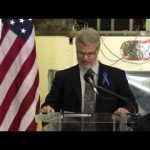
NASA Renames Historic Facility in Honor of Neil Armstrong
During a ceremony at Kennedy Space Center on Monday, July 21, NASA renamed the center’s Operations and Checkout Building in honor of late astronaut Neil Armstrong, who passed away in 2012. The ceremony included NASA Administrator Charles Bolden, Kennedy Center Director Robert Cabana, Apollo 11’s Michael Collins and Buzz Aldrin and astronaut Jim Lovell, who was the mission’s back-up commander. International Space Station NASA astronauts Steve Swanson, who is the current station commander, and Reid Wiseman, also took part in the ceremony via satellite downlink from their orbiting laboratory 260 miles above Earth.
Kennedy’s Operations and Checkout Building has played a vital role in NASA’s spaceflight history. It was used during the Apollo program to process and test the command, service and lunar modules. Today, the facility is being used to process and assemble NASA’s Orion spacecraft, which the agency will use to send astronauts to an asteroid in the 2020s and Mars in the 2030s.
-
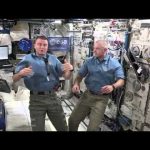
NASA’s Next Giant Leap
A live conversation about the future of space exploration with actor, director and narrator Morgan Freeman. He spoke at NASA’s Jet Propulsion Laboratory in Pasadena, California, about his personal vision for space. The event also included NASA astronaut Reid Wiseman and Expedition 40 Commander Steve Swanson participating from the International Space Station.
-

Apollo 11 yesterday, Next Giant Leap tomorrow on This Week @NASA
NASA is celebrating the 45th anniversary of the historic Apollo 11 mission to the moon. On July 20, 1969, Neil Armstrong and Buzz Aldrin, with crewmate Michael Collins manning the command service module from lunar orbit, became the first humans on the moon — with Armstrong’s historic first step onto the lunar surface becoming a symbolic giant leap for humanity. Today, with Apollo 11 as inspiration, NASA is taking the steps needed for America’s next giant leap, to send astronauts to Mars. The path to Mars will use a stepping stone approach consisting of key elements, including human health and technology research aboard the International Space Station; development and evolution of NASA’s Space Launch System rocket and Orion deep space capsule and development of other game-changing technologies to enable tomorrow’s missions. Also, Science instruments for Europa mission?, Cygnus cargo craft arrives at ISS, News conference with next ISS crew, 5th Anniversary of Bolden’s Confirmation, The Search for Life in the Universe.
-
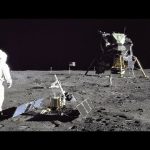
Restored Apollo 11 Moonwalk – Original NASA EVA Mission Video – Walking on the Moon
Original Mission Video as aired in July 1969 depicting the Apollo 11 astronauts conducting several tasks during extravehicular activity (EVA) operations on the surface of the moon. The EVA lasted approximately 2.5 hours with all scientific activities being completed satisfactorily. The Apollo 11 (EVA) began at 10:39:33 p.m. EDT on July 20, 1969 when Astronaut Neil Armstrong emerged from the spacecraft first. While descending, he released the Modularized Equipment Stowage Assembly on the Lunar Module’s descent stage. A camera on this module provided live television coverage of man’s first step on the Moon. On this, their one and only EVA, the astronauts had a great deal to do in a short time. During this first visit to the Moon, the astronauts remained within about 100 meters of the lunar module, collected about 47 pounds of samples, and deployed four experiments. After spending approximately 2 hours and 31 minutes on the surface, the astronauts ended the EVA at 1:11:13 a.m. EDT on July 21.
-
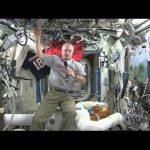
NASA Space Station Commander Discusses Life And Work Floating In Space with Denver Media
Aboard the International Space Station, Expedition 40 Commander Steve Swanson of NASA discussed life and research on the orbital outpost during an in-flight interview July 17 with KDVR-TV in Denver. Swanson, who is a native of Steamboat Springs, Colorado, arrived on the station in late March, became station commander in May and will remain in orbit until mid-September when he will return to Earth in a Russian Soyuz spacecraft.
-

The Journeys of Apollo
The Journeys of Apollo is a previously produced documentary narrated by Actor Peter Cullen that relives the 40th Apollo Anniversary and mission to explore Earths neighbor, the moon.
-
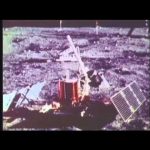
The Flight of Apollo 11
The story of the first Moon landing in July 1969. Depicts the principal events of the mission, from the launching through the post recovery activities of astronauts Armstrong, Aldrin, and Collins. Through television, motion pictures, and still photography, the program provides an “eyewitness” perspective of the Apollo 11 mission.
-
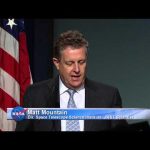
Space Experts Discuss the Search for Life in the Universe at NASA
NASA space-based observatories are making unprecedented new discoveries and revealing worlds never before seen. During a televised panel discussion of leading science and engineering experts at NASA Headquarters on Monday, July 14, a scientific and technological roadmap to lead to the discovery of potentially habitable worlds among the stars was addressed. The agency’s next step, the James Webb Space Telescope (Webb telescope), was featured as a new tool that will continue to help scientists rewrite scientific textbooks long after its scheduled launch in 2018.
-
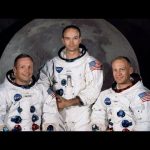
NASA Administrator Charles Bolden Apollo 11 45th Anniversary Message
Building on Apollo 11 for the Next Giant Leap
This month, our nation will mark the 45th anniversary of the Apollo 11 landing on the moon – a remarkable American accomplishment and a “giant leap” for humankind. Today, at NASA, we’re working on the next giant leap – a human mission to Mars, standing on the shoulders of astronauts Neil Armstrong, Buzz Aldrin and Michael Collins.
As I near the end of my fifth year as NASA administrator, I take great pride in the many amazing things our nation’s space program continues to accomplish. From an incredible five Earth science missions heading to space this year, to the first flight test of the Orion spacecraft that will one day carry astronauts to Mars and the continued success of our commercial partners in their missions to the International Space Station (ISS), we’re building on the Apollo program’s legacy to test and fly transformative, cutting-edge technologies today for tomorrow’s missions.
Around this 45th anniversary, we look ahead on our path to Mars and the milestones within our grasp. We’re treading that path with a stepping stone approach that takes the extraordinary work our crews have been doing aboard the Space Station for more than 13 years preparing us to travel farther into our solar system. Technology drives exploration, and we’ll be testing new technologies in the proving ground of deep space on our mission to an asteroid, eventually becoming Earth independent as we reach Mars.
Just this past week we were pleased that one of our private sector partners, Orbital Sciences, once again successfully launched a cargo mission to the ISS from U.S. soil. Along with another commercial partner, SpaceX, they’ve demonstrated with their Cygnus and Dragon spacecraft, respectively, that American industry can help us reach low Earth orbit and create good jobs and value for NASA at the same time. Later this year, we plan to award commercial contracts for transporting our astronauts to space from American soil by 2017, ending our reliance on others to get into space and freeing up scarce resources to focus on our even bolder Mars mission.
Our science missions also continue to turn science fiction into science fact. Today in Washington, we are hosting a public event, “The Search for Life in the Universe,” about our work on one of the most fundamental questions in exploration, “Are we alone?” Top scientists will share insights on how close we are to answering that question, what we know today from NASA missions and what we may find out soon.
In September, MAVEN arrives at Mars to study the planet’s upper atmosphere even as Curiosity and Opportunity continue to rove the surface and help prepare us for human missions to the Red Planet. Next year New Horizons arrives at Pluto and the year after, Juno arrives at Jupiter, even as we prepare our next Great Observatory, the James Webb Space Telescope, for launch in 2018 to peer back at the oldest light in the cosmos.
You can see that today’s astronauts, scientists and engineers continue to be inspired by the Apollo 11 mission. I’m proud and privileged to head a space agency that is accomplishing so much today with the legacy of the Apollo 11 crew and the thousands of ground support personnel who facilitated their success. As the world’s leader in exploration, we have so much to look forward to in the coming years.
Below is a link to a video I recorded about my personal remembrances of the first moon landing. I’m sure every one of you who was old enough also remembers exactly where you were at the time.
In the spirit of this brave crew, we look forward to a new generation of NASA achievements in space.