Tag: Experiment
-

Satelitul Europa are apă în apropierea suprafeței sale
#youtubevideos #subscribe Urmareste mai multe #shorts aici
https://www.youtube.com/playlist?list=PLcod69NUBSYiax7w_5cXANwSf5b8I22V0
Mai nou, cercetătorii au descoperit pungi de apă lichidă și în crusta înghețată, la doar 1 kilometru adâncime! Cum? Priviți această imagine cu suprafața satelitului Europa. Vedeți cum ea este brăzdată de crevase? La o privire mai atentă, ele arată ca două linii paralele de tren. Suprinzător, astfel de structuri se găsesc și în Groenlanda, așa cum se vede în această poză.
Cu ajutorul unui radar, cercetătorii au arătat cum, în Groenlanda, ele se formează datorită unor pungi de apă aflate la adâncime. Din acestea scapă apă spre suprafața, care apoi îngheață, se dilată, și împinge în gheață în stânga și în dreapta, formând cele două structuri paralele.
Procesul ar avea loc și pe Europa, trădând existența unor pungi de apă la un kilometru adâncime. Acolo s-ar putea găsi microorganisme, ce sunt astfel mai ușor de găsit decât dacă trebuie să forăm la zeci de kilometri adâncime pentru a ajunge la oceanul subteran.
În 2024 sonda Europa Clipper va pleca spre Europa. Voi ce credeți că va găsi?
https://www.nature.com/articles/s41467-022-29458-3 -

NASA investigheaza fenomenele OZN raportate de Pentagon! #shorts
🔸 SPRIJINĂ FINANCIAR ►https://patreon.com/cristianpresura
🔸 DEVINO MEMBRU ►https://bit.ly/35Q8vXC❗Discord ► https://www.discord.gg/presura
❗Instagram ► https://www.instagram.com/cristianpresura/
❗TikTok ► https://www.tiktok.com/@cristian.presura
❗Facebook ► https://www.facebook.com/presura
❗Facebook page ► https://www.facebook.com/stiintaclub
❗Twitch ► https://www.twitch.tv/cristian_presura🔊 Spotify Podcast ► https://spoti.fi/3dbvYo6
🔊 MixCloud Podcas ► https://www.mixcloud.com/StiintaClub/📙 Carte ► “O calatorie prin Univers”: https://bit.ly/3pdOfGp
📙 Carte ► “Fizica Povestita”: https://bit.ly/2YsKaAc
📙 Carte ► “Care e diferența dintre un copil și un laptop?” https://bit.ly/3h4auLZ
❗Asociația “Știinta pentru toți” ► https://www.presura.ro/Urmareste aici toata #seriacool din care acest video face parte:
https://www.youtube.com/playlist?list=PLcod69NUBSYiWVp2QL98wG0hTZYO1JL7XTestați gratuit 3 luni aplicațiia Da Vinci Kids: https://get.davincikids.tv/cristianpresura/
#viral #viralromania #invatapeyoutube #invatadepeyoutube #youtubechannel #youtube #youtuber #youtubers #subscribe #youtubevideos #sub #youtubevideo #like #instagram #subscribe #follow #video #vlog #subscribetomychannel
#explorepage #youtubecommunity #likes #explore #youtubelife #youtubecreator #ps #bhfyp -

Ți-e teamă de meteoriți? ☄ Urmărește acest video!
🔸 SPRIJINĂ FINANCIAR ►https://patreon.com/cristianpresura
🔸 DEVINO MEMBRU ►https://bit.ly/35Q8vXC00:00 Intro
01:05 1. Frecventa impacturilor meteoritilor
03:25 2. Efectul devastarii produse de un impact
06:53 3. Monitorizarea Meteoritilor
08:34 4. Devierea sau distrugerea meteoritilor
13:00 Concluzii❗Discord ► https://www.discord.gg/presura
❗Instagram ► https://www.instagram.com/cristianpresura/
❗TikTok ► https://www.tiktok.com/@cristian.presura
❗Facebook ► https://www.facebook.com/presura
❗Facebook page ► https://www.facebook.com/stiintaclub
❗Twitch ► https://www.twitch.tv/cristian_presura🔊 Spotify Podcast ► https://spoti.fi/3dbvYo6
🔊 MixCloud Podcas ► https://www.mixcloud.com/StiintaClub/📙 Carte ► “O calatorie prin Univers”: https://bit.ly/3pdOfGp
📙 Carte ► “Fizica Povestita”: https://bit.ly/2YsKaAc
📙 Carte ► “Care e diferența dintre un copil și un laptop?” https://bit.ly/3h4auLZ
❗Asociația “Știinta pentru toți” ► https://www.presura.ro/Urmareste aici toata #seriacool din care acest video face parte:
https://www.youtube.com/playlist?list=PLcod69NUBSYiWVp2QL98wG0hTZYO1JL7XTestați gratuit 3 luni aplicațiia Da Vinci Kids: https://get.davincikids.tv/cristianpresura/
#viral #viralromania #invatapeyoutube #invatadepeyoutube #youtubechannel #youtube #youtuber #youtubers #subscribe #youtubevideos #sub #youtubevideo #like #instagram #subscribe #follow #video #vlog #subscribetomychannel
#explorepage #youtubecommunity #likes #explore #youtubelife #youtubecreator #ps #bhfyp -

Holograme pe care le poți atinge!
#youtubevideos #subscribe Urmareste mai multe #shorts aici
https://www.youtube.com/playlist?list=PLcod69NUBSYiax7w_5cXANwSf5b8I22V0
Bine ați venit în holodeck. Știu, nu vi se pare nimic special. Ați văzut atâtea filme SF cu astfel de holograme că, dacă va arată cineva așa ceva în realitate, nu vă veți mira. Păcat, pentru că nimeni până acum nu a reușit să facă o astfel de hologramă tactilă cât de cât realistă. Motivul este simplu: lumina ce formează holograma are o presiune prea mică pentru a fi simțită de mână. Desigur, dacă se folosesc mănuși speciale, se poate, dar nu asta vrem. Vrem să atingem holograma cu mâna noastră!
Soluția găsită de cercetători este să folosească jeturi de aer, pe care să le trimită către mână, a cărei poziție o determină cu o cameră de luat vederi. Intensitatea jeturilor de aer este corelată cu poziția mâinii în interiorul hologramei, în așa fel încât să simțim jetul ca pe ceva tare dacă holograma arată un perete, sau ca pe ceva ușor dacă holograma reprezintă curgerea unei ape. Echipa universității Glasgow a testat sistemul generând holograma unei mingi de baschetbal. Ei au reușit să atingă mingea virtuală, să o miște și să o învârtă într-un mod realist. Practic, jetul de aer făcea mâna să simtă prezența mingii, iar mișcarea mâinii punea mingea virtuală în mișcare.
Va fi holograma tactilă parte din Multivers? Voi ce credeți?
https://futurism.com/the-byte/scientists-holograms-touch -

Conector USB-C pentru toate încărcătoarele!
Întrebarea filozofică este: dispozitivul care încarcă fără fir telefonul nu are și el nevoie de conector?
-
Omul și Cosmosul
Cumpara cartea “Care e diferenta dintre un copil si un laptop?” de aici: https://bit.ly/36NNobe
Sambata 2 aprilie ora 13:30, voi fi prezent standul Humanitas de la Bookfest Timisoara, unde voi vorbi despre cartile mele🔸 SPRIJINĂ FINANCIAR ►https://patreon.com/cristianpresura
🔸 DEVINO MEMBRU ►https://bit.ly/35Q8vXC❗Discord ► https://www.discord.gg/presura
❗Instagram ► https://www.instagram.com/cristianpresura/
❗TikTok ► https://www.tiktok.com/@cristian.presura
❗Facebook ► https://www.facebook.com/presura
❗Facebook page ► https://www.facebook.com/stiintaclub
❗Twitch ► https://www.twitch.tv/cristian_presura🔊 Spotify Podcast ► https://spoti.fi/3dbvYo6
🔊 MixCloud Podcas ► https://www.mixcloud.com/StiintaClub/📙 Carte ► “O calatorie prin Univers”: https://bit.ly/3pdOfGp
📙 Carte ► “Fizica Povestita”: https://bit.ly/2YsKaAc
📙 Carte ► “Care e diferența dintre un copil și un laptop?” https://bit.ly/3h4auLZ
❗Asociația “Știinta pentru toți” ► https://www.presura.ro/Testați gratuit 3 luni aplicațiia Da Vinci Kids: https://get.davincikids.tv/cristianpresura/
#viral #viralromania #invatapeyoutube #invatadepeyoutube #youtubechannel #youtube #youtuber #youtubers #subscribe #youtubevideos #sub #youtubevideo #like #instagram #subscribe #follow #video #vlog #subscribetomychannel
#explorepage #youtubecommunity #likes #explore #youtubelife #youtubecreator #ps #bhfyp -
Water experiments part 2 – olive oil | Cosmic Kiss (In German, English subtitles available)
ESA astronaut Matthias Maurer is currently living and working aboard the International Space Station for his first space mission, Cosmic Kiss. Recently, he experimented with water in microgravity.
In this water experiments video series, Matthias demonstrates the different behavior of water in weightlessness and how this research is applied to life on Earth.In this second clip in the series, Matthias blows air into a floating water sphere and looks at what happens when he tries to mix it with olive oil.
Matthias will live and work in orbit for approximately six months for his Cosmic Kiss mission. During this time, he will conduct and support more than 35 European and numerous other international experiments in microgravity.
Follow Matthias: https://bit.ly/ESACosmicKiss
★ Subscribe: http://bit.ly/ESAsubscribe and click twice on the bell button to receive our notifications.
Check out our full video catalog: http://bit.ly/SpaceInVideos
Follow us on Twitter: http://bit.ly/ESAonTwitter
On Facebook: http://bit.ly/ESAonFacebook
On Instagram: http://bit.ly/ESAonInstagram
On LinkedIn: https://bit.ly/ESAonLinkedIn
On Pinterest: https://bit.ly/ESAonPinterest
On Flickr: http://bit.ly/ESAonFlickrWe are Europe’s gateway to space. Our mission is to shape the development of Europe’s space capability and ensure that investment in space continues to deliver benefits to the citizens of Europe and the world. Check out https://www.esa.int/ to get up to speed on everything space related.
Copyright information about our videos is available here: https://www.esa.int/ESA_Multimedia/Terms_and_Conditions
#ESA
#CosmicKiss
#MatthiasMaurer -

New experiment possibilities for Astro Pi Mission Space Lab
The European Astro Pi Challenge offers young people from age 7 up to 19 years the chance to run their code in space. This year students can take their codes for Mission Space Lab to the next level thanks to two brand new Astro Pi computers offering new experiment capabilities.
More info: https://astro-pi.org/mission-space-lab/
★ Subscribe: http://bit.ly/ESAsubscribe and click twice on the bell button to receive our notifications.
Check out our full video catalog: http://bit.ly/SpaceInVideos
Follow us on Twitter: http://bit.ly/ESAonTwitter
On Facebook: http://bit.ly/ESAonFacebook
On Instagram: http://bit.ly/ESAonInstagram
On Pinterest: https://bit.ly/ESAonPinterest
On Flickr: http://bit.ly/ESAonFlickrWe are Europe’s gateway to space. Our mission is to shape the development of Europe’s space capability and ensure that investment in space continues to deliver benefits to the citizens of Europe and the world. Check out https://www.esa.int/ to get up to speed on everything space related.
Copyright information about our videos is available here: https://www.esa.int/ESA_Multimedia/Terms_and_Conditions
#ESA
#AstroPi
#RaspberryPi -

Mars confinement tips
In these times of confinement, ESA astronaut support engineer Romain Charles shares nine tips on how to live in isolation – he spent 520 days locked in a mockup spacecraft and is a true expert on the subject.
Mars500 locked six ‘marsonauts’ in a simulated spaceship near Moscow, Russia for 520 days, the time it would take to fly to Mars and back plus 30 days spent exploring its surface. It was the first full-length, high-fidelity simulation of a human mission to our neighbouring planet. The crew went into lockdown on 3 June 2010, and they did not open the hatch until 17 months later on 4 November 2011.
Mars 500 was a success in that it proved that humans can survive the inevitable isolation that is needed for a mission to Mars and back. Psychologically, we can do it!
The crew had their ups and downs, but these were to be expected. In fact, scientists anticipated many more problems, but the crew did very well coping with the monotonous mission, with little variation in food and even a communication delay over 12 minutes one-way.
During their simulated mission, the crew lived in isolation without fresh food, sunlight or fresh air. The participants from Italy, Russia, China and France had no external cues such as the Sun going down at night to remind them when to sleep.
Their bodies are among the most researched in the world. Years of constant monitoring, prodding and taking blood allowed scientists examined how they reacted to the time in confinement with experiments focussing on their bodies, mental states and performance.
More on Mars 500: www.esa.int/Mars500
★ Subscribe: http://bit.ly/ESAsubscribe and click twice on the bell button to receive our notifications.
Check out our full video catalog: http://bit.ly/SpaceInVideos
Follow us on Twitter: http://bit.ly/ESAonTwitter
On Facebook: http://bit.ly/ESAonFacebook
On Instagram: http://bit.ly/ESAonInstagram
On Flickr: http://bit.ly/ESAonFlickrWe are Europe’s gateway to space. Our mission is to shape the development of Europe’s space capability and ensure that investment in space continues to deliver benefits to the citizens of Europe and the world. Check out http://www.esa.int/ESA to get up to speed on everything space related.
Copyright information about our videos is available here: http://www.esa.int/spaceinvideos/Terms_and_Conditions
#ESA
#Confinement
#Mars500 -
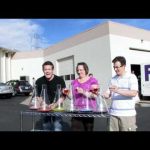
Elephant’s Toothpaste – Steve Spangler
Steve Spangler preparing for his October 2010 appearance on the Ellen DeGeneres Show by making a rainbow fountain of Elephant’s Toothpaste.
About Steve Spangler Science…
Steve Spangler is a celebrity teacher, science toy designer, speaker, author and an Emmy award-winning television personality. Spangler is probably best known for his Mentos and Diet Coke geyser experiment that went viral in 2005 and prompted more than 1,000 related YouTube videos. Spangler is the founder of www.SteveSpanglerScience.com, a Denver-based company specializing in the creation of science toys, classroom science demonstrations, teacher resources and home for Spangler’s popular science experiment archive and video collection. Spangler is a frequent guest on the Ellen DeGeneres Show where he takes classroom science experiments to the extreme. Check out his pool filled with 2,500 boxes of cornstarch!
Cool Science Toys – http://www.SteveSpanglerScience.com
Sign up for the Experiment of the Week – http://www.stevespanglerscience.com/experiment-of-the-week
Watch Spangler’s Science Videos – http://www.stevespanglerscience.com/video/
Attend a Spangler Hands-on Science Workshop for Teachers – http://www.stevespanglerscience.com/teacher_training/
Visit Spangler’s YouTube Channel – http://www.youtube.com/stevespanglerscienceJoin the conversation on Steve Spangler’s blog – http://www.SteveSpangler.com
Additional Information:
On the education side, Spangler started his career as a science teacher in the Cherry Creek School district for 12 years. Today, Steve travels extensively training teachers in ways to make learning more engaging and fun. His hands-on science boot camps and summer institutes for teachers inspire and teach teachers how to prepare a new generation for an ever-changing work force. Over the last 15 years, he has also made more than 500 television appearances as an authority on hands-on science and inquiry-based learning.
On the business side, Spangler is the founder and CEO of Steve Spangler Science, a Denver-based company specializing in the creation of educational toys and kits and hands-on science training services for teachers. The companys unique business strategies and viral creations have been featured in the Wall Street Journal, Inc. Magazine, Wired and TIME Magazine where online readers voted Steve Spangler #18 in the Top 100 Most Influential People of the Year for 2006 (what were they thinking?). You’ll find more than 140 Spangler created products available online at SteveSpanglerScience.com and distributed to toy stores and mass-market retailers worldwide.
Spangler joined NBC affiliate 9News in 2001 as the science education specialist. His weekly experiments and science segments are designed to teach viewers creative ways to make learning fun. His now famous Mentos Geyser experiment, turning 2-liter bottles of soda into erupting fountains, became an Internet sensation in September 2005 when thousands of people started posting their own Mentos explosions on YouTube.com.
As founder of SteveSpanglerScience.com, Spangler and his design team have developed more than 140 educational toys and science-related products featured by mass-market retailers like Target, Wal-Mart, Toys R’ Us, Discovery Channel Stores and over 1,400 independent specialty toy stores. His educational science catalog and on-line business offers more than a thousand science toys and unique learning resources. Recently, Spangler has been featured in the Wall Street Journal, Inc. Magazine, WIRED, the History Channel, Food Network and TIME Magazine where on-line readers voted Steve Spangler #18 in the Top 100 Most Influential People of the Year for 2006.
His recent appearances on the Ellen DeGeneres Show have taught viewers how to blow up their food, shock their friends, create mountains of foam, play on a bed of nails, vanish in a cloud of smoke and how to turn 2,500 boxes of cornstarch and a garden hose into a swimming pool of fun.
-
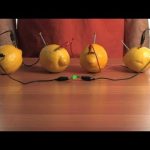
Fruit-Power Battery – Sick Science! #080
Read the full experiment at http://www.stevespanglerscience.com/experiment/fruit-power-battery Voltaic batteries of all shapes and sizes are objects that convert chemical energy into electrical energy. You probably use batteries to power your cell phone, iPod, or any number of wireless gadgets. But did you know that you can actually use chemical energy stored within a lemon to power a small LED light? It’s true, and we’ll show you exactly how in the Fruit-Power Battery experiment.
Want more experiments like this? Check out http://www.stevespanglerscience.com/product/naked-eggs-and-flying-potatoes
Sick Science™ is a trademark of Steve Spangler, inc.
© 2012 Steve Spangler Science all rights reserved
-
Pop Rocks MythBuster – Cool Science Experiment
Steve and Mark bust the myth of eating Pop Rocks and drinking soda. Check out this and other cool science experiments at http://www.stevespanglerscience.com/experiments/
About Steve Spangler Science…
Steve Spangler is a celebrity teacher, science toy designer, speaker, author and an Emmy award-winning television personality. Spangler is probably best known for his Mentos and Diet Coke geyser experiment that went viral in. Spangler is the founder of www.SteveSpanglerScience.com, a Denver-based company specializing in the creation of science toys, classroom science demonstrations, teacher resources and home for Spangler’s popular science experiment archive and video collection. Spangler is a frequent guest on the Ellen DeGeneres Show and Denver 9 News where he takes classroom science experiments to the extreme. For teachers, parents or DIY Science ideas – check out other sources of learning:
Join the Science Club and check out other cool science experiments at – http://www.SteveSpanglerScience.com
Sign up to receive a FREE Experiment of the Week- http://www.stevespanglerscience.com/experiment-of-the-week
Attend a Spangler Hands-on Science Workshop for Teachers – http://www.stevespanglerscience.com/training
Watch Steve on Local and National Media Appearances on YouTube at: https://www.youtube.com/user/SpanglerScienceTV
-
Shrinking Chip Bag – Sick Science! #064
We can’t get our hands on enough stuff to shrink. Faced with the problem of creating tiny chip bags (don’t ask, some things are better left alone), we turned to Steve. “I don’t know. Throw them in the microwave,” was all he had to say. So we tossed a bag in the microwave and now we have this experiment. Is it scientific? Oh you bet your bag of salted potato chips that it’s scientific.
Learn more at http://www.stevespanglerscience.com/lab/experiments/shrinking-chip-bags/
About Steve Spangler Science…
Steve Spangler is a celebrity teacher, science toy designer, speaker, author and an Emmy award-winning television personality. Spangler is probably best known for his Mentos and Diet Coke geyser experiment that went viral in. Spangler is the founder of www.SteveSpanglerScience.com, a Denver-based company specializing in the creation of science toys, classroom science demonstrations, teacher resources and home for Spangler’s popular science experiment archive and video collection. Spangler is a frequent guest on the Ellen DeGeneres Show and Denver 9 News where he takes classroom science experiments to the extreme. For teachers, parents or DIY Science ideas – check out other sources of learning:
Join the Science Club and check out other cool science experiments at – http://www.SteveSpanglerScience.com
Sign up to receive a FREE Experiment of the Week- http://www.stevespanglerscience.com/experiment-of-the-week
Attend a Spangler Hands-on Science Workshop for Teachers – http://www.stevespanglerscience.com/training
Watch Steve on Local and National Media Appearances on YouTube at: https://www.youtube.com/user/SpanglerScienceTV
-
Color Changing Milk – Cool Science Experiment
It’s an explosion of color! Some very unusual things happen when you mix a little milk, food coloring, and a drop of liquid soap. Use the experiment to amaze your friends and uncover the scientific secrets of soap.
About Steve Spangler Science…
Steve Spangler is a celebrity teacher, science toy designer, speaker, author and an Emmy award-winning television personality. Spangler is probably best known for his Mentos and Diet Coke geyser experiment that went viral in. Spangler is the founder of www.SteveSpanglerScience.com, a Denver-based company specializing in the creation of science toys, classroom science demonstrations, teacher resources and home for Spangler’s popular science experiment archive and video collection. Spangler is a frequent guest on the Ellen DeGeneres Show and Denver 9 News where he takes classroom science experiments to the extreme. For teachers, parents or DIY Science ideas – check out other sources of learning:
Join the Science Club and check out other cool science experiments at – http://www.SteveSpanglerScience.com
Sign up to receive a FREE Experiment of the Week- http://www.stevespanglerscience.com/experiment-of-the-week
Attend a Spangler Hands-on Science Workshop for Teachers – http://www.stevespanglerscience.com/training
Watch Steve on Local and National Media Appearances on YouTube at: https://www.youtube.com/user/SpanglerScienceTV